
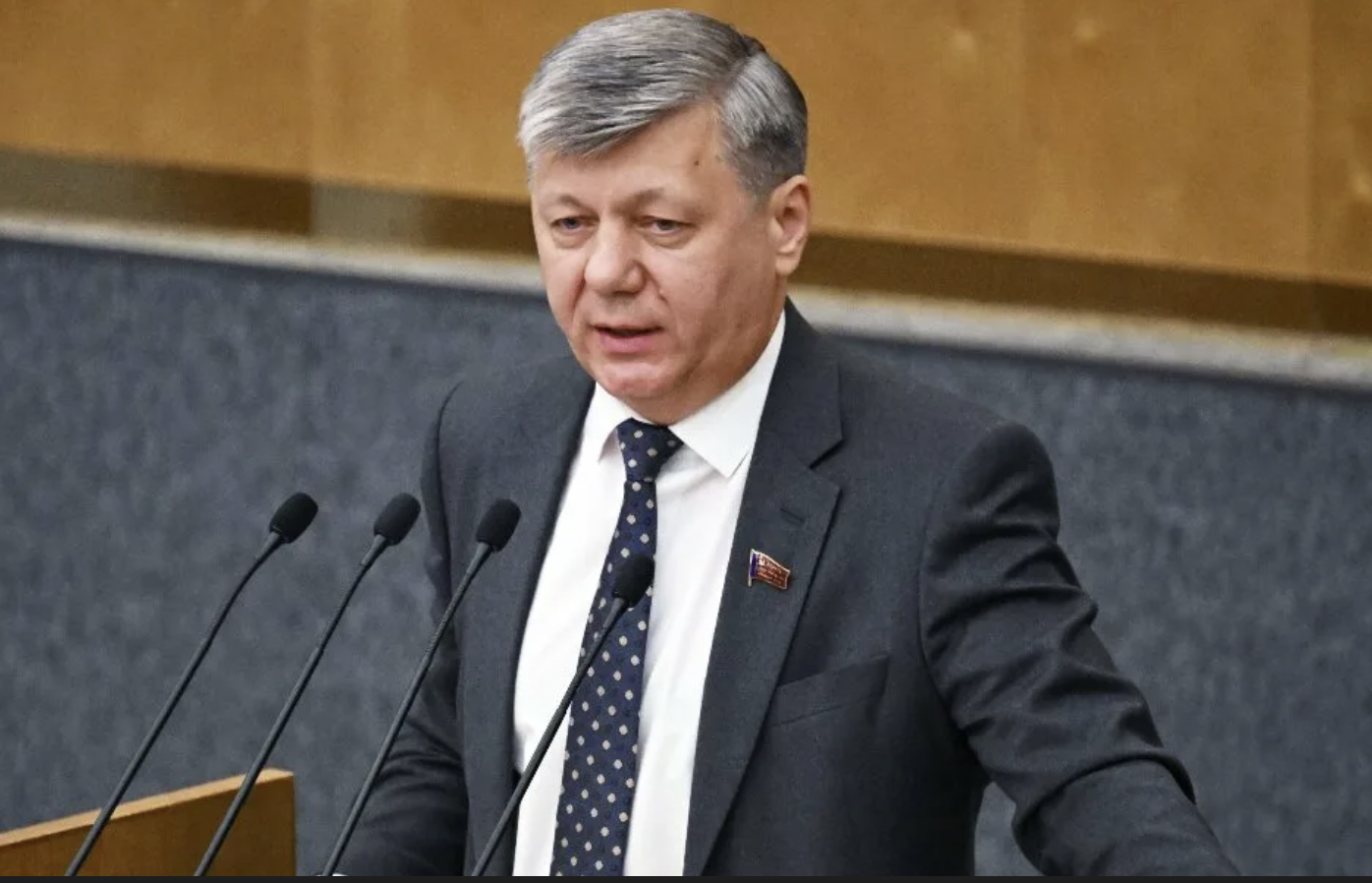
MOSCOW (Realist English). Any conflicts near Russia’s borders represent a long-term threat, not a situational gain. This was stated in an interview with Realist English by Dmitry Novikov, Deputy Chairman of the Central Committee of the Communist Party of the Russian Federation and First Deputy Chairman of the State Duma Committee on International Affairs.
According to the politician, the US is striking Venezuela and Iran and threatening Cuba in order to deprive China and Russia of their allies and then get to them themselves.
“Washington cannot act otherwise — otherwise it will lose its hegemonic position.”
Answering a question about the balance of power amid the war in Iran, Novikov stressed that communists understand Washington’s imperialist logic well.
“The US intends to deprive China and Russia of their allies. The strikes on Venezuela and Iran, the threats to Cuba — all of this is so that they can later get to us,” the deputy emphasized. “Washington is convinced that it cannot act otherwise — otherwise it will lose its hegemonic position.”
The parliamentarian noted that the CPRF actively discusses global trends in both bilateral and multilateral formats.
“Bilateral ties involve strengthening the CPRF’s relations with the communist parties of China, Cuba, Spain, Italy, and South Africa. Our foreign comrades often visit us at the Central Committee and in the CPRF faction in the State Duma,” Novikov said.
He also recalled that since the mid-1990s, Meetings of Communist and Workers’ Parties have been held annually, and the Union of Communist Parties — the UCP-CPSU — operates in the post-Soviet space, with its Council headed by Gennady Zyuganov.
Third anti-fascist forum in Moscow
Novikov announced that the third International Anti-Fascist Forum is being prepared for the end of May 2026 and will be held in Moscow.
“Special attention this time will be paid to terrorism. Alas, this phenomenon is widespread in a world dominated by imperialism,” he explained.
The first two forums were held in Minsk and Moscow, and last year an International Anti-Fascist Media Forum was held. Participants in the movement include communist, socialist, workers’, left parties and anti-fascist associations, including the Nicaraguan Sandinistas.
The “Iranian dividend”: short-term gain or long-term threat?
Commenting on the thesis of Western analysts that Moscow is receiving an “Iranian dividend” by strengthening its position in the oil market and its leverage over Europe, Novikov called for a dialectical assessment of the situation.
“Marxism is strong in dialectics — it teaches us to see any phenomenon in a system of interconnections. What brings situational gains today may turn into problems tomorrow. We must remember this when assessing the Iranian events,” he said.
According to the deputy, the US has gotten itself into a serious adventure, and Iran has proven able to resist aggression much more effectively than Washington expected.
“Energy prices have risen. This distracts Europeans from the Ukrainian issue, but even so, NATO’s support for the Kyiv regime has not gone away,” Novikov noted.
He stressed that so far, Donald Trump’s invasion has not led to the destruction of Iranian statehood, as happened with Iraq or Libya. However, if the US continues to “iron” Iran or deploys new military bases in the Middle East, this will worsen the international climate and weaken the prospects for resisting new aggression by the main empire.
“That won’t exactly strengthen BRICS and the SCO,” he added.
“The courage of the Iranians is protecting the entire world today.”
Novikov acknowledged that a situational, short-term gain from rising oil prices is possible for Russia. “If we are talking about the oligarchs trading oil, they will get their profit,” he said.
“But any aggression against our friends and allies, against supporters of a just world order, is a long-term threat for Russia. It must be assessed as a challenge. That is precisely how I view the Iranian situation.”
In conclusion, the deputy chairman of the CPRF Central Committee emphasized: “The courage of the Iranians in fighting the aggressor is protecting the entire world today.”
US naval blockade
The results of the talks in Pakistan (April 11–12), which ended without an agreement, were at the center of the diplomatic agenda. In a telephone conversation on April 12, Iranian President Masoud Pezeshkian thanked Russian President Vladimir Putin for Russia’s principled position aimed at de-escalation and for the humanitarian aid provided.
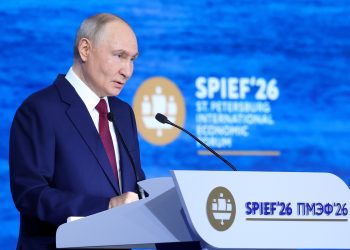
Putin, for his part, confirmed his readiness to facilitate a political-diplomatic settlement and to provide mediation efforts to establish lasting peace in the Middle East.
After the talks failed, US President Donald Trump made a sharp statement: the US Navy would begin blockading all ships entering or leaving the Strait of Hormuz starting April 13.
“Other countries are working to ensure that Iran cannot sell oil. And that will be very effective,” Trump said.
US Central Command clarified that the blockade would apply only to vessels entering or leaving Iranian ports and would not impede freedom of navigation for vessels transiting the strait to and from non-Iranian ports.
Iran’s response was immediate: the Islamic Revolutionary Guard Corps warned that any military vessels attempting to approach the strait would be considered a violation of the ceasefire and would receive a “harsh and decisive response.”
Market reaction was instantaneous: Brent oil rose 8% to $104 per barrel. JPMorgan warned that if shipping is not normalized by July, prices could again spike to a peak of nearly $120 per barrel.
Before the war, about 138 ships passed through the Strait of Hormuz daily. After the ceasefire was announced on April 8, that figure fell to 15 per day. As of April 9, 346 energy-related vessels remained trapped in the Persian Gulf.
The total number of victims of the aggression against Iran exceeded 3,636 people, according to HRANA, of which 1,701 were civilians, including at least 254 children.