Realist: news and analytics

Русский / English / العربية

  • News
  • Russia
  • Caucasus
  • Opinion
  • Interviews
  • Experts
No Result
View All Result
Realist: news and analytics
  • News
  • Russia
  • Caucasus
  • Opinion
  • Interviews
  • Experts
No Result
View All Result
Realist: news and analytics

Fears over Hormuz blockade push oil above $110 per barrel

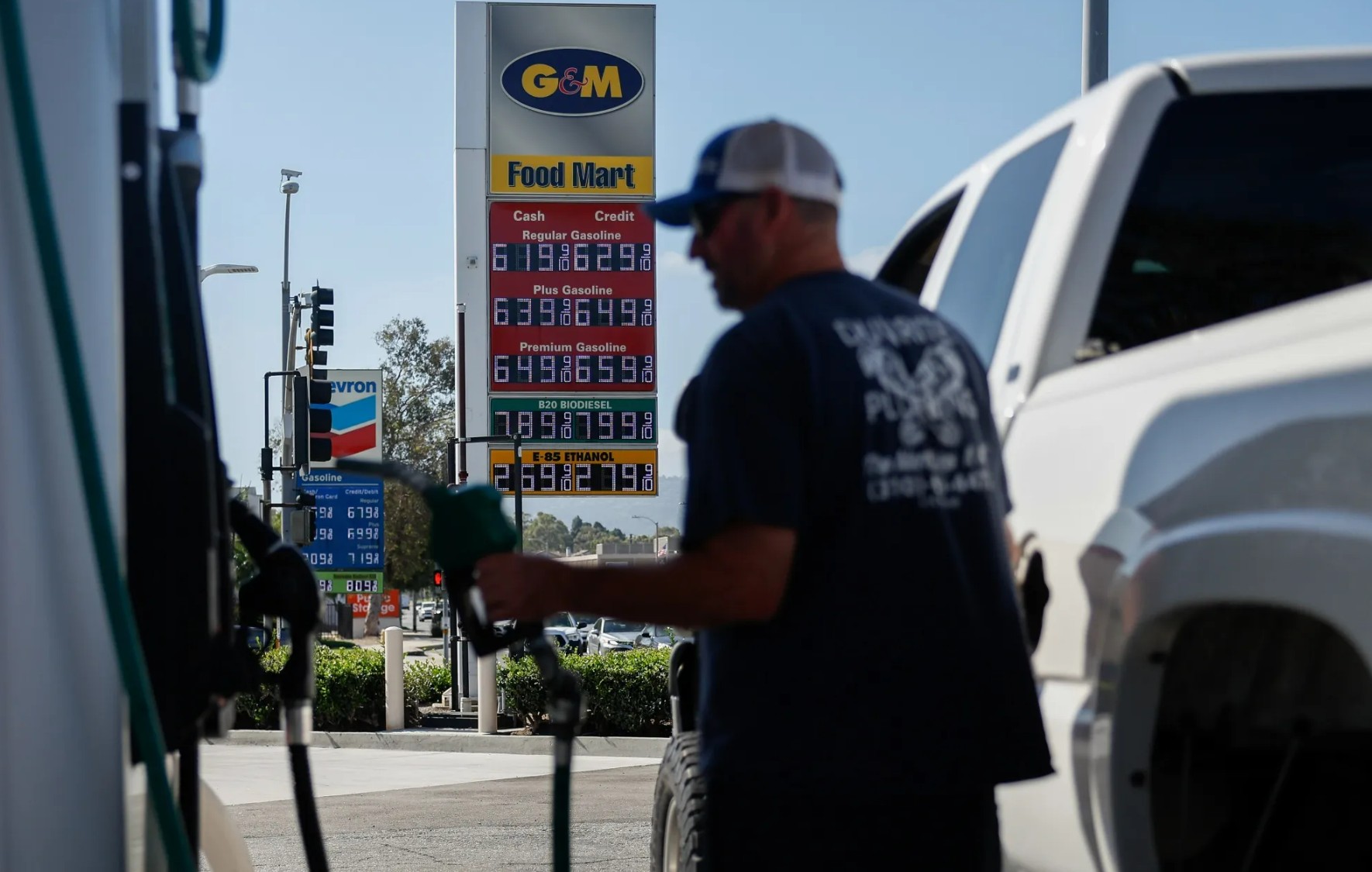
Analysts warn that a blockade could halt 1.5–1.7 million barrels per day of Iranian oil exports on top of the 10 million b/d already offline.

     
April 13, 2026, 11:55
Business & Energy
Fears over Hormuz blockade push oil above $110 per barrel

Photo: AFP

NEW YORK (Realist English). Oil market experts warn that the collapse of peace talks between the United States and Iran, combined with President Donald Trump’s announced naval blockade of the Strait of Hormuz, will drive up oil prices and worsen the global energy crisis.

Amrita Sen, founder and director of market intelligence at Energy Aspects, said that on Sunday, April 12, markets opened sharply higher.

“Until now, the US has allowed Iranian crude and product exports, and even eased sanctions so that more buyers could import these cargoes, because Washington has been so focused on keeping oil prices low. But if there is a genuine blockade, that would stop another 1.5–1.7 million barrels per day of oil exports — on top of the 10 million b/d already halted,” Sen explained.

Blockade as leverage

Trump’s announcement of a blockade of the Strait of Hormuz on April 12 appears to be an attempt to pressure the Iranian regime, which has maintained its ability to ship oil to key markets such as China even during the conflict.

Reopening the strait was a key sticking point in talks between the US and Iran aimed at turning the two‑week ceasefire (which began on April 8) into a more lasting peace. The talks ended without a deal on April 12. About one‑fifth of global oil and liquefied natural gas supplies pass through the Strait of Hormuz — one of the world’s most important energy chokepoints.

Escalation instead of peace

Analysts note that the US strategy of blockading the strait does not yet amount to a return to active combat, but it points to an escalation that will increase concerns about a worsening shortage of key petroleum products, such as jet fuel and diesel.

“Escalation tends to beget escalation,” said Kevin Book, head of research at ClearView Energy Partners. “Blocking Iranian tankers could raise prices and worsen shortages.” The plan also suggests that Trump is willing to risk a prolonged disruption to supplies despite soaring US gasoline and diesel prices.

“This shows that President Trump is willing to risk prolonged disruption going into the summer driving season in order to preserve the zero‑enrichment (of uranium in Iran) position,” noted Helima Croft, head of global commodity strategy at RBC Capital Markets.

Market expects a spike

On Friday, April 11, the oil market closed lower, with Brent posting its steepest weekly loss since August 2022 thanks to optimism that peace talks might lead to a deal. Brent futures fell nearly 1% to $95.20 a barrel, while WTI dropped 1.3% to $96.57 a barrel.

However, Jorge León, an analyst at Rystad Energy, said he expected prices to jump back above $110 a barrel when trading resumed on the evening of April 12. “What matters is that the chances of a durable ceasefire have plummeted,” he said.

Bob McNally, founder of Rapidan Energy Group and a former White House energy adviser, said the big question now is whether Iran and its allies will retaliate against critical energy infrastructure in the region.

The weekend of April 11–12 buried hopes for a diplomatic resolution to the Iranian conflict. Asian trading on April 13 opened with a massive rally in commodity markets. Brent crude futures jumped 8.36% to $103.16 a barrel, while US WTI soared 8.22% to $104.57 a barrel. Some exchange data showed WTI above $105 and Brent above $102, and by 9 a.m. Moscow time, Brent was up more than 8%. This is a reversal — exactly one week ago, on April 8, markets rejoiced when oil plunged below $95 after the ceasefire was announced. Now the fragile two‑week ceasefire is effectively hanging in the air.

The European gas market reacted even more violently to the escalation than the oil market. On the morning of April 13, the Dutch TTF (Title Transfer Facility) hub soared 18% to €51.30 per megawatt‑hour. This happened on the very first day of an extended trading session from 10 to 21 hours, which increased the market’s vulnerability to geopolitical shocks.

The main reason for the fear is the effective halt of LNG supplies through the Strait of Hormuz. At the end of February, Iran de facto blocked the passage of Qatari LNG tankers, and LNG shipments through the strait have not resumed for more than a month. Global market losses are estimated at about 20% of LNG supplies.

Analysts at ANZ Bank warn that the blockade not only restricts exports from the Persian Gulf but also exacerbates the overall supply deficit. OPEC+ plans to increase production by 206,000 barrels per day from May, but that is not enough to compensate for the volumes lost.

Gas MarketGas PricesIran WarOil MarketOil PricesTransport And CommunicationsWorld Economy
Previous Post

“The courage of the Iranians is protecting the entire world today”: Dmitry Novikov on the war in the Middle East, the “Iranian dividend” and threats to Russia

Next Post

Germany, Poland, France and Britain: who will replace America in Europe

Related Posts

Why Trump is threatening to blockade a strait that Iran is already blockading
Business & Energy

Why Trump is threatening to blockade a strait that Iran is already blockading

13 April, 2026
“Ceasefire is temporary and conditional”: why reopening the Strait of Hormuz won’t solve shipping woes and high oil prices
Business & Energy

“Ceasefire is temporary and conditional”: why reopening the Strait of Hormuz won’t solve shipping woes and high oil prices

12 April, 2026
US gasoline prices jumped 21.2% in a month — biggest spike since 1967
Business & Energy

US gasoline prices jumped 21.2% in a month — biggest spike since 1967

11 April, 2026
Iran war has exposed the weakness of the dollar: America’s weapon is cracking
Business & Energy

Iran war has exposed the weakness of the dollar: America’s weapon is cracking

9 April, 2026
Central bank sold $20 billion in gold: Turkey crashed the precious metals market, prices post biggest drop since 2008
Business & Energy

Central bank sold $20 billion in gold: Turkey crashed the precious metals market

8 April, 2026
Easter unites millions as Armenian, Catholic and Protestant churches celebrate together
Business & Energy

Chinese semiconductor firms surge on AI boom and export restrictions

5 April, 2026
Most Popular
Most Popular
Dmitry Novikov on his path to politics, the intelligentsia, the left movement, and why US aggression against Iran is a threat to Russia

Dmitry Novikov on his path to politics, the intelligentsia, the left movement, and why US aggression against Iran is a threat to Russia

12 April, 2026

MOSCOW (Realist English). Dmitry Novikov, Deputy Chairman of the CPRF Central Committee and First Deputy Chairman of the State Duma...

“We Are Witnessing the Messianic Footsteps”: Avigdor Eskin on Israel’s War with Iran

“We Are Witnessing the Messianic Footsteps”: Avigdor Eskin on Israel’s War with Iran

11 April, 2026

JERUSALEM (Realist English). Israeli public figure and publicist Avigdor Eskin argues that we live in an era of “incredible acceleration,” when...

“Israel is not fighting the Iranian people, but the regime”: Alexander Tsinker on the goals of the operation against Iran

“Israel is not fighting the Iranian people, but the regime”: Alexander Tsinker on the goals of the operation against Iran

9 April, 2026

TEL AVIV (Realist English). The war in the Middle East, which began with US-Israeli strikes on Iran, has entered its fifth...

“Armenians are the autochthonous people of the South Caucasus”: geneticist Levon Yepiskoposyan on the Armenian gene pool and its neighbors

“Armenians are the autochthonous people of the South Caucasus”: geneticist Levon Yepiskoposyan on the Armenian gene pool and its neighbors

8 April, 2026

YEREVAN (Realist English). Levon Yepiskoposyan – Doctor of Biological Sciences, head of the Laboratory of Evolutionary Genomics at the Institute of...

Opinion

Germany, Poland, France and Britain: who will replace America in Europe

Germany, Poland, France and Britain: who will replace America in Europe

13 April, 2026

NEW YORK (Realist English). Analysts Ethan Kapstein and Jonathan Caverley argue in an article for the American analytical journal Foreign Affairs...

Sumerian and Armenian are the same language: Sumerologist Armen Davtyan

Sumerian and Armenian are the same language: Sumerologist Armen Davtyan

12 April, 2026

YEREVAN (Realist English). Armen Davtyan — a renowned Armenian linguist, Sumerologist and poet. He is the author of the “Armenian-Sumerian Dictionary”...

New economic course of Abkhazia and South Ossetia: forums as drivers of development and investment attraction

New economic course of Abkhazia and South Ossetia: forums as drivers of development and investment attraction

11 April, 2026

MOSCOW (Realist English). Political scientist Maxim Vaskov is an expert who for many years has personally participated in establishing and strengthening...

China’s Game of Go without rules: How the Celestial Empire “strangles in its embrace” the countries of Latin America and expands its influence in Russia

China’s Game of Go without rules: How the Celestial Empire “strangles in its embrace” the countries of Latin America and expands its influence in Russia

10 April, 2026

MOSCOW (Realist English). Doctor of Political Sciences, State Counselor of the Russian Federation First Class Tatiana Poloskova, in an authorial...

All rights reserved.

© 2017-2026

  • About Us
  • Mission and Values
  • Contact Us
  • Privacy Policy

Follow Realist English

No Result
View All Result
  • News
  • Russia
  • Caucasus
  • Opinion
  • Interviews
  • Experts

Русский / English / العربية