Realist: news and analytics

Русский / English / العربية

  • News
  • Russia
  • Caucasus
  • Opinion
  • Interviews
  • Experts
No Result
View All Result
Realist: news and analytics
  • News
  • Russia
  • Caucasus
  • Opinion
  • Interviews
  • Experts
No Result
View All Result
Realist: news and analytics

Why Trump is threatening to blockade a strait that Iran is already blockading

CNN analysts note the paradox: Trump demands Iran immediately reopen the strait, but at the same time threatens to blockade it. His goal is to cut off Tehran’s main source of revenue, as Iran continues to export oil while charging up to $2 million per tanker for passage.

     
April 13, 2026, 10:17
Business & Energy
Why Trump is threatening to blockade a strait that Iran is already blockading

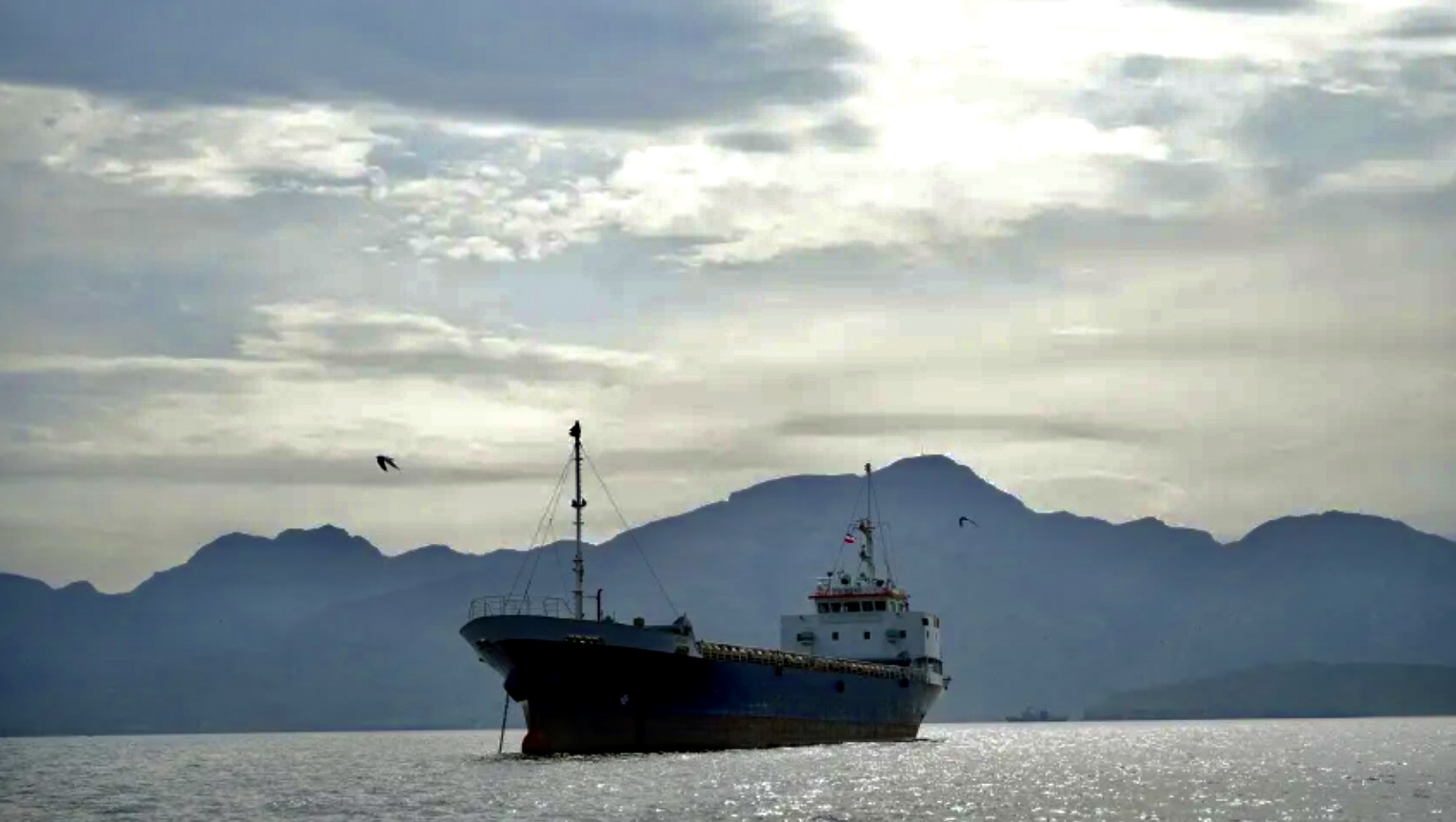
A vessel at the Strait of Hormuz, off the coast of Oman’s Musandam province, April 12, 2026. Photo: Reuters

WASHINGTON (Realist English). US President Donald Trump made another sharp statement on the situation in the Strait of Hormuz on Sunday, April 12.

“Effective immediately, the United States Navy, the Finest in the World, will begin the process of blockading any and all Ships trying to enter, or leave, the Strait of Hormuz,” he wrote on his Truth Social platform.

At the same time, he added that at some point a regime will be reached where “everyone is allowed to go in and everyone is allowed to go out,” but so far Iran has not allowed that.

The blockade paradox: why close what needs to be opened? 

At first glance, Trump’s threat to blockade the strait contradicts his repeated demands that Iran open this waterway.

However, as CNN analysts explain, the strait is not technically completely closed. Iran has been gradually allowing some tankers through, charging up to $2 million per vessel. Most importantly, Iran continues to export its own oil. According to data from analytics firm Kpler, an average of 1.85 million barrels of Iranian crude oil passed through the strait daily — 100,000 barrels more than in the previous three months.

Thus, by blockading the strait, Trump could cut off a key source of financing for the Iranian government and military operations. However, this is a lever the administration has been unwilling to pull: a blockade — even of Iranian oil — would inevitably trigger a new surge in global oil prices.

Prices spike, blockade begins April 13

Trump told reporters on the evening of April 12 that he had ordered the military to begin the blockade at 10:00 a.m. Eastern Time on April 13. The idea is to strangle Iran’s oil revenues and collapse its economy, as well as to thwart Tehran’s plans to charge fees for safe passage.

Market reaction was immediate. The price of Brent crude rose 8% to $104 per barrel. This is a test of Trump’s resolve, as Americans are already unhappy with high gasoline prices (the average price has exceeded $4 per gallon), and inflation jumped to 3.3% in March from 2.4% in February.

How the blockade will work and who will be affected

US Central Command (CENTCOM) clarified on April 12 that the blockade would apply only to vessels entering or leaving Iranian ports. “CENTCOM forces will not impede freedom of navigation for vessels transiting the Strait of Hormuz to and from non-Iranian ports,” it said in a post on X. However, experts warn of risks.

Talks fail and deadlock 

The blockade threat followed marathon talks in Islamabad on April 11–12 that ended without result. Vice President JD Vance said the US had offered its “best and final” proposal, including: Iran’s renunciation of uranium enrichment and dismantling of nuclear facilities; removal of more than 400 kg of highly enriched uranium; an end to funding for Hamas, Hezbollah and the Houthis; and opening the strait for toll-free navigation.

Iran refused, leaving Trump with a limited set of “unattractive options.”

Resuming massive bombing (including threats to strike power plants and bridges) could lead to civilian casualties and Iranian retaliation. The blockade is an attempt to gain leverage without risking US soldiers’ lives in a ground operation.

Doubts about effectiveness 

Trump’s critics doubt the logic of the blockade. Democratic Senator Mark Warner told CNN on April 12: “I don’t understand how blockading the strait is going to somehow push the Iranians into opening it. I don’t get the connection there.”

Former US Ambassador to the UN Nikki Haley, by contrast, supported the president: “If we did not do anything to stop them, not only would they have leverage; they would have even more money than they had before to funnel money to their proxies, even more money to buy supplies for ballistic missiles and continue their nuclear production.”

What next? Trump finds himself in a situation where the war he hoped would be quick and decisive is dragging on. Economic damage is growing, and the president’s approval ratings are falling. The blockade is his latest attempt to disprove the axiom that it is easy for presidents to start foreign wars but hard to end them. Even if it works, the price will be high, reflecting many consequences Trump failed to foresee.

Donald TrumpIran WarOil MarketOil PricesTransport And CommunicationsUS Foreign PolicyUS-Iran Relations
Previous Post

Roman Gofman: from tank crewman to Mossad chief

Next Post

“The courage of the Iranians is protecting the entire world today”: Dmitry Novikov on the war in the Middle East, the “Iranian dividend” and threats to Russia

Related Posts

Iran stores 42 million barrels on ageing tankers in the Gulf
Business & Energy

Iran stores 42 million barrels on ageing tankers in the Gulf

19 May, 2026
Trump’s war with Iran cost Americans $40 billion in fuel – more than repairing all of America’s bridges
Business & Energy

Trump’s war with Iran cost Americans $40 billion in fuel – more than repairing all of America’s bridges

18 May, 2026
Coal prices hold above $133 amid Hormuz crisis
Business & Energy

Coal prices hold above $133 amid Hormuz crisis

17 May, 2026
$1 trillion a year by 2035: NATO pressures Europe to pay
Business & Energy

$1 trillion a year by 2035: NATO pressures Europe to pay

16 May, 2026
Rosatom dictates prices, China builds 29 reactors, the West scrambles to catch up
Business & Energy

Rosatom dictates prices, China builds 29 reactors, the West scrambles to catch up

15 May, 2026
Oil Market Freezes Awaiting Outcome of Trump–Xi Summit
Business & Energy

Oil Market Freezes Awaiting Outcome of Trump–Xi Summit

14 May, 2026
Most Popular
Most Popular
“Restrictions Alone Are Not Enough — Children Need to Be Engaged”: Paata Amonashvili on Meaningful Alternatives to Gadgets

“Restrictions Alone Are Not Enough — Children Need to Be Engaged”: Paata Amonashvili on Meaningful Alternatives to Gadgets

18 May, 2026

TBILISI (Realist English). Restrictions alone are not enough to overcome children’s dependence on gadgets — children must be offered meaningful...

US and Iran fail to reach Hormuz deal as Trump threatens new strikes

US and Iran fail to reach Hormuz deal as Trump threatens new strikes

18 May, 2026

WASHINGTON (Realist English). The United States and Iran remain far from reaching an agreement to end the war and reopen...

Israel prepares for new war with Iran – from bombing to commando landings

Israel prepares for new war with Iran – from bombing to commando landings

17 May, 2026

TEL AVIV (Realist English). With US‑Iran talks deadlocked, the Israeli leadership has stepped up preparations for a resumption of full‑scale hostilities....

Raúl Castro remains Cuba’s “shadow king”

Raúl Castro remains Cuba’s “shadow king”

17 May, 2026

HAVANA (Realist English). From the very moment in April 2021 when legendary General Raúl Castro, brother of the great Fidel, handed...

Opinion

Replacing Baathists with Islamists: why Kurds and other minorities in Syria have not seen equality

Replacing Baathists with Islamists: why Kurds and other minorities in Syria have not seen equality

19 May, 2026

HASAKAH (Realist English). The overthrow of Bashar al‑Assad and the rise to power in Damascus of radical Islamist groups has not...

Russia seeks its place in China’s new transport corridor

Russia seeks its place in China’s new transport corridor

17 May, 2026

MOSCOW (Realist English). Ahead of Russian President Vladimir Putin’s official visit to Beijing, experts are increasingly discussing the hidden contradictions...

From Hormuz to Solar Panels: How Iran Accelerated the Global Shift to Renewables

From Hormuz to Solar Panels: How Iran Accelerated the Global Shift to Renewables

16 May, 2026

WASHINGTON (Realist English). An analytical article by Benjamin Bradlow, professor of sociology and international affairs at Princeton University, published in...

China No Longer Seeks U.S. Approval

China No Longer Seeks U.S. Approval

15 May, 2026

BEIJING (Realist English). U.S. President Donald Trump’s visit to China on May 14–15 passed with surprising calm and almost none...

All rights reserved.

© 2017-2026

  • About Us
  • Mission and Values
  • Contact Us
  • Privacy Policy

Follow Realist English

No Result
View All Result
  • News
  • Russia
  • Caucasus
  • Opinion
  • Interviews
  • Experts

Русский / English / العربية