


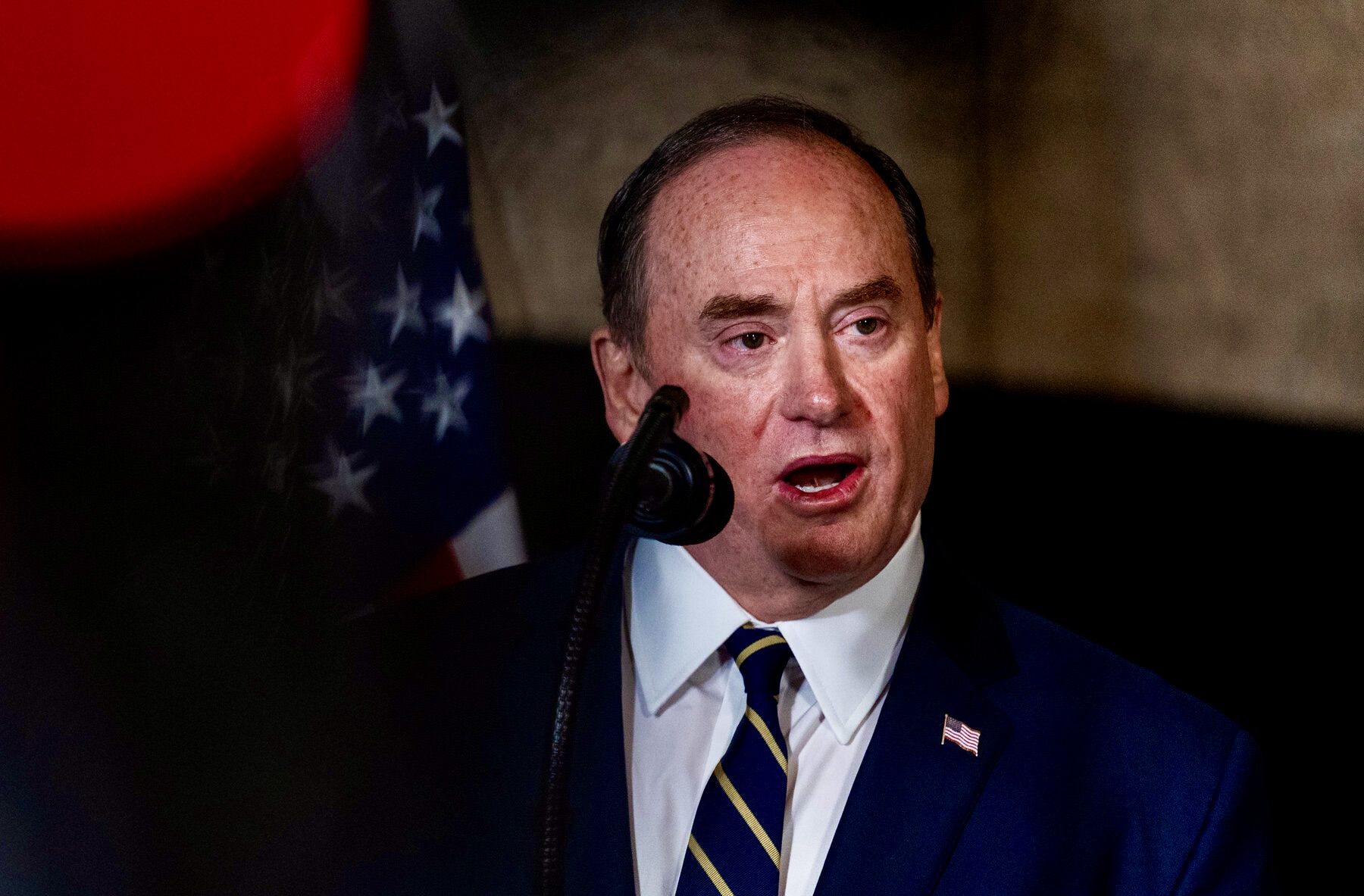
WASHINGTON (Realist English). US Navy Secretary John Phelan was fired on April 22 as turmoil gripped the Pentagon in the midst of the blockade of the Strait of Hormuz and the full‑scale war against Iran.
Phelan’s abrupt departure from his post was announced by Pentagon spokesman Sean Parnell in a short statement on X, offering no explanation. “Secretary of the Navy John C. Phelan is departing the administration, effective immediately,” Parnell wrote.
Phelan’s ousting comes as President Donald Trump’s Defence Secretary Pete Hegseth has sought to remove a series of Pentagon leaders seen to be at odds with the administration. A senior administration official said on April 22: “President Trump and Secretary Hegseth agreed new leadership at the Navy is needed. Secretary Hegseth informed John Phelan of this news prior to it being made public.”
Conflict over shipbuilding and personnel
As the top civilian official for the US Navy, reporting to Hegseth, Phelan had led an effort to rebuild America’s military shipbuilding capacity and establish a “Golden Fleet” for the US. However, a person familiar with the matter said there had been tensions with the top civilian leaders at the Pentagon, including Hegseth, over the shipbuilding programme as well as nominations and promotions of military officers.
Firing in the midst of the Iran blockade
His exit comes in the middle of one of the most consequential missions for US naval forces in decades: the blockade of vessels transiting in and out of Iranian ports through the Strait of Hormuz. There are 21 US warships in the region, with seven more on the way. More than a dozen of them are involved in the American naval blockade of Iranian ports.
Pentagon personnel shake‑ups
Phelan’s departure is the latest episode in Hegseth’s efforts to shake up the Pentagon, which began at the start of Trump’s second term and has become a defining feature of his tenure. Leadership changes and internal tensions have continued even as the US military embarked on increasingly aggressive military campaigns – from the Iran war launched in late February, to the raid on Venezuela in January, and continued strikes against alleged drug boats.
Earlier this month, Hegseth forced the departure of Army Chief of Staff Randy George as Trump was deploying thousands of soldiers to the Middle East for the Iran war and preparing for the possible use of ground forces in the country. Tensions between Hegseth and Army Secretary Dan Driscoll have increasingly spilled into the public arena.
Phelan, a financier and political donor from Palm Beach, Florida, will be replaced on an acting basis by Hung Cao, the Under‑Secretary of the Navy. The White House did not immediately respond to a request for comment.
Hung Cao is a Navy veteran and a refugee from Vietnam who rose from enlisted sailor to senior official.
Reason for the conflict
According to information leaked to the media, the conflict was caused by Phelan’s inability to accelerate the shipbuilding programme, as well as his management style, which did not suit Defence Secretary Hegseth and his deputy Stephen Feinberg. One source described him as “incompetent and arrogant.”
It was noted that Phelan, using his personal connections with Donald Trump, had direct contact with him and even presented ideas for shipbuilding, bypassing Defence Secretary Hegseth, which was seen as a violation of the chain of command. An Axios source said Phelan “didn’t understand that he is not the boss. His job is to take orders.”
Phelan also had tense relations with his deputy, Hung Cao, a special operations veteran.
Phelan was a typical Trump administration appointee: a wealthy businessman and political donor whose success in the private sector, in the president’s view, was meant to compensate for his lack of military experience. However, his inability to establish working relationships with key Pentagon figures and to implement priority tasks ultimately led to his resignation in the midst of the US military operation against Iran.
His main project was the promotion of the “Golden Fleet” initiative, which envisaged massive investments in new ships, including the creation of a new class of battleships named the “Trump‑class” after the president. However, the implementation of this programme encountered difficulties, and later Phelan began to have some of his authority over its management stripped away.