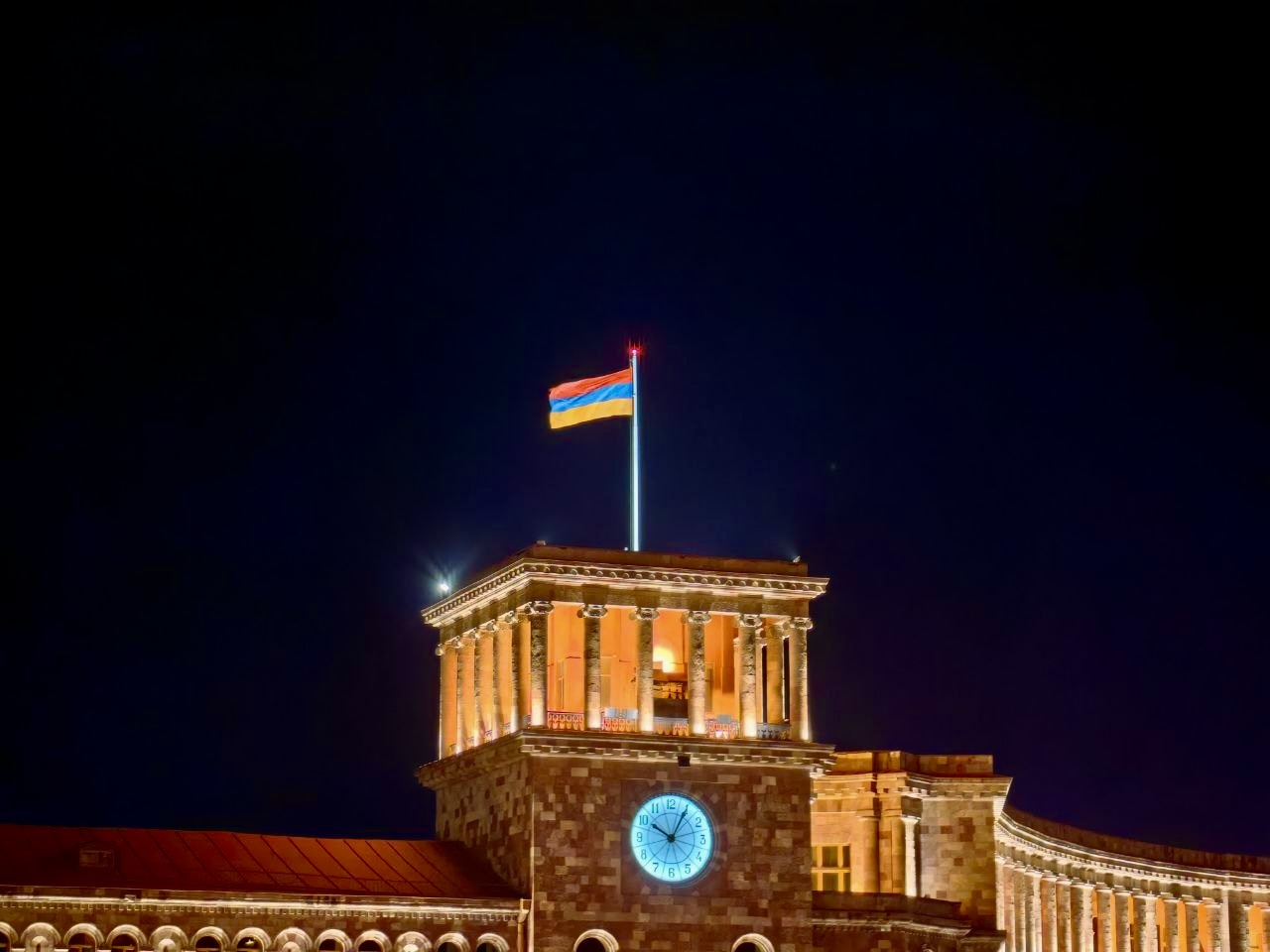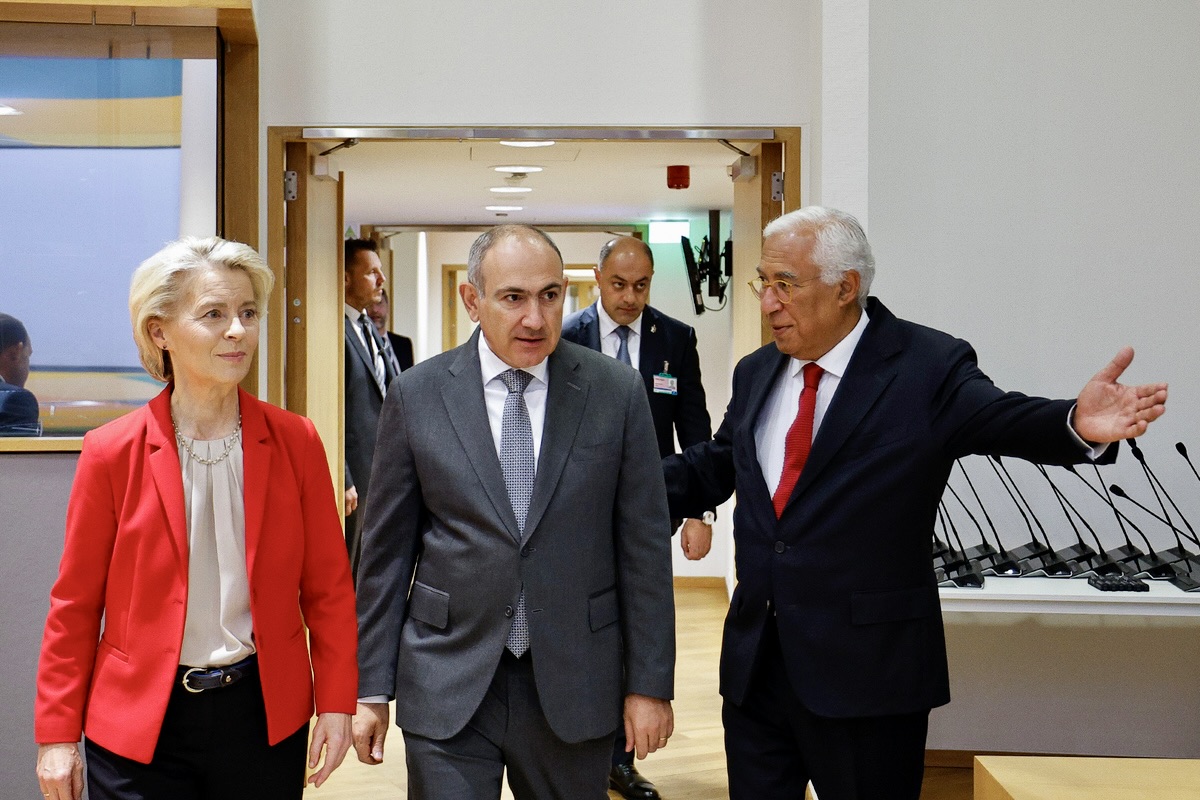
YEREVAN (Realist English). On July 2, Armenian Prime Minister Nikol Pashinyan, at a joint briefing with European Commission President Ursula von der Leyen, stated that he completely rules out Armenia abandoning its European course.
“I will answer clearly and unequivocally: I rule out a situation like in 2013, when Armenia changed its decision overnight, abandoning the already agreed process of signing an association agreement with the EU,” he said.
At the same time, Pashinyan assured that Yerevan does not intend to create a crisis in relations with Moscow.
“We have never set, do not set and will not set the goal of creating a crisis in relations between Armenia and the Russian Federation. We are acting in the interests of our country.”
These two statements, made on the same day, reflect the crux of Armenia’s dilemma: Yerevan has firmly set course for the West, but is unable to sever the economic and energy ties with Russia on which the republic’s survival directly depends.
European Choice: The Process Has Been Launched and Is Irreversible
In 2025, the Armenian parliament adopted the law “On the Beginning of the Process of the Republic of Armenia’s Accession to the European Union.” In May 2026, Yerevan signed joint declarations with the EU containing a list of specific steps aimed at rapprochement with the bloc.
Pashinyan called the European Union “one of Armenia’s most reliable partners.” According to him, Armenia will continue the path of democratic reforms “with the support of our European partners, because the European Union is our main partner in implementing democratic reforms.”
At the same time, the Armenian prime minister realistically assesses the prospects for membership. He acknowledged that the country does not yet meet the necessary criteria for EU accession and noted that two scenarios are possible: “First, the European Union will accept Armenia as a full member. Second, it will not accept it, since this depends on many political circumstances.” However, in his words, “in both cases, Armenia will win,” since even without membership it will have a state that meets European standards.
Von der Leyen, who visited Yerevan on July 2, confirmed Brussels’ support. The EU announced a €50 million aid package to help Armenia weather the consequences of Russian economic restrictions. She called Russia’s actions “economic coercion.” The EU also intends to help Armenia diversify its energy supplies — a team of EU experts will arrive in the country next week.
Moscow Demands an Immediate Choice
Moscow’s reaction to Armenia’s European turn was immediate and harsh. On May 29, the leaders of Belarus, Kazakhstan, Kyrgyzstan and Russia issued a joint statement clearly stating that Yerevan’s course towards rapprochement with the EU “carries significant risks to the economic security of EAEU member states.”
Russian Foreign Ministry Spokeswoman Maria Zakharova stated that Armenia needs to answer the question of strategic choice between the EAEU and the EU as soon as possible. She stressed that Yerevan’s behaviour cannot be called conscientious membership in the EAEU, and Armenia’s participation in the union is “merely a temporary measure to prepare the ground for joining the European bloc.”
The Kremlin also made it clear that it does not intend to tolerate double-dealing. Russian Presidential Press Secretary Dmitry Peskov stated that the Armenian leadership is “artificially trying to put the country before a choice — Europe or the Eurasian Economic Union.” At the same time, he expressed hope that Yerevan would ultimately choose the EAEU, since this integration is “significantly more beneficial” than potential EU membership.
As Russian Foreign Minister Sergei Lavrov noted, “Armenia has already adopted a law on joining the EU, so the question is already on the table.”
Economic Reality: Russian Gas and Markets
The main reason Armenia cannot simply sever relations with Russia is economic dependence. Alexander Krylov, an expert at IMEMO RAS, warned that a radical revision of relations with Russia could turn Armenia into an “economic disaster zone.”
Russia supplies Armenia with gas at $177.5 per thousand cubic metres, while the market price in Europe exceeds $600. If Moscow revises the 2013 energy agreement and raises prices to European levels, it would deal a “painful blow to the Armenian population.” Russian President Vladimir Putin has already warned that if Armenia leaves the EAEU, the republic could lose up to 14% of its GDP due to higher energy prices.
Russia has also imposed restrictions on the import of a wide range of Armenian goods — fruits, vegetables, flowers and beverages. These measures have affected almost all Armenian fresh fruits, vegetables and plants previously exported to Russia, as well as more than 90% of beverage and alcohol exports.
Less than 8% of Armenian exports go to Europe, while more than 35% go to Russia. As The Irish Times notes, “now that Russia is effectively closed, Armenia must find other markets for its exports.” However, protected European markets remain difficult to access, even though Armenian producers increasingly meet international quality standards.
CSTO: Freeze Instead of Withdrawal
The economic dimension is complemented by the military-political one. Armenia has effectively frozen its participation in the Collective Security Treaty Organisation (CSTO). In July 2025, Pashinyan stated that withdrawal from the organisation was “more likely than return.”
The reason was Russia’s non‑intervention in the Nagorno‑Karabakh conflict. Moscow, which had acted as guarantor of the peace agreement that ended the 44‑day war with Azerbaijan, refused direct intervention. This dealt a serious blow to Yerevan’s trust in the Kremlin’s alliance commitments.
Strategic Crossroads: ‘Theoretical Choice’ vs Reality
Pashinyan is trying to maintain a balance. On the one hand, he declares the irreversibility of the European course and rules out a repeat of the 2013 scenario. On the other hand, he stresses that Armenia “does not raise the issue of withdrawal from the EAEU” and will continue to work within the union as long as a combination of directions is possible.
However, Moscow is leaving Yerevan no room for manoeuvre. In December 2026, at a meeting of the Supreme Eurasian Economic Council, a report will be presented on the possible consequences of suspending the EAEU Treaty with respect to Armenia. The leaders of the four EAEU countries have also called for an early referendum in Armenia on the choice between the EU and the EAEU.
Pashinyan, for his part, believes that holding a referendum at this stage would be inappropriate, since “this choice remains theoretical.” He explained: “Until the moment when Armenia either officially submits an application for EU membership or is very close to obtaining candidate status, holding any referendum would be unjustified.”
Armenia finds itself in a classic small‑country trap between two centres of power. Its leadership has made a strategic choice in favour of Europe, but the economy remains deeply integrated into Russian structures — from gas supplies to sales markets.
Moscow, for its part, does not intend to tolerate “unconscientious membership” indefinitely and demands a clear answer. This answer, which Yerevan is postponing, will ultimately determine not only Armenia’s foreign policy course but also its very existence as a sovereign state.