ANKARA (Realist English). NATO’s Western allies, ahead of the summit in Ankara on July 7–8, are refraining from publicly criticising Turkey, turning a blind eye to systemic democratic backsliding, repression of the opposition and independent media.
In the five years since the 2021 diplomatic crisis, when 10 Western ambassadors called for the release of political prisoner Osman Kavala, the West has radically changed course.
Instead of criticism — the strengthening of security and defence cooperation with a regional military power and major arms exporter.
Western Silence: Security Over Democracy
At the upcoming NATO summit, leaders of the 32 member states do not plan to discuss the unprecedented judicial persecution of the main opposition Republican People’s Party (CHP), including the arrest of its presidential candidate, Istanbul Mayor Ekrem İmamoğlu.
Critics of Erdoğan believe that Western silence encourages Turkey’s authoritarian drift, isolates the opposition and ignores NATO’s fundamental principles — democracy and the rule of law.
Former US Ambassador to Ankara David Satterfield warned: “It remains important for the West to continue to comment on the degradation of democratic institutions in Turkey, because the course has not yet been irreversibly set.” However, the Trump administration avoids discussing democratic values, and the EU has focused on strategic partnership.
Experts note: for Trump, this is “natural” — he does not care about human rights globally — but now “Europeans are also seeking functional relations with Turkey, wanting to ignore human rights as an obstacle.”
Repression Ahead of the Summit: Over 200 Detained and Accreditation Denied
In the run‑up to the summit, Turkish authorities carried out mass arrests. Turkish police detained 225 people, including academics, teachers and activists.
Among them is a 79-year-old environmental activist. Public gatherings, press conferences and poster displays have been banned in Ankara, and 40,000 police have been deployed to the capital.
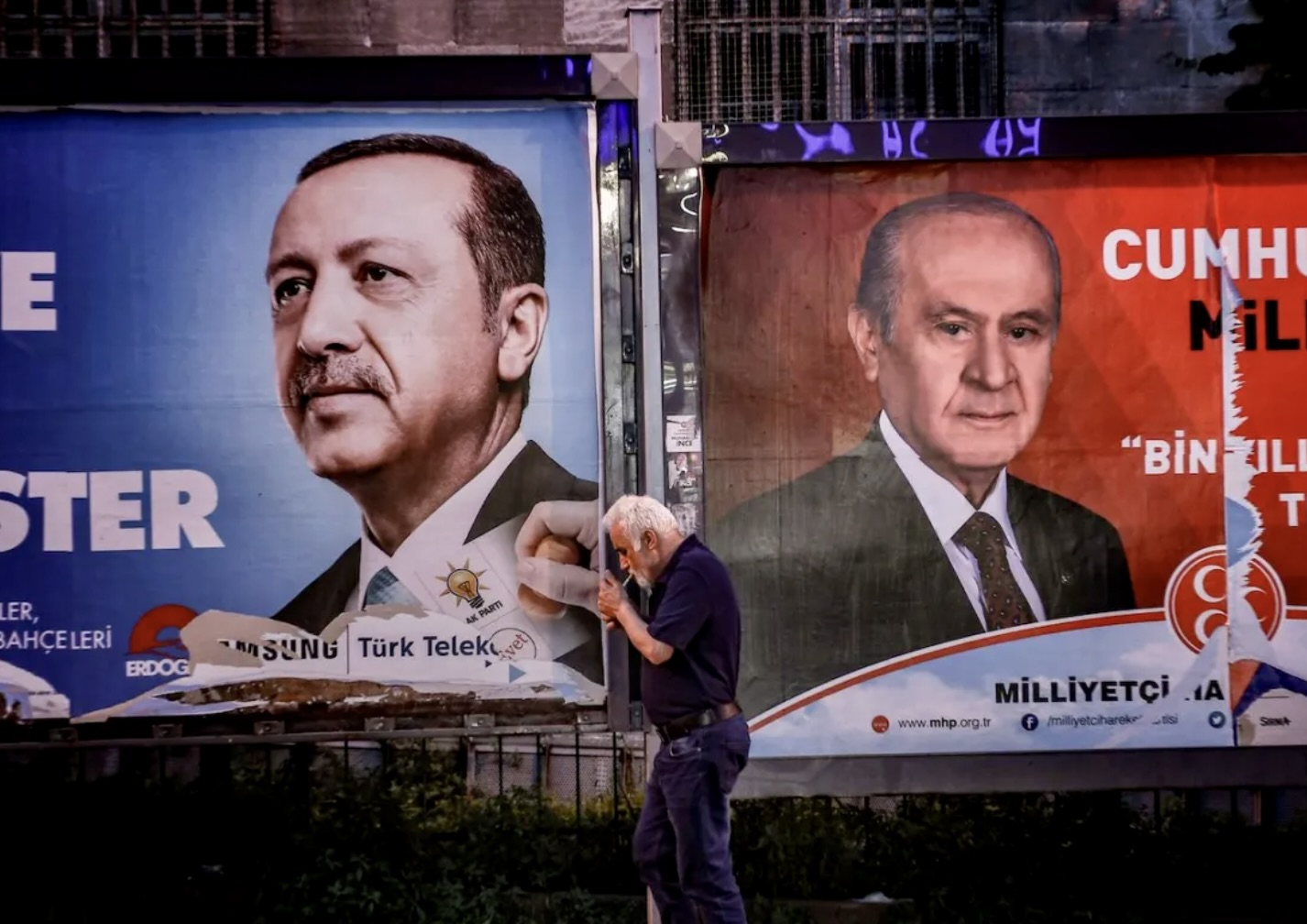
At the same time, dozens of independent Turkish journalists from opposition media outlets (including Cumhuriyet, Sözcü, BirGün, ANKA, T24, Medyascope and Halk TV) were denied accreditation for the summit. NATO said it “relies on the host country in assessing journalists,” but human rights groups accuse the alliance of evading responsibility.
The International Press Institute (IPI), together with 14 human rights organisations, called on NATO to review the accreditations.
One NATO diplomat acknowledged: “The summit should not be used as a pretext for repression,” adding that the alliance is “closely monitoring these events.”
Constitutional Reform: The Path to ‘Super-Presidency’
A parliamentary committee has approved a constitutional reform of 21 articles that would transform the largely ceremonial presidency into a post with full executive authority. Opponents fear this will lead to one‑man rule.
Earlier, Erdoğan cited Hitler’s Germany to defend his plan to expand presidential powers, aiming to create a “super‑presidency” modelled on the United States.
The proposed changes also abolish the post of prime minister, lower the age limit for parliamentary candidates from 25 to 18 and increase the number of deputies from 550 to 600.
Opposition: ‘Europe Sacrifices Democracy for Security’
The main opposition CHP has stated that the West “is not responding to the repression” and is effectively sacrificing democracy for security. Former CHP deputy chairman İlhan Uzgel called for diplomatic isolation of Erdoğan: “Erdoğan needs to be told that he is destroying democracy.”
In May 2026, an Ankara appellate court annulled the CHP’s 2023 congress, at which Özgür Özel was elected leader, reinstating the previous leadership. The opposition calls this an attempt to neutralise the country’s largest opposition party.
Ankara Mayor Mansur Yavaş stated that this decision is aimed at “destroying” the CHP.
Western allies find themselves in a dilemma. On the one hand, Turkey is a key NATO partner with the alliance’s second‑largest army, playing a strategic role in deterring Russia, managing migration and regional security. On the other hand, systemic democratic backsliding, repression of the opposition and the press are causing growing concern.
As European Parliament member Nacho Sánchez Amor summed it up: “When an authoritarian government hosts a summit, you get arbitrary media accreditation decisions and more than 200 detained in some ‘preventive’ operation.”
The question is whether NATO can remain “an alliance based on shared democratic values” if it systematically turns a blind eye to their violation.