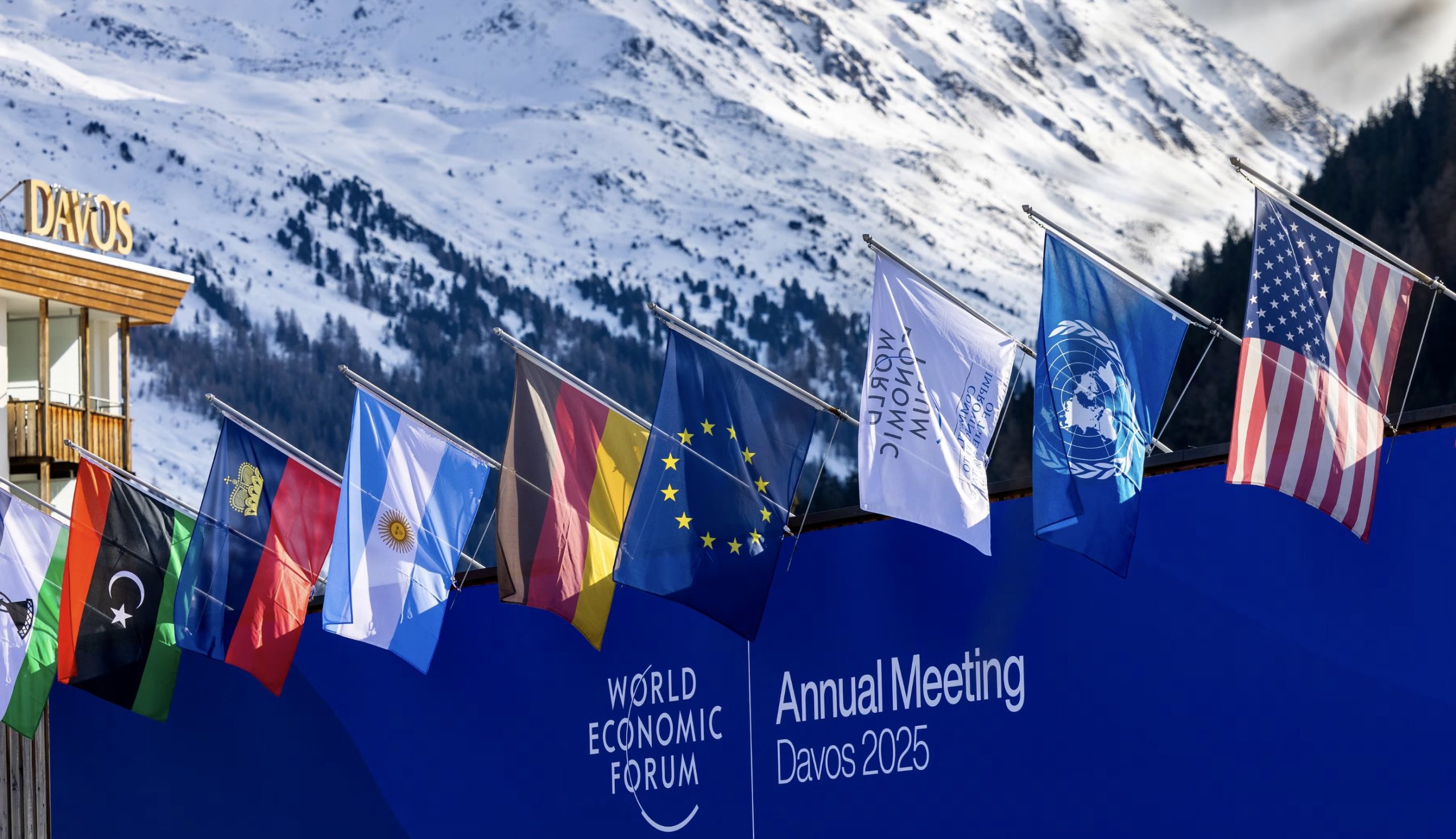
DAVOS (Realist English). Behind closed doors at the World Economic Forum (WEF) headquarters, a sharp conflict has erupted between the organisation’s founder, Klaus Schwab, and its current leadership.
The dispute concerns the future governance of the forum and its mission. Schwab, 88, who was forced out in 2025 amid investigations, is trying to retain control over the organisation he built over decades.
Meanwhile, the acting co‑chairs of the Board of Trustees — BlackRock CEO Larry Fink and Roche Vice‑Chairman André Hoffmann — are pushing reforms that Schwab calls “Americanisation” and the transformation of the forum into a “business platform.”
Origins of the Conflict: Scandals, Investigations and the Founder’s Departure
In 2025, Klaus Schwab stepped down as WEF chairman following an internal investigation that uncovered discrimination, mobbing, possible misuse of corporate funds and data‑related violations.
While the forum’s public statement merely noted that some employees “did not feel satisfied,” internal documents reviewed by The Wall Street Journal paint a darker picture.
In February 2026, a new shock: WEF CEO Børge Brende resigned over ties to Jeffrey Epstein. An investigation revealed that Brende had dined with Epstein three times in 2018–2019.
Amid these scandals, the Board of Trustees appointed Larry Fink and André Hoffmann as interim co‑chairs, and Alois Zwinggi as interim CEO. Initially considered transitional, their roles later became permanent.
The Core of the Dispute: Board Reform and Conflict of Interest
The central point of contention is a proposed reform of the Board of Trustees. Currently, it has 28 members, including the Queen of Jordan, the President of Singapore, cellist Yo‑Yo Ma and Salesforce co‑founder Marc Benioff. Critics inside and outside the organisation question the effectiveness of such a composition.
The proposed reform would transfer key decisions from the 28‑member board to a new, more compact governing body, strengthening Fink and Hoffmann’s positions. Schwab opposed this with unprecedented harshness, threatening to use “all legal means.”
In a letter to the Swiss Federal Supervision Authority, Schwab demanded the appointment of an “independent” president “without conflicts of interest.” He explicitly pointed to Fink, who heads BlackRock — the world’s largest asset manager. Many WEF participants are potential BlackRock clients. Hoffmann, in turn, is vice‑chairman of Roche.
Schwab also warned of the risk of “Americanisation” and the forum’s transformation into a “business‑dominated platform.” To strengthen ties with Switzerland, he proposed donating a site in Coligny (Geneva) to the Swiss government.
Position of the Swiss Supervisory Authority
The Swiss Federal Supervision Authority rejected Schwab’s complaint, stating that dual mandates for board members are not a problem. Authority representative Christoph Lenz explained: “Holding multiple positions is not prohibited; the president must act in the interest of the foundation.”
The authority also recommended downsizing the board and reviewing high executive salaries, but otherwise backed the current leadership.
The Battle for Legacy and the Search for a Successor
The conflict extends beyond procedural matters. According to media reports, Schwab is waging a “bitter campaign” to regain influence. He has sent letters to board members and threatened lawsuits.
His preference for the presidency is Christine Lagarde, but she is expected to remain as head of the European Central Bank.
Interim CEO Alois Zwinggi enjoys support in Geneva, while the search for a permanent successor has been postponed. A decisive board meeting is scheduled for late August.
The WEF finds itself at the centre of a sharp conflict between its founder, seeking to preserve his vision, and new leadership attempting to reform the organisation.
The question is whether the balance between business interests and the public mission that has defined the Davos Forum for decades can be maintained.