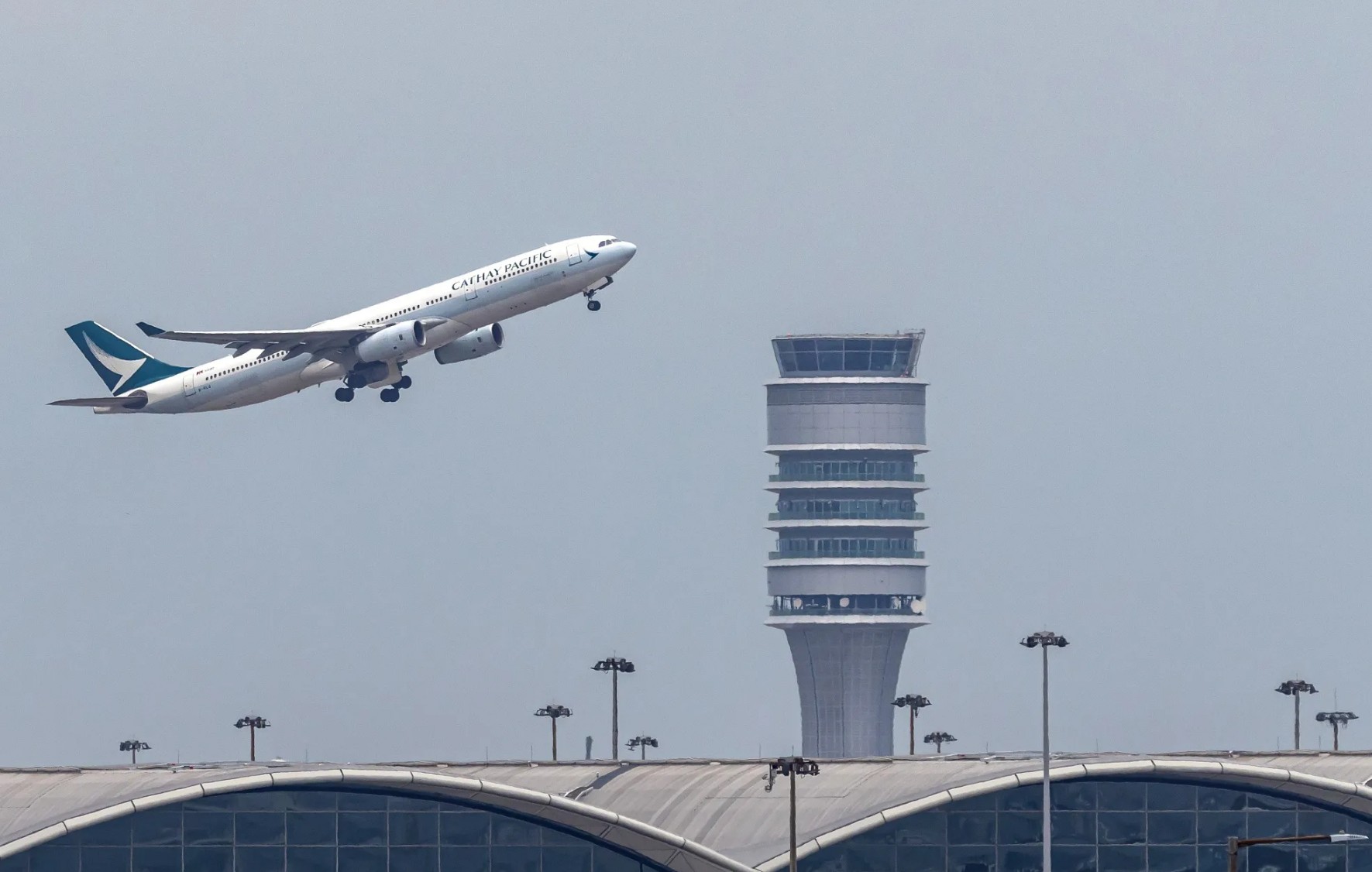
HONG KONG (Realist English). Hong Kong-based airline Cathay Pacific Airways Ltd. intends to order up to 50 additional wide-body aircraft to complete the formation of its long-term growth strategy. Bloomberg reports this, citing sources familiar with the situation.
Talks and timeline
According to sources, Cathay plans to begin talks with Airbus SE and Boeing Co. next year. Separate decisions on purchasing additional narrow-body and wide-body aircraft through existing options and purchase rights could be made as early as November. These steps will supplement the carrier’s already formed order book.
Current order book
Cathay Group currently has an order book worth approximately HK$150 billion ($19 billion) before standard industry discounts. Confirmed deliveries include 35 Boeing 777-9s and 30 Airbus A330neos between 2027 and 2034. The group, including budget carrier HK Express, operates a fleet of 235 Airbus and Boeing aircraft.
In September 2026, Cathay placed an order for 14 Boeing 777-9s worth $8.1 billion — its first contract with the American manufacturer in more than a decade. Cathay was one of the first buyers of the 777X program, ordering 21 aircraft in 2013. The new agreement brought the 777-9 order book to 35 units.
Strategic goals
Cathay Group plans to increase its fleet to approximately 300 aircraft over the next ten years. Some 150 new aircraft are expected to join the fleet, split equally between growth and replacement, subject to favorable market conditions.
CEO Ronald Lam said in June that the next ten years represent a “golden opportunity” for the group’s expansion, citing the opening of the third runway at Hong Kong Airport.
Financial performance
Cathay Group reported a net profit of HK$6.2 billion ($795 million) for the first half of 2026 — up 71% year-on-year. Revenue rose 25.3% to HK$68 billion. Passenger revenue increased 26.3% to HK$43.2 billion.
Group Chairman Guy Bradley noted that the results were positively supported by sustained demand for Cathay Pacific and Cathay Cargo, improved HK Express performance, and a stronger contribution from associates. At the same time, aviation fuel costs nearly doubled from the first to the second quarter due to the situation in the Middle East.
Market situation
Cathay’s aircraft procurement plan reflects a broader trend: airlines worldwide are seeking to lock in wide-body aircraft orders years in advance amid parts shortages, supply chain issues, and high utilization of Boeing and Airbus production facilities.
Vladimir Chernov, an analyst at Freedom Finance Global, believes Airbus has a better chance of winning the tender. First, Boeing is suffering serious reputational damage after several aviation incidents in 2024. Second, while investigations were underway, US regulators froze production of some models, causing the company to accumulate a large number of overdue orders.
Cathay’s new order is not just a fleet replenishment but a bet on restoring Hong Kong as an aviation hub after years of restrictions. The carrier is benefiting from redirected passenger flows through Hong Kong due to instability in the Middle East, as confirmed by record load factors in the first half of the year.
However, the fulfillment of these plans depends on two factors: the ability of Boeing and Airbus to deliver aircraft on time amid overloaded production facilities, and the preservation of high demand amid rising fuel costs. Cathay is already facing delays: the first 777-9 is expected in the second half of 2027, and the A350F is running approximately six months behind schedule.