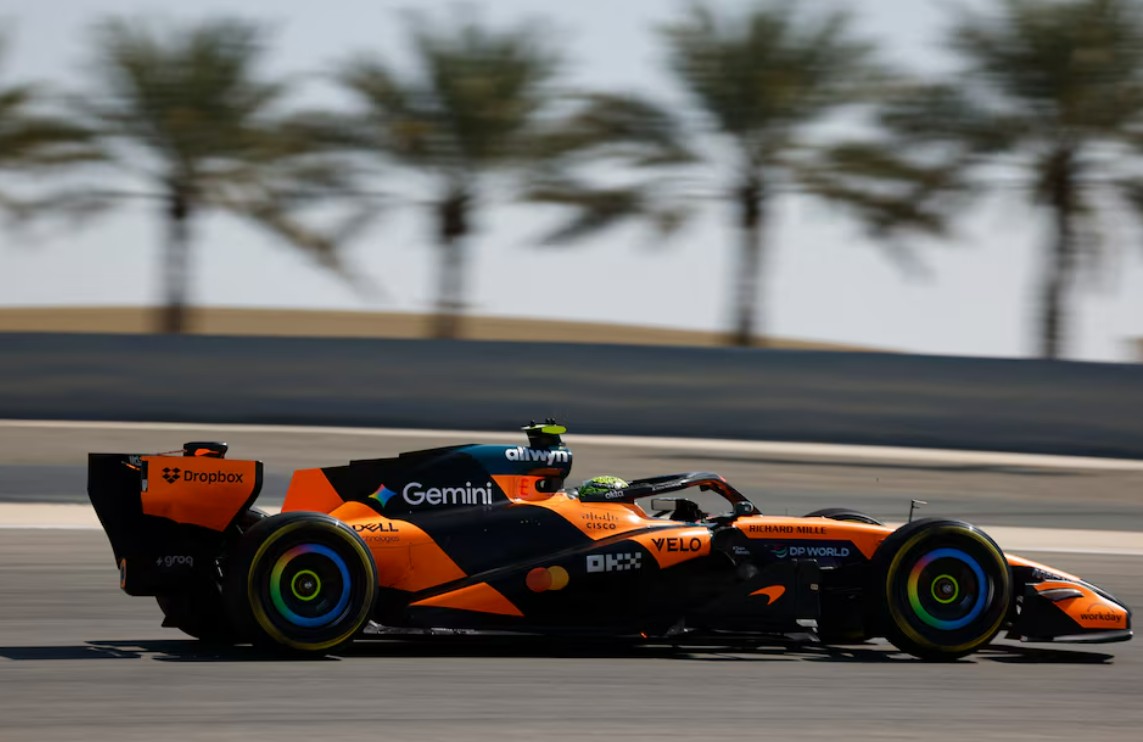
KIGALI (Realist English). On October 13, Formula One officially announced that Rwanda will host the African Grand Prix starting in the “early 2030s.” The contract is for ten years. This will be the sport’s first return to the African continent since the 1993 South African Grand Prix. F1 President and CEO Stefano Domenicali called the day “one of the most important in Formula One history.”
Track and timeline
The race will take place on a new permanent track being built in the Bugesera area, southeast of Rwanda’s capital Kigali, about 40 km from the city, next to Bugesera International Airport.
According to media reports, German architect Hermann Tilke, who has designed a number of Formula One tracks, is involved in the design. Construction is expected to be completed “in the early part of the next decade,” that is, around 2030. In F1’s statement, the track “will be integrated into the natural landscape, using the region’s significant elevation changes to offer spectators a unique experience.”
Rwanda’s sports strategy
Rwanda has for many years actively used sporting events to improve its international image and attract investment and tourists. The country has already signed sponsorship agreements with European football clubs Arsenal and Paris Saint-Germain, cooperates with the NBA as the main hub of the African Basketball League, and last year hosted the World Cycling Championships. President Paul Kagame officially announced the intention to bid in December 2024 at the International Automobile Federation (FIA) congress in Rwanda.
At the launch ceremony on October 13, Kagame said this was “a success and a milestone for the entire African continent, especially for African fans,” and expressed hope that it would lead to new F1 rounds in Africa.
South Africa’s concession and competition
Until the last moment, South Africa was considered the most likely candidate for Formula One’s return to Africa. The historic Kyalami track has already begun upgrading to FIA Grade 1, with costs estimated at $5–10 million. South African Sports Minister Gayton McKenzie publicly acknowledged Rwanda’s victory on social media: “We are happy for Rwanda and its F1 in 2030. They worked on this longer than South Africa and deserved this opportunity.”
However, McKenzie stressed that a continent uniting 55 countries should not be content with just one F1 round: “Italy has two Grands Prix a year, and some believe one is enough for Africa. South Africa will get its Formula One, perhaps even before 2030.”
Hamilton, lobbying, and “sportswashing” disputes
Seven-time world champion Lewis Hamilton has lobbied for many years for F1’s return to Africa. During the Singapore Grand Prix, he said: “I have always said we need a Grand Prix in Africa.
For me, it is the most important and most beautiful continent. We compete on every continent except Africa — it makes no sense.” Hamilton said he would not leave F1 until the African return was confirmed.
However, holding the event in Rwanda has drawn criticism. Opponents accuse the country of “sportswashing” — using sporting events to distract attention from human rights violations, including the persecution of political opposition.
The UN has accused Rwanda of supporting rebels in the neighboring Democratic Republic of the Congo. In addition, about a quarter of Rwanda’s population lives below the poverty line, and according to government sources who spoke to France-Presse, “the economy is struggling,” while the population is skeptical about the real returns from high-profile sports contracts.
Formula One’s return to Africa closes the last blank page on the tournament’s global map: since the world championship was founded in 1950, F1 has held races in 34 countries, but in Africa — only in Morocco (1958) and South Africa. The ten-year contract with Rwanda shows that F1 leadership views this as a long-term strategy rather than a one-off event.
But for Rwanda, holding the race in the early 2030s depends on the timing of the track’s completion, and disputes over “sportswashing” are likely to intensify as the event approaches. F1 chose Rwanda rather than South Africa with its already-ready track — this in itself is a signal: the tournament is betting on African countries willing to invest significant funds in creating a new image.