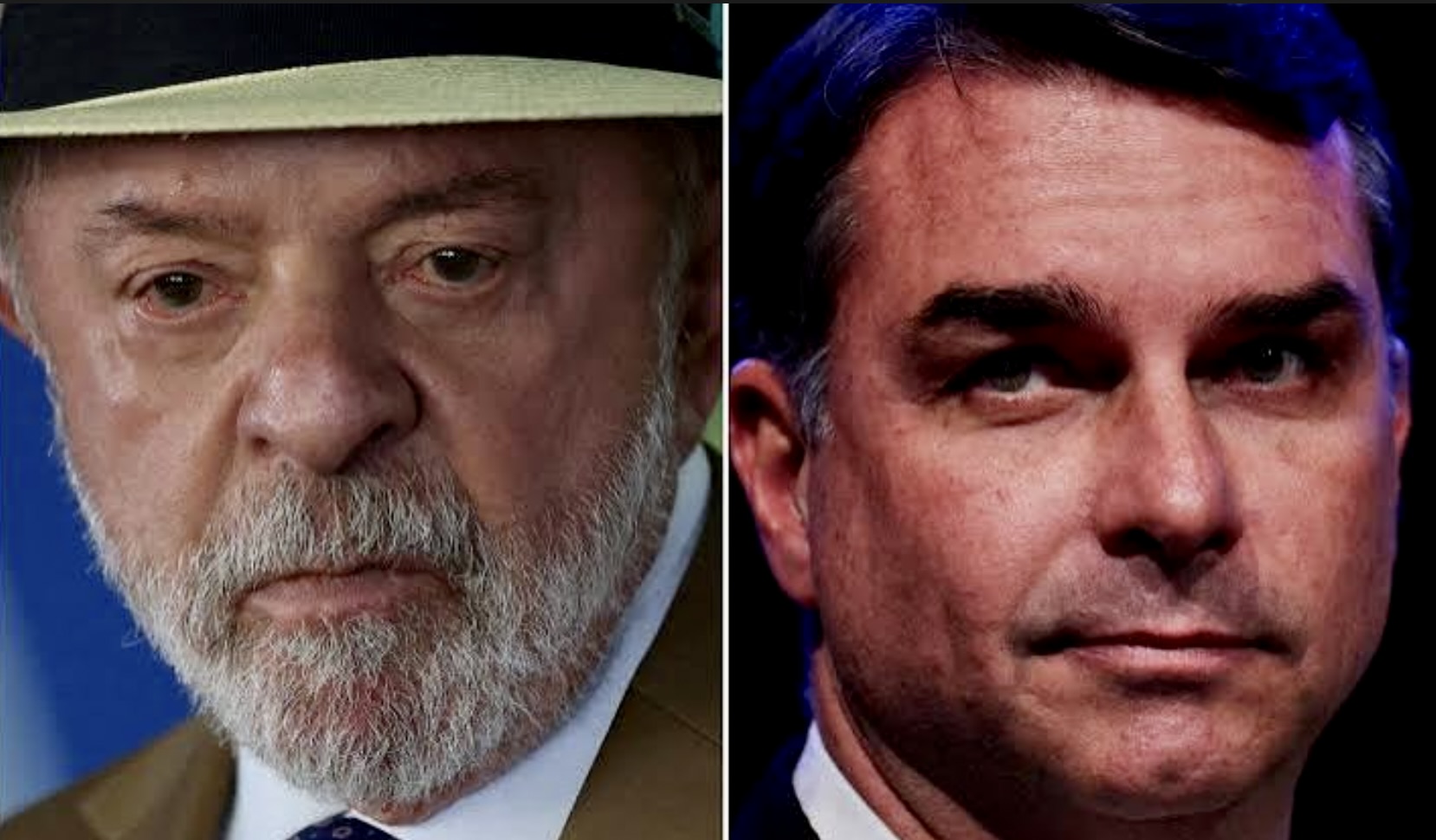
BRASÍLIA (Realist English). Brazil is living in anticipation of the second round of the presidential elections. As is known, in the first round held on October 4, no candidate won more than half of the votes. With a two-percent margin, the leader of the Liberal Party, Flávio Bolsonaro Jr., is ahead (47 percent of the vote).
Incumbent President Lula da Silva (Workers’ Party) received about 45%. Bolsonaro Jr., who is under the protection of the US President, hastened to declare that the “end of the era of the Workers’ Party” has come. But Lula’s supporters are determined. Their social networks call for uncompromising battle in the upcoming elections, with slogans displayed: “Não vão passar” (“They shall not pass”).
Analysts are more restrained in their forecasts. They consider Bolsonaro the more likely winner of the second round. A Lula victory, according to Brazilian experts, is an unlikely, but still possible, scenario.
Why is it so important for the world community who wins these elections? A defeat for the left will mean that the country returns to a pro-American course. And this will significantly affect the geopolitical alignment. Brazil is too tempting a prize for North American monopolies, and the battle for possession of this resource will go on to the end.
In the event of a Bolsonaro victory, the future format of Brazil’s participation in BRICS is unclear. And will there even be such participation? It all depends on what Trump recommends to Bolsonaro on this issue.
The fate of multibillion-dollar Chinese investments in the Brazilian economy is the most vulnerable. Chinese experts in the spring still expressed confidence in Lula’s victory and were skeptical of figures showing his declining ratings.
Now China is concerned, but it seems the train has already left. And the reasons for such short-sightedness are, in general, understandable. Many Chinese international relations experts prefer to give the kind of interpretation of events that is “expected at the top.” Not wanting to take responsibility for a forecast unpopular with the authorities.
Moreover, China’s specialized analytical centers are catastrophically short of experts on Latin America, and fewer than half of them speak Spanish and Portuguese.
If Bolsonaro wins, the Venezuelan scenario is not excluded. Then China will have to ask Trump to leave Chinese investors at least part of the playing field in Brazilian projects.
As for BRICS, for Lula it is a key instrument. Although Lula’s successes in consolidating the countries of the Global South are more declarative than real. There are too many contradictions. In Bolsonaro’s election program, BRICS is not mentioned at all.
In foreign policy, Bolsonaro Jr. emphasizes closer cooperation with the US (focusing, in particular, on the administration of Donald Trump) and advocates weakening dependence on China. Will Bolsonaro dare to take such drastic steps after victory? We will soon see.
Naturally, the Brazilian electorate is more interested in issues of the country’s domestic life. Lula da Silva promises to strengthen social justice, the role of the state in the economy, expand existing social programs, raise the minimum wage, and abolish taxes on goods in the basic food basket.
He proposes strengthening law enforcement cooperation to combat organized crime and significantly reducing deforestation by 2030.
This is extremely relevant for the Brazilian Amazon forests, which are the “lungs of the planet.” In principle, nothing new. But it seems the credit of trust in the promises of the Workers’ Party is not unlimited.
Bolsonaro’s program is more conservative and focused on reducing the role of the state, tight budget policy, and rapprochement with the West.
It is curious that in Russian political circles there are also calls to begin a dialogue with Bolsonaro as the most likely winner of the second round. But our country’s role in Latin American processes is currently not so great. And it has not been possible to restore the presence that the region had during the USSR. Although after the collapse of the military dictatorship in Brazil in 1985, interest in developing relations with Moscow was very high.
Currently, the main international player in the Brazilian elections is Trump, who called Bolsonaro’s first-round result “a very, very big victory.” Bolsonaro Jr. responded by saying that Trump’s comments show “the growing isolation” of Lula on the world stage.
We await October 25, understanding that the outcome of the elections will have a qualitative impact not only on domestic and regional processes but also on the prospects for further global development.
Tatiana Poloskova — Doctor of Political Sciences, State Counsellor of the Russian Federation, 1st Class, specially for Realist English