MANAGUA (Realist English). On September 22, Brazilian President Lula da Silva made a number of important statements in his speech at the UN General Assembly. Speaking about the situation in Latin America and the Caribbean, the Brazilian president noted that it is impossible to ignore the geographic proximity of these countries to the world’s largest military power — especially now, when “hegemonic temptations” are intensifying again.
“The countries of our region have known the full horror of emergency and authoritarian regimes. We have come a long way to restore the power of the popular will. But democracy has once again come under threat.
We are again witnessing external interference in electoral processes. The division of the world into spheres of influence and neo-colonial attempts to gain control over strategic resources are an anachronism. The people of Venezuela deserve the right to determine their own fate.
The crisis in Haiti continues to test the limits of the international community’s indifference. In the case of Cuba, the world watches with shock as ten million people are collectively punished through an illegal economic blockade and energy siege,” Lula da Silva said from the UNGA rostrum.
Speaking about the fate of Brazil, which in a few days faces a difficult decision: to come under US control or choose the path of free development, Lula sternly stated that his country “does not fit in the backyard.”
Lula Gave a Separate Assessment of the Situation in Nicaragua
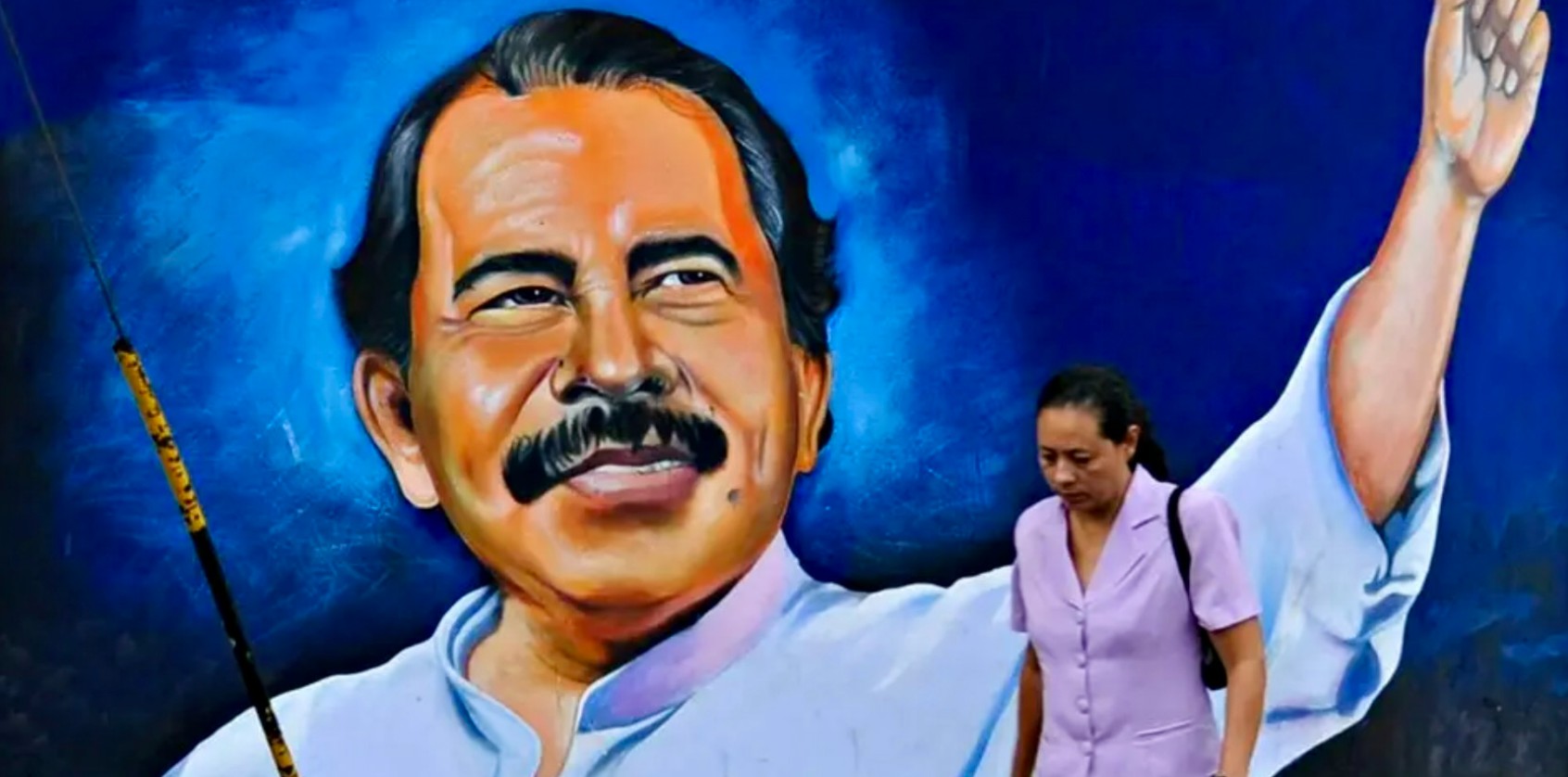
Commenting on the decision of its president, Daniel Ortega, to fundamentally cancel the presidential election in the country, Lula stated: “Nicaragua will not solve its problems by preventing the opposition from participating in elections.” Recall that Daniel Ortega directly stated that he fears losing in the event of a presidential election. And this is quite likely under the conditions Ortega himself created for his country. In other words, there are serious risks of pro-US forces coming to power.
In fairness, Ortega has always played a multi-vector game and has not shied away from mutually beneficial contacts with official Washington. Thus, several years ago the US gratuitously transferred modern fast patrol boats to the Nicaraguan Navy to combat drug trafficking, which were equipped with the latest equipment with the help of US specialists.
Statistics show that the US remains Nicaragua’s main importer and exporter to this day.
The Nicaraguan Canal: “Panama-2” or a Super Scam
If the frozen project to build the Nicaraguan Canal (more on this later) had been completed successfully, its main users would also have been US-flagged vessels, with Chinese ships projected to take second place. As for Russian vessels, no more than 40 of our ships pass through the Panama Canal per year. And there is no reason to think their number will surge to the point where they would need another interoceanic passage located in close proximity to the Panama Canal. No preferences or profits from using the canal under construction were ever offered to Russia as a possible investor by the Nicaraguan authorities. That is why many Russian experts are convinced that the real alternative to the Panama Canal, genuinely beneficial for Russia, is not the Nicaraguan Canal under construction, but the Northern Sea Route.
An example of the multi-vector policy of the Nicaraguan authorities is that back in November 2013, the Nicaraguan parliament allowed Russian and US aircraft and military vessels to enter the country’s territory in the area of the maritime border with Colombia in the Caribbean Sea, all under the same pretext of combating drug trafficking.
The construction of the Nicaraguan Canal, in which Russia planned to take an active part (up to sending its military to guard it), was at one time dubbed with considerable irony the construction project of the century. And it was called “Panama-2,” which is synonymous with the term “super scam.”
Why the Project Is Frozen: Volcanoes, Corruption, and a Bust Company
The construction of the Nicaraguan Canal is frozen; let us recall why. It would be good to remember why the US at one time abandoned building a canal in Nicaragua and switched to the Panama option. The first to notice the possibility of connecting the two oceans across the isthmus on the current territory of Nicaragua was the Spanish King Charles V. Then the Dutch and French became interested in the idea. And in the mid-19th century, dense interest arose on the part of the US. In the 1880s, several companies were successively created in the US to build the Nicaraguan Canal. A postage stamp even appeared depicting the future canal against a backdrop of volcanoes. As specialists on the “canal” theme in Central America recount, it was precisely the volcanoes on the stamp that made American investors sharply abandon the Nicaragua option. And in 1904, the US War Department, pushing aside the French and British, began constructing the Panama Canal.
Nicaragua as a country was and remains a zone of increased seismic activity. Earthquakes of magnitude 6–7 with severe destruction are not rare in Nicaragua but an integral part of the population’s existence. Recall that in 1972 the country’s capital, Managua, was destroyed. The earthquake reduced the city center to ruins. The destruction of the capital, according to witnesses, was comparable in scale to the destruction of Hiroshima and Nagasaki after the US dropped atomic bombs on them. Even if the canal had been built, its main task would have been to prevent this corridor from turning into ruins. And perhaps endless repair work in case it does blow up might be beneficial to someone…
And one more nuance. This concerns corruption schemes involving members of the family of current President Daniel Ortega. All matters related to the canal, including financial ones, including future profits, are decided precisely by “The Family.” This is how a specialist on the region from the Russian Foreign Ministry privately explained the real state of affairs to me. And in the media of neighboring Costa Rica, flooded with refugees from Nicaragua, the real estate of Daniel Ortega, corruption in his circle, and disregard for the people’s interests are actively discussed.
In this aspect, the numerous protests by the Nicaraguan population against the canal’s construction receive yet another explanation. A more down-to-earth one than CIA machinations, although those exist too. Moreover, according to the Nicaraguan Environmental Protection Agency, the property interests of 20,000 people will be affected by the canal’s construction. And the question of compensation is highly precarious.
There is no doubt that Russia is interested in strengthening its presence in Central America. But this must be done without illusions and on the basis of a complete informational picture. So far, the canal saga (whose construction, incidentally, was officially overseen by the Nicaraguan president’s son) has ended as follows: on June 4, 2012, the Nicaraguan National Assembly approved the canal’s construction.
In 2013, a 50-year concession was granted to the Hong Kong company HK Nicaragua Canal Development Investment Co Ltd (HKND) and its owner Wang Jing. The project’s approximate cost was estimated at 40–50 billion dollars. However, by 2018 the project was frozen. The main reason was the halt in investment from China. In other words, Mr. Wang’s company, into which some funds from Nicaragua had also been transferred “for the project,” went bust. Along with the money.
Mass Emigration and “Voting with Their Feet”
Why Ortega so fears opposition participation in elections is also clear. Horrific corruption, serious economic problems and social difficulties, and pressure on opposition parties and leaders force the people to “vote with their feet.”
According to researchers’ estimates and sociological survey data, approximately 1–1.5 million Nicaraguans now live outside Nicaragua. Mass emigration began in the late 1990s–early 2000s, largely due to political instability in the country.
Most Nicaraguans have settled in the US (primarily California and Texas) — by some estimates, about 300,000–400,000 people live there. Noticeable communities also exist in Central American countries (especially Costa Rica), Spain, and some other states.
What Awaits Nicaragua: The Threat of Losing Sovereignty
So what awaits Nicaragua? Currently, the expansion of military operations under the pretext of fighting drug cartels marks “a new phase of Trump’s campaign to pressure governments throughout Latin America” aimed at achieving “US dominance in the Western Hemisphere,” notes the American agency Associated Press.
“Nicaragua and Cuba, like little ‘Gaulish villages of the defiant,’ continue to defend their sovereignty, but constant threats and suffocating sanctions have largely deprived them of freedom of action. Apart from Brazil, only Mexico now hinders the implementation of Trump’s plans to establish control over the entire continent,” comments Reuters.
In other words, hopes that Latin American countries would manage to form some kind of alliance to counter Trump’s intentions to return the region to the position of the US backyard have not yet materialized. And regardless of whether Ortega canceled the elections or not, there is a real threat of Nicaragua effectively losing its sovereignty. And there are many internal reasons for this. It is precisely these reasons that Ortega, as the country’s president, must address first and foremost. If he wants to keep his country free.
Tatyana Poloskova — Doctor of Political Sciences, First Class State Counsellor of the Russian Federation