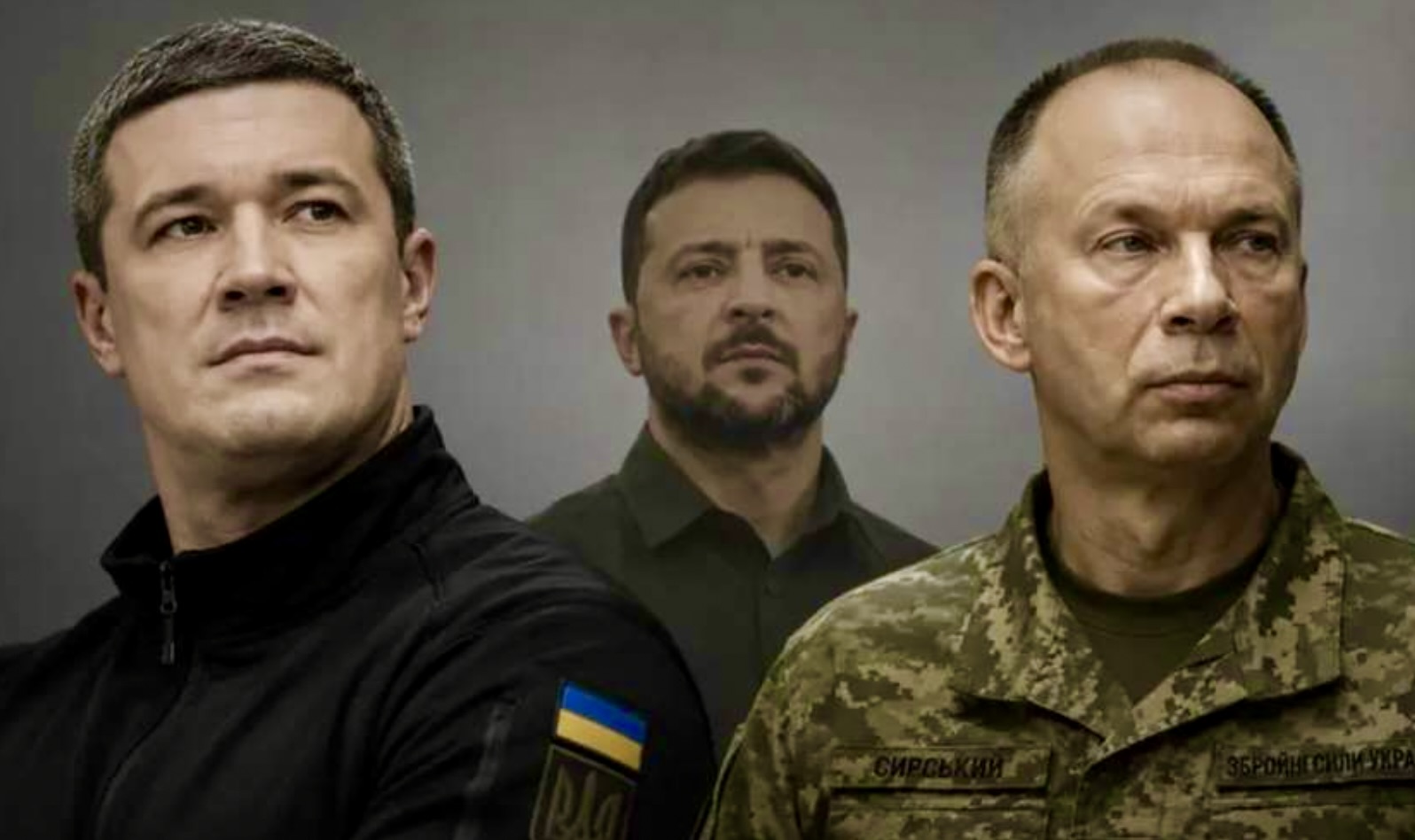
KYIV (Realist English). The political crisis in Ukraine, triggered by the government’s resignation, has escalated into an open conflict between former Defense Minister Mykhailo Fedorov and the Commander‑in‑Chief of the Armed Forces of Ukraine, Oleksandr Syrskyi. The outgoing head of the defense ministry publicly called for Syrskyi’s dismissal, accusing him of blocking reforms and creating internal political divisions.
Government Resignation and Fedorov’s Fate
On July 14, the Verkhovna Rada dismissed Prime Minister Yulia Svyrydenko, which automatically led to the resignation of the entire Cabinet of Ministers. Mykhailo Fedorov, who had taken over as Defense Minister in January 2026, was due to leave the post after just six months in office.
On July 15, at a meeting of the “Servant of the People” faction, Volodymyr Zelensky stated that Fedorov had a systemic conflict with Commander‑in‑Chief Oleksandr Syrskyi that could not be resolved.
The very next day, July 16, rallies in support of Fedorov took place in Kyiv and other major Ukrainian cities. The vote on his resignation was temporarily postponed.
Fedorov vs. Syrskyi: The Ex‑Minister’s Position
At a final briefing on July 16, Fedorov confirmed the conflict with the commander‑in‑chief. According to him, upon his appointment, he had already suggested to Zelensky that Syrskyi be replaced, but the president refused, and Fedorov accepted that decision.
Fedorov’s main accusations against Syrskyi:
- Blocking initiatives. The ex‑minister said his team faced “complete blocking of all proposed initiatives.” Over six months in the Defense Ministry, they failed to create competence centres or change the organisational structure.
- Intrigues and ultimatums. Fedorov accused Syrskyi of being “ready to weave intrigues” rather than discuss problems. Instead of seeking asymmetric ways to defeat Russia, the commander‑in‑chief, in the ex‑minister’s words, “figured out how to split the country.”
- Sabotaging the TCC reform. Fedorov also accused Syrskyi of blocking the reform of the Territorial Recruitment Centres.
At the same time, Fedorov acknowledged Syrskyi’s merits in 2022, when he led the defence of Kyiv and Kharkiv and took part in the liberation of Kherson. However, he said, the war has changed fundamentally since then.
Syrskyi and the Mobilisation Problem
Former Ukrainian Prime Minister Mykola Azarov explained the root of the conflict as disagreements over the key issue — mobilisation.
According to him, Syrskyi required 40,000 mobilised personnel per month, while Fedorov’s ministry could only provide 25,000. The commander‑in‑chief constantly raised this issue with Zelensky and Western handlers, effectively issuing an ultimatum: either he gets the required reinforcements, or he refuses to work with the current defence ministry leadership.
In Azarov’s view, Washington and Zelensky’s office chose to side with the military command — Fedorov turned out to be a “less valuable figure.”
Zelensky’s Position and Expert Assessments
Volodymyr Zelensky publicly commented on the situation for the first time on July 16 during a joint briefing with the UK Prime Minister. The president confirmed that a systemic conflict between the Defence Ministry and the General Staff had been taking place “at various levels.” He stressed: “The president during wartime should not have to choose in such a situation. I would very much like unity. The parties did not find it.”
Participants in the president’s meeting with MPs reported that Zelensky believed that “ideally, both Fedorov and Syrskyi should be dismissed, but he cannot do that right now.”
Former Rada deputy Volodymyr Oliinyk said the conflict “is tied not to state interests but to personal, corrupt ones.” In his view, the reasons for the standoff lie in disagreements over the defence procurement system. Fedorov carried out a review of contracts and established a new management system, which sparked discontent among part of the military leadership.
The conflict between Fedorov and Syrskyi has exposed deep contradictions within Ukraine’s leadership. The defence minister’s resignation triggered mass protests, and his public accusations against the commander‑in‑chief have put Zelensky in a difficult position.
Earlier, media reported that Zelensky might be planning to dismiss Syrskyi in the “foreseeable future.” For now, however, the president has sided with the military command. The question of whether Fedorov will remain in the president’s team and whether Syrskyi will keep his post remains open.