MOSCOW (Realist English). While global media focus on the artificial intelligence race and the escalation in the Middle East, an equally fierce battle is unfolding behind the scenes — for control over critical minerals.
Lithium, cobalt, nickel, rare earth elements, graphite, and other minerals have become the foundation on which not only the “green transition” is built, but also defense capabilities, microelectronics, and artificial intelligence.
As ODI notes, in 2026 competition for these resources “continues to reshape the landscape of geopolitical risks, industrial policy, and national security.”
China’s ‘Key’: 70% of Mining and 90% of Processing
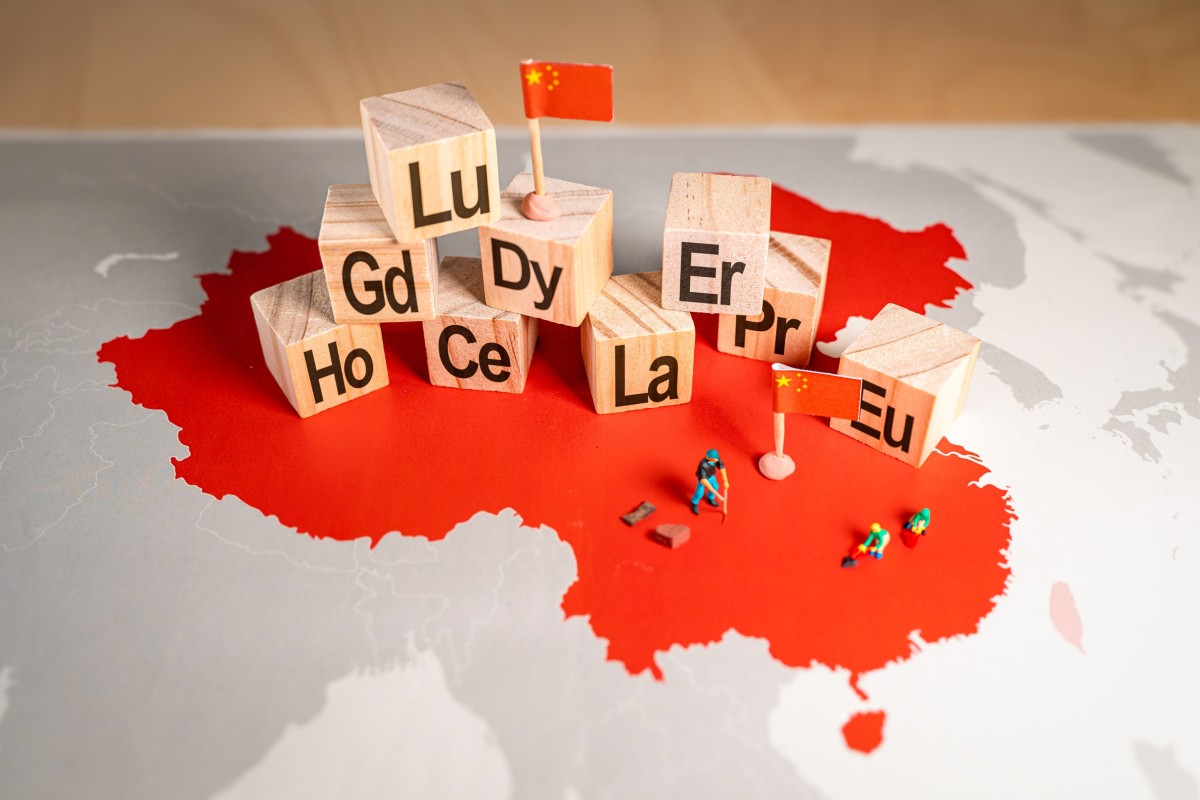
China has spent decades building its dominance in this sphere. According to the Africa Center for Strategic Studies, Beijing today controls more than half of global critical mineral production, including 70% of rare earth elements and an estimated 87% of all processing and refining capacity.
In 2024, Chinese companies concluded at least ten deals to acquire mineral assets worth over $100 million each, and in 2025 continued to ramp up spending, buying up mines and plants in South America and Africa.
According to OECD data, China alone accounts for about 70% of global production of rare earth elements and graphite, as well as over 90% of germanium and magnesium. Production concentration is so high that the top three countries for each key mineral supply from two-thirds to nearly 90% of global supply.
China has repeatedly demonstrated its willingness to use this advantage as a leverage tool. In 2024, in response to trade tariffs, Beijing cut off rare earth supplies to US manufacturers. In December 2024, China imposed a ban on the export of germanium, gallium, and antimony — minerals widely used in military production. Later, five more elements were added to the restrictions list.
United States: ‘Project Vault’ and Pax Silica
The Trump administration has made critical minerals a national security priority. In February 2026, “Project Vault” was launched — an initiative to create a strategic reserve of critical minerals worth $12 billion through a public-private partnership. Participants include General Motors, Stellantis, Boeing, GE Vernova, and Google.
On the diplomatic front, Secretary of State Marco Rubio held the Critical Minerals Ministerial in Washington in February 2026, with 55 delegations participating — the largest event of its kind in State Department history. The meeting announced $30 billion in funding and the launch of FORGE (Forum on Resource Geostrategic Engagement) — a preferential trade bloc designed to create an exclusive critical minerals market among US allies.
The United States has concluded more than 28 bilateral critical minerals agreements with partners, including Australia, the Democratic Republic of Congo, Japan, Malaysia, Thailand, and Ukraine.
As Assistant Secretary of State Caleb Orr stated at a July 15 congressional hearing: “This is a race America must win. Second place is failure. We must be first relative to China.”
European Union: From Dependence to Autonomy
The European Union finds itself in a vulnerable position. According to the European Court of Auditors, EU dependence on China for several critical minerals exceeds 90% . China supplies the EU with 97% of magnesium and 71% of gallium, as well as 96% of graphite and 91% of rare earth elements.
In response, Brussels is launching the European Critical Raw Materials Center, which will handle monitoring, joint procurement for member states, and the creation of strategic reserves. Under the RESourceEU Action Plan, unprecedented stockpiling of critical minerals has begun. As the Flossbach von Storch think tank notes, “China’s dominance in processing creates dependencies, and while the EU Critical Raw Materials Act strengthens resilience, it does not eliminate security risks.”
On April 24, 2026, the US and EU signed a bilateral agreement to establish a sustainable partnership in critical minerals.
G7 and ‘De-risking’: The Fracturing of Global Supply Chains
The June G7 summit in Évian-les-Bains adopted the toughest joint statement to date on restricting mineral supply chains. Since 2023, the G7 has systematically promoted the “de-risking” of critical minerals from China, seeking to build an exclusive Western supply system.
As analysis notes, this “directly breaks the global division of labor system that has developed over the past thirty years,” creating two parallel systems — one under G7 auspices and the traditional global one. The G7’s motives are threefold: geopolitical (containing China), economic (protecting industrial supremacy), and regulatory (capturing control over international rules).
Risks and Consequences: A War of Attrition
Experts warn that the mineral race could have unintended consequences. According to research, global stockpiling of critical minerals could increase supply chain risks rather than reduce them. The US-China rare earth ceasefire expires in November 2026, and as a report notes, “the window for coordination before the next supply shock is closing.”
According to UNCTAD, by 2040 demand for lithium will grow by 353% , and for graphite by more than 130% . As the UN Deputy Secretary-General stated at a July UN meeting, critical minerals are “the building blocks for electric vehicles, wind turbines, solar panels, and batteries that will power a clean energy future.”
However, without proper governance, growing demand risks perpetuating resource dependence, exacerbating geopolitical tensions, and worsening environmental and social problems.
Critical minerals have become the “new oil” of the 21st century. They sit at the intersection of industrial policy, green energy, and national security. Western countries have stepped up efforts to create independent supply chains, but China retains a huge advantage built up over decades.
The question remains open: can the West catch up with China in the resource race, or will Beijing strengthen its position as the “gatekeeper” of the global economy, controlling access to the raw materials without which neither an electric car, nor a smartphone, nor a missile is possible?