TEHRAN (Realist English). The hostilities between the US and Iran, which resumed last week, have entered a new and most dangerous phase. On the night of July 12, US forces carried out the third massive strike on Iranian targets in a week, hitting about 140 targets.
In response, Iran launched coordinated missile and drone attacks on US bases in Qatar, the United Arab Emirates, Bahrain, Kuwait and Jordan. Air defence systems of the Gulf states were put on alert and engaged in interceptions.
Third Wave of US Strikes: 140 Targets in One Night
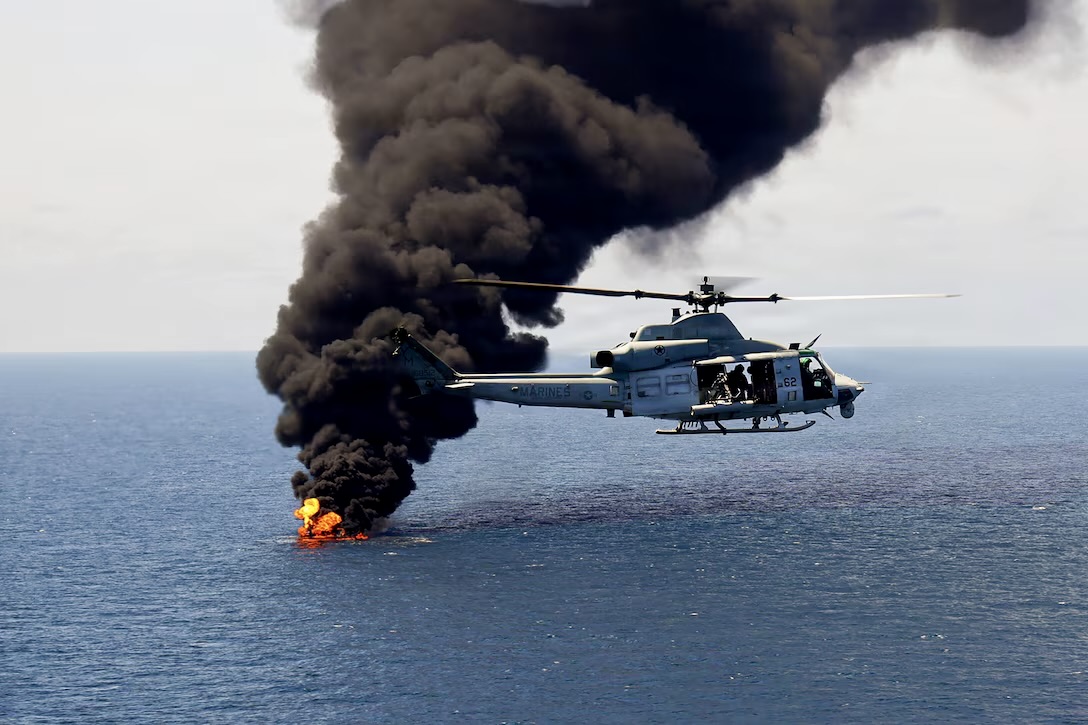
The trigger for the new round of escalation was an attack by Iran’s Islamic Revolutionary Guard Corps (IRGC) on the container ship M/V GFS Galaxy, sailing under the Cypriot flag through the Strait of Hormuz. According to US Central Command (CENTCOM), the vessel sustained significant damage to its engine room, a fire broke out on board, and one crew member is missing.
In response, at 7:15 p.m. Eastern Time on July 12, the US launched a third round of strikes. US forces used precision munitions from land- and sea-based fighters, drones and ships, hitting about 140 Iranian military targets. These included missile and drone bases, naval facilities, ammunition depots, communications systems and coastal surveillance assets.
Over three nights of strikes, CENTCOM hit a total of more than 300 Iranian military targets. US Defence Secretary Pete Hegseth wrote on social media: “Iran made a bad choice. Now they are paying the price.”
Massive Iranian Response: From Qatar to Jordan
Iran responded immediately and on an unprecedented scale. On the morning of July 12, the IRGC launched waves of coordinated missile and drone attacks on US facilities across several countries.
Targets included:
- Al Udeid Air Base in Qatar, where, according to the IRGC, the command centre and fighter maintenance centre were hit.
- Prince Hassan Air Base in Jordan, where the control centre and MQ-9 drone hangars were destroyed.
- Military facilities in the UAE, Bahrain and Kuwait.
In the Qatari capital Doha, two rounds of powerful explosions were heard, and the country’s air defence systems engaged ballistic missiles. In the UAE, sounds of fighter jets intercepting hostile targets were heard. Air raid sirens sounded in Bahrain and Kuwait.
The Gulf Under Attack: Interceptions and Casualties
Air defence forces of the Gulf states were placed on full combat alert. Kuwait intercepted three ballistic missiles, one cruise missile and ten drones. Bahrain also activated its air defences and intercepted Iranian targets. Qatar said its armed forces continued to intercept “a number of ballistic missile attacks.” The UAE confirmed it was actively repelling attacks. Jordan reported intercepting Iranian missiles that had entered its airspace.
According to US officials, most Iranian missiles and drones were shot down or failed to reach their targets. No information on US military casualties has been reported so far.
The Strait of Hormuz Is Closed
The IRGC announced the closure of the Strait of Hormuz until further notice. Iranian forces said they would prevent any vessels from using unauthorised routes. Shipping through the strategic waterway, through which about 20% of the world’s oil passed before the war, has effectively been halted.
Oman, acting as a mediator, proposed a compromise plan to manage traffic in the strait through two separate routes under Omani control, but its fate remains unclear.
Diplomatic Deadlock
The escalation has effectively ended the “Islamabad Memorandum of Understanding,” signed between the US and Iran on June 17. Iranian Parliament Speaker and chief negotiator Mohammad Bagher Ghalibaf said: “The era of unilateral deals is OVER. We told you: keep your word or pay the price. Reality is knocking at the door.”
Iranian Foreign Minister Abbas Araghchi’s visit to Oman, where he discussed mechanisms for safe navigation, yielded no results. No US officials were present at those talks.
Three days of escalation in the Strait of Hormuz have led to the largest exchange of strikes since the memorandum was signed. The Strait of Hormuz is closed, dozens of Iranian targets have been hit, and the Gulf states have come under direct attack.
Diplomatic channels, which at the start of the week seemed to be the only hope for peace, have been blocked by military action. The question of whether the region can avoid a full‑scale war remains open.