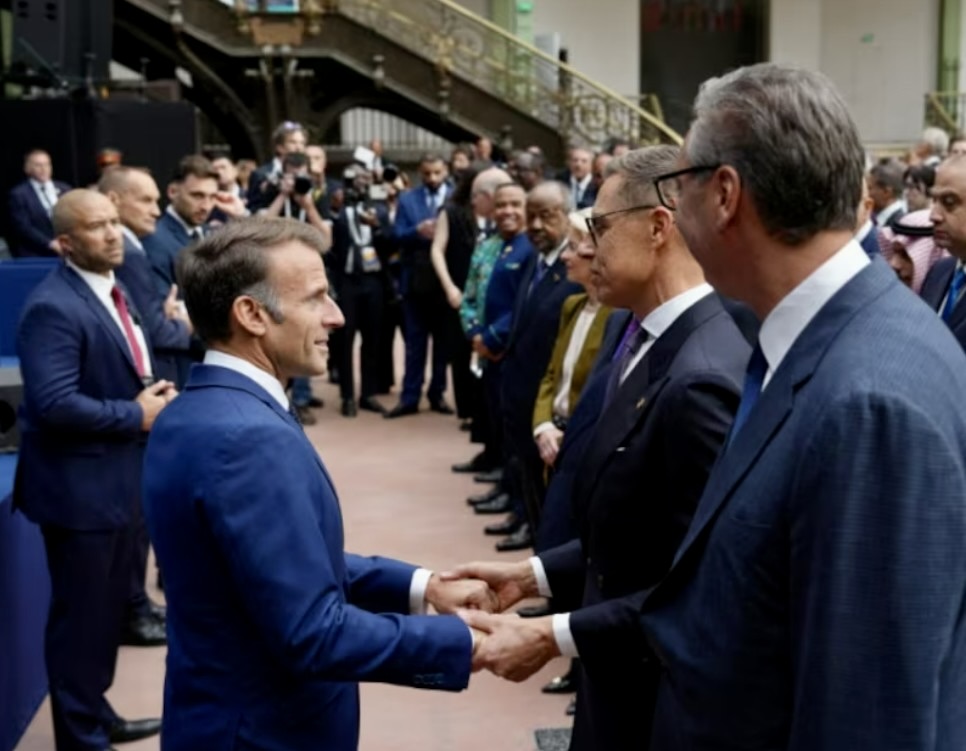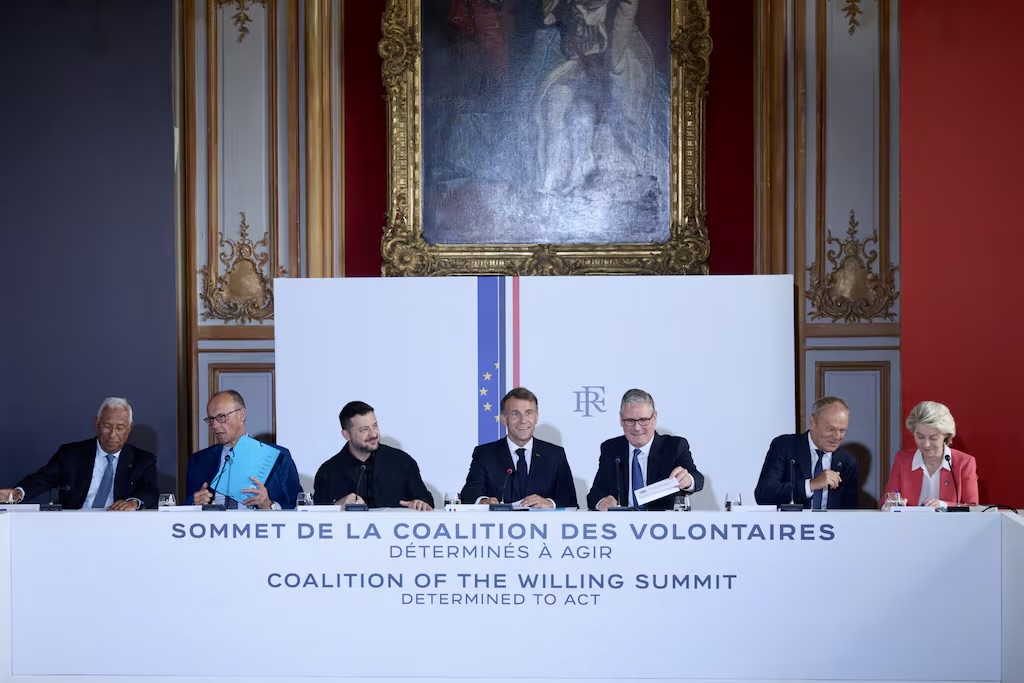
PARIS (Realist English). On July 13 in Paris, nine European countries signed a joint declaration establishing the Integrated Anti‑Ballistic Coalition.
Its flagship project will be the Ukrainian FREYJA missile defense system, which is planned to be deployed within a year, Ukrainian President Volodymyr Zelensky announced following the meeting of the “Coalition of the Willing.”
The FREYJA project, developed by the Ukrainian company Fire Point based on the FP‑7.X interceptor, is designed to become a cheaper and more mass‑produced alternative to the American Patriot system.
“FREYJA is our Ukrainian anti‑ballistic system… an analogue of Patriot in intercepting ballistic targets, but designed for mass production and at a lower cost,” Zelensky said.
Coalition Members
The coalition includes nine European countries: Denmark, France, Germany, Italy, the Netherlands, Norway, Spain, Sweden, and the United Kingdom. Later, according to some reports, the number of participants expanded to ten. The coalition is open to other states that share its goals.
French President Emmanuel Macron emphasized: “What we are building here is not only for Ukraine. It is a demonstration that Europe can ensure its own security, protect its interests, and act with strength.”
Why FREYJA: Global Interceptor Shortage
The creation of FREYJA was a response to an acute global shortage of interceptors. The war in Iran led to massive consumption of US Patriot PAC‑2 and PAC‑3 interceptors, depleting allied stockpiles.
At the same time, Ukraine has faced massive Russian ballistic strikes that air defense often cannot repel: according to analysts, in the first two weeks of July 2026, Ukrainian forces failed to intercept a single Russian ballistic missile.
How FREYJA Will Work: Division of Labor
Ukraine will take on the development and production of the interceptor missile — the FP‑7.X will form the core of the system. European partners will provide radars, tracking and command systems, as well as funding and manufacturing capacities.
The project does not involve creating a completely new system from scratch: FREYJA will integrate with existing radars, command posts, and NATO data links.
As Zelensky explained: “Ukraine can provide its part: the anti‑ballistic missile. We are currently finalizing it. Others have radars and other critical components.”
The goal is to make the system affordable, suitable for mass production, and capable of filling Europe’s anti‑ballistic gap.
Timeline and Risks
Zelensky expressed hope that FREYJA would become operational within the next 12 months.
However, experts point to serious technical and industrial challenges. The project carries risks, especially given the recent failure of another large‑scale pan‑European program — the Future Combat Air System (FCAS) fighter.
Nevertheless, according to the Ukrainian president, “the threat of ballistic missiles in the world will only grow. This is one of the main consequences of Russia’s and Iran’s wars. So FREYJA must become a reality.”
French Contribution: License for Aster‑30
In parallel with FREYJA, France granted Ukraine a license to produce Aster‑30 missiles (used in the SAMP/T system), SCALP cruise missiles, and A2SM guided bombs. Production of Aster‑30 will begin in Ukraine before the end of 2026. Additionally, France will deliver 16 Rafale fighters to Kyiv in 2028–2029 and several SAMP/T batteries “in the coming weeks.”
The meeting in Paris marked the first step toward creating a European anti‑ballistic shield that would reduce dependence on US Patriots. As coalition participants stated: “By combining our defense‑industrial base, our research, and operational experience, we aim to build a common anti‑ballistic capability for Europe.”
FREYJA is not a replacement for existing systems, but a complement designed to close the gap in missile defense. Its success will determine whether Europe can achieve strategic autonomy in missile defense in the coming years — or remain dependent on US supplies.