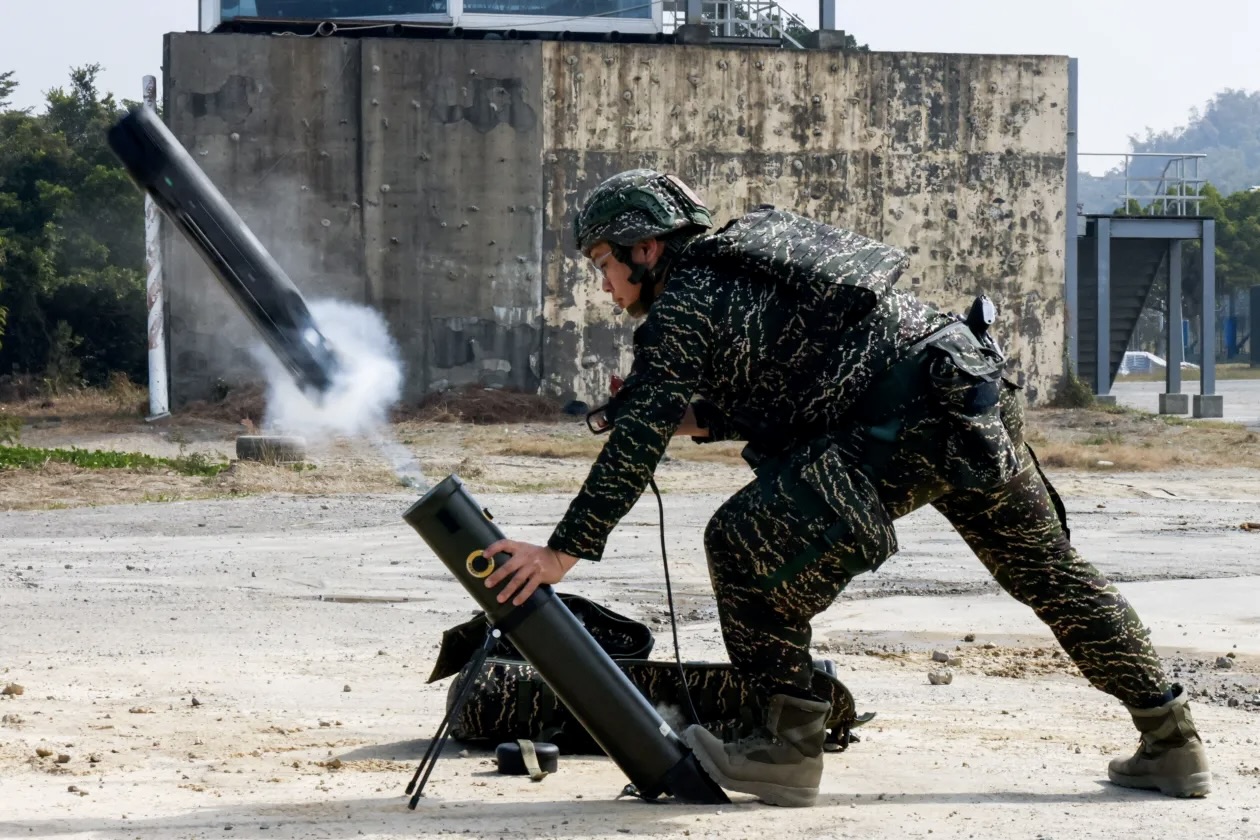
TAIPEI (Realist English). Former CIA Director and former commander of US forces in Iraq and Afghanistan, David Petraeus, together with AI expert Clara Kaluderovic, published an article in Foreign Affairs warning Taiwan against a fatal mistake — reducing the lessons of the Ukraine war to a procurement catalogue of weapons.
The war in Ukraine, in the authors’ view, is not merely a demonstration of the effectiveness of drones, but the birth of a new concept of warfare, where the decisive factor is not a specific weapon, but the ecosystem that turns that weapon into a lethal force.
Taiwan, they argue, risks missing this key lesson by focusing on platform procurement rather than building a holistic defence system.
The Ukrainian Revolution: ‘Everything Around the Drones’
The authors warn: “The danger is that military strategists look at the battlefield in Ukraine and see only a catalogue of weapons to be purchased.” The true transformation demonstrated by Ukraine runs deeper — in the integration of software, intelligence, production and tactics into a single operational cycle.
Petraeus and Kaluderovic highlight several elements of the Ukrainian ecosystem:
- Delta — battle management system. Created by Ukrainian engineers and volunteers without foreign procurement, it integrates data from sensors on land, air and sea into a single battlefield picture.
- Sky Fortress — acoustic network. 14,000 sensors capable of detecting Russian drones by sound even at altitudes beyond radar coverage.
- Unmanned Systems Forces. A new branch of the military, built from scratch — with its own doctrine, training, procurement and recruitment systems.
- Weekly iterations. Manufacturers update software every 1–2 weeks, hardware every 3–4 weeks, and engineers work directly in the units they support.
As a result, Ukraine, which lost virtually its entire fleet at the start of the war, managed to push Russia’s Black Sea Fleet out of Sevastopol using a combination of reconnaissance drones and naval kamikaze drones.
The Economics of War: How to Flip the Cost of a Strike
The authors pay particular attention to the cost logic of combat operations. When Russia began mass‑using Shahed drones to deplete Ukrainian air defences, Kyiv faced a problem: each Patriot interceptor costs millions of dollars, while each Shahed costs less than $50,000.
Ukraine’s response was a turning point: instead of expensive interceptors, Ukraine developed its own defensive drones for “a few thousand dollars,” completely changing the economics of the confrontation.
Petraeus and Kaluderovic’s conclusion: the cost of every combat engagement is a strategic variable that can be changed through development and mass production, but cannot be changed through procurement alone.
Traditional military procurement programmes take years. Ukraine compressed that cycle to weeks.
Taiwan’s ‘Procurement Reflex’
Turning to Taiwan, the authors introduce the term “procurement reflex.” Since the purchase of F‑16 fighters in 1992, Taiwan has focused its investments on acquiring off‑the‑shelf weapons, while building the architecture that makes them effective has moved much more slowly.
The authors note that Taiwan’s parliament recently cut funding for domestic drone production while maintaining significant spending on traditional US‑made weapons. This, in their view, is a symptom of a fundamental misunderstanding of Ukraine’s lessons.
The Main Warning: Not to Copy, but to Translate
The authors warn: Taiwan should not blindly copy Ukraine. The differences are too great — Ukraine is fighting on a vast land front, while Taiwan would face an amphibious assault, one of the world’s largest fleets, and a massive missile‑and‑air campaign from the first hours of any conflict.
Therefore, the key word, in Petraeus and Kaluderovic’s view, is not “imitation” but “translation”: adapting the principles of the Ukrainian experience to the Indo‑Pacific theatre. Asymmetric defence is not built by buying equipment — it is built through doctrine development, creating new organisational structures, engaging the private sector, developing indigenous software, strengthening electronic warfare capabilities, and integrating national industry into the war effort.
Petraeus and Kaluderovic warn Taipei: Ukraine’s experience is not a list of what to buy, but a method of how to think. The true lesson of the war in Ukraine lies not in specific weapons, but in the ability to turn the enemy’s initial superiority into one’s own competitive advantage through speed of adaptation and the creation of a holistic combat ecosystem.