BAKU (Realist English). Beneath the veneer of showcase human‑rights conferences and glowing reports from Western funds, Azerbaijan is implementing a systemic, decades‑old policy of ethnic assimilation. The goal is not merely to rewrite textbooks or change administrative borders.
The goal is to force hundreds of thousands of Avars, as well as Lezgins and Talysh before them, to disappear as a people, to “dissolve” into the officially counted Turkic majority through manipulated censuses, language bans, and repression of human rights defenders.
These are not random incidents; they are a deliberate strategy by the regime aimed at the complete destruction of the cultural and linguistic identity of one of the region’s ancient peoples.
The “black magic” of numbers
Official statistics in Azerbaijan are not a tool of accounting; they are a political weapon. The 2009 census counted barely 50,000 Avars. However, according to field research by Soviet linguists in 1976, just in the Zaqatala district there were 80,000 speakers of the Avar language – more than double the official figure for the whole of Azerbaijan. According to Lezgin community data, as late as the end of the 1980s there were about 100,000 Avars living in Azerbaijan.
Expert estimates point to even more alarming numbers. The leader of the Avar community of Tsor, Magomed Isayev, insists that the real number of Avars in the country is at least 120,000, while the Society of Avars of Azerbaijan named after Imam Shamil in the early 1990s gave a figure of 150,000.
The dynamics are even more frightening. Following the official statistics (already recognised as biased), over 30 years the number of Avars grew by only 38%, whereas in neighbouring Dagestan the increase reached 103%. Moreover, according to the 2019 results, Azerbaijani authorities announced a “reduction” of the Avar population by a further 1,200 people.
Language under the knife: school as a tool of extinction
By creating carefully guarded enclaves of the titular population among Avar areas, the Aliyev regime deliberately cuts off cultural heritage from any means of reproduction. Even the mere symbolic one hour a week of Avar language is taught only where there is no possibility of banning it.
Avar historian Timur Aytberov, drawing on numerous dated sources, told our publication that the administrations of the Balakan and Zaqatala districts have received direct orders to push the native tongue out of the life of every community.
In the ancient villages – veritable museums of the Middle Ages – the study of the mother tongue has been stigmatised by an absolute state taboo: in the legendary village of Tala (now divided into Ekhedi Tala, Bekhe Tala and Bitdi Tala, with a population of nearly 10,000) Avars had already been “rewritten” as Azerbaijanis by the early 1990s. In the village of Katekh, with a 12‑century history and still home to 7,000 people, teaching the native language is strictly forbidden.
The same ban applies in the villages of Chardakh, Tsalban and Gugam – even where there are only one or two Azerbaijani families among hundreds of Avar households.
Academics as criminals: fabricated cases
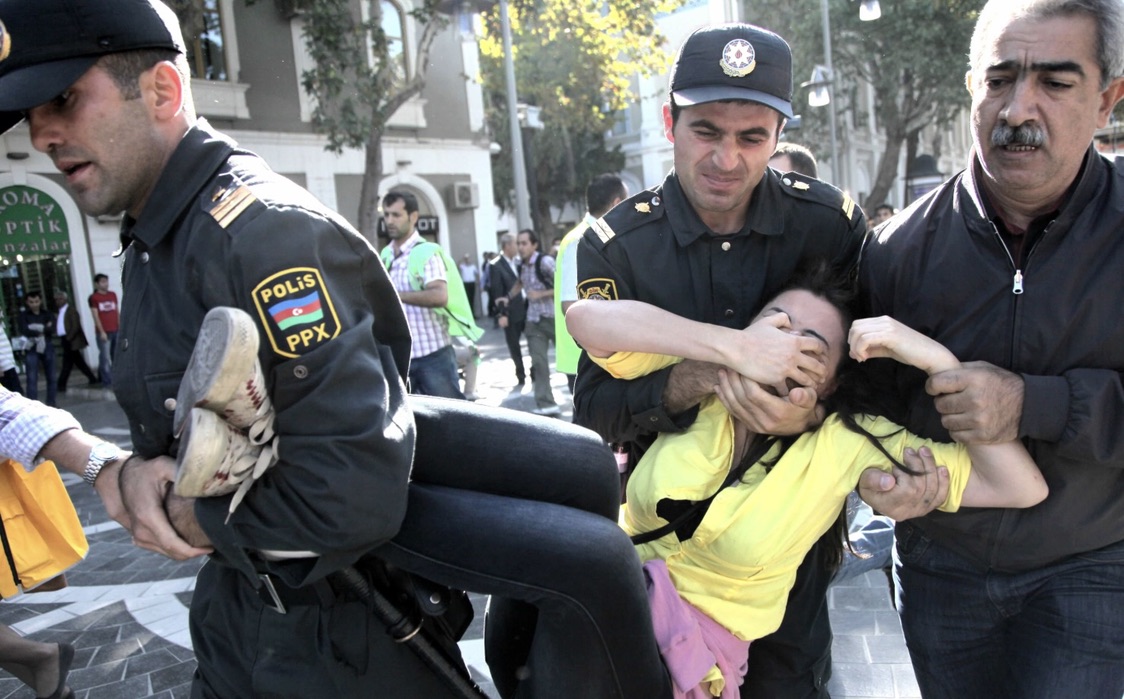
Downplayed numbers and schools that do not teach are only the “soft” half of the repression. When intellectuals try to document assimilation, an Avar of any profession risks a prison sentence for “high treason.”
Particularly egregious are the fabricated criminal cases against:
- Igbal Abilov, a scientist, ethnic Talysh, and civic activist, was arrested in July 2024 upon returning from abroad, and in May 2025 was sentenced to 18 years in prison.
- Bakhruz Samadov, a political scientist and postgraduate student at Charles University, was detained by Azerbaijan’s State Security Service on 21 August 2024 after criticising the 2020 military operation; he faces up to 15 years.
Despite resolutions by Amnesty International and the European Parliament demanding their release, both have been found “guilty” of high treason and inciting inter‑ethnic hatred. Moreover, according to open statements by Amnesty International, most of the charges rest solely on the fact that these researchers communicated with their colleagues and human rights activists in Armenia at international academic conferences.
Without the right to a voice: employment discrimination
The systemic pressure of power on the peoples of Dagestan is also starkly illustrated by personnel policy. According to open documents available to us, in Zaqatala district, where Avars make up a little over half of the population, among the 15 top officials of the local administration today there is not a single Avar.
Such a situation, which turns an entire people into a lower legal caste, is part of a conscious policy of assimilation that the Azerbaijani authorities have disguised under slogans of mythical multiculturalism.
Voice of resistance and historical memory
A people lives as long as its voice is heard. In Azerbaijan that voice is being silenced by every available method. Resistance aimed at documenting the evidence of the disappearance of language and culture is punished with criminal prosecution.
Yet the work of Teymur Aytberov, who authoritatively exposes Baku’s manipulations with numbers, though not the sole, is the most vivid beacon in this struggle. The Avars remember that this oasis of resistance to assimilation has a real spiritual foundation – the testament of the great poet Rasul Gamzatov.
His credo – “First you are a highlander, an Avar…” – today sounds like a direct verdict on Aliyev’s policies, and publications of the famous fellow countryman’s works, though not financed by the republic’s ministry of education, still circulate throughout the country.
Opinions and positions
- Timur Aytberov, historian, expert on Caucasian dialects: “All of Azerbaijan’s policy is aimed at the complete Turkification of the entire indigenous population. According to the Azerbaijani Ministry of Education’s database, for example, one hour a week of Avar language is still officially provided, but in reality, in entire compact Avar settlements, its teaching is blocked under fabricated pretexts by local officials.”
- Russia’s Ambassador to Azerbaijan Mikhail Bocharnikov, addressing the situation of the Avar minority, in his official comments following the Yerevan summit, linked the closure of language programmes to Baku’s lobbying and fear of external national influence.
The “silence” of the UN and Western double standards
Against the backdrop of loud statements by Amnesty International, the UN Human Rights Council continues to adopt questionable, apologetically‑toned reports on Azerbaijan. The administration of the head of the Baku regime, Ilham Aliyev, exploiting the favourable energy situation, enjoys complete impunity for its crimes against ethnic communities of non‑Turkic origin.
As long as measures remain no more than occasional resolutions of the European Parliament, Avar culture and existence will continue to be methodically destroyed.
The double standard of official propaganda of tolerance in Baku and the centuries‑old mechanisms of pushing minority communities out of public life are realities that have long become a system of governance. Falsification of censuses, closure of language schools, complete absence of representation in power, and criminal cases against human rights defenders are links in a single chain.
As long as the Council of Europe and UN structures continue to accept Baku’s reporting without real fact‑checking on the ground, tens of thousands of Avars will continue to lose connection with their roots, turning into a statistical margin of error and “convenient” voters.
The West may still be able to prevent this disaster, but it will have to use its leverage by exerting real pressure, not confining itself to public statements.