PARIS (Realist English). The French army is developing a “kill web” — a system that connects sensors and weapons on the battlefield for faster decision-making and target engagement, similar to Ukraine’s Delta system. This was announced by Brigadier General Olivier Coquet, head of the French Army’s technical section (STAT), at the Eurosatory defense exhibition opening in Paris.
System inspired by war
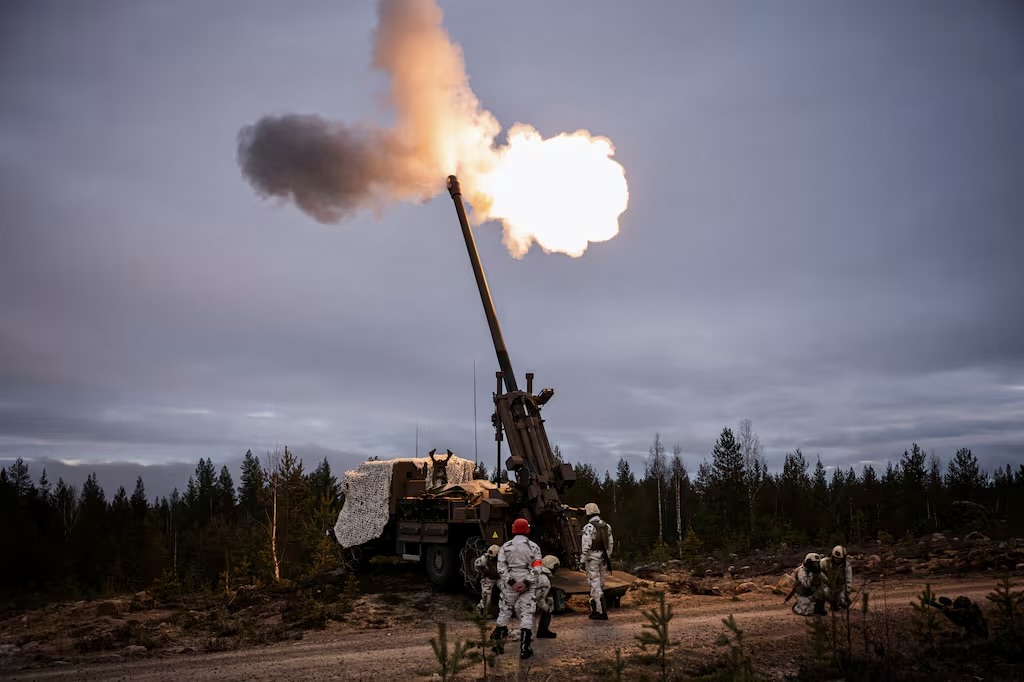
Speaking to journalists on June 15, Coquet explained that the kill web will initially be deployed around Thales’ Atlas artillery system, with subsequent expansion to “dynamic targeting.” The new system will be part of the broader Arcadia AI-powered battlefield command and control structure.
“Just like the Ukrainians are doing, we want to set up a kill web as quickly as possible,” Coquet said. “In other words, shorten the sensor-to-effector loops so we can fire faster and make decisions faster. That’s already underway.”
Unlike the traditional linear “kill chain,” the “kill web” is a multidimensional structure where multiple sensors, weapons, and decision-making nodes interact in parallel.
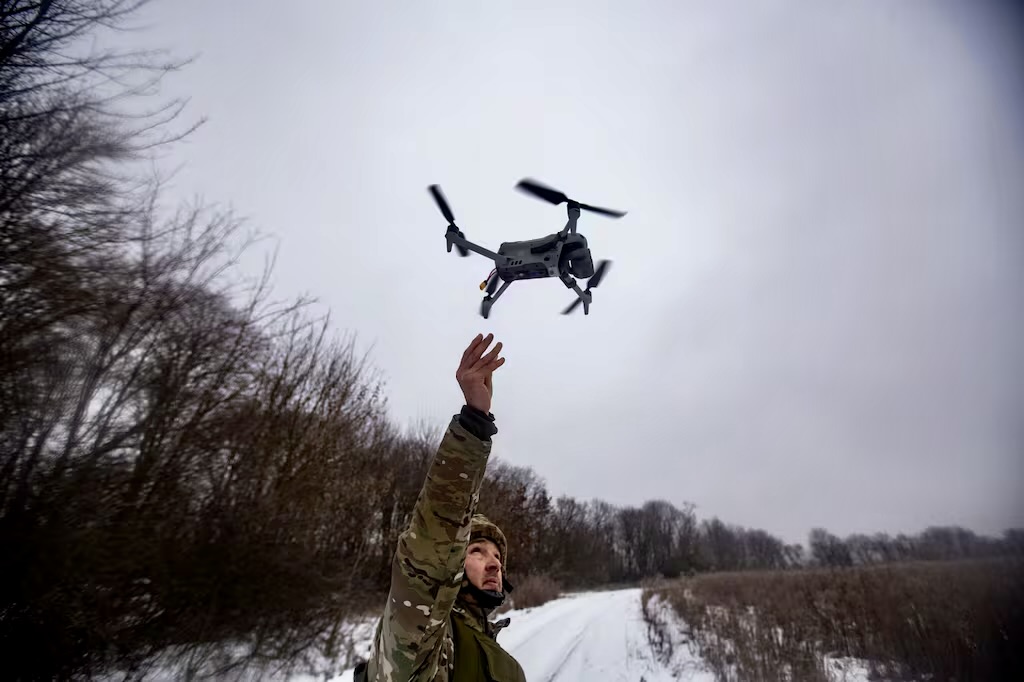
Ukraine’s Delta system — built on a network of drones, satellites, artillery, and command posts — allows forces to engage targets via multiple pathways.
Arcadia: Europe’s answer to America’s Maven
The Arcadia system, developed with the participation of French companies Mistral AI, Safran.AI, Thales, and Airbus, is positioned as a European alternative to the Maven Smart System from American Palantir Technologies.
General Patrick Justel, deputy chief of staff of the French Army, called Arcadia “our answer to Maven.”
According to him, the use of Maven within NATO raises questions of digital sovereignty, hence “the question arises whether we should blindly accept Maven or seek other solutions.”
As General Philippe de Montenon, commander of French land forces and operations, reported, Arcadia is a combination of several programs, including the kill web. Its goal is to ensure interoperability between allied command systems.
“This is a major challenge we need to resolve in the very short term — ensuring that what we call our combat clouds can communicate with one another,” de Montenon emphasized.
Arcadia has already been tested in Romania and France.
From June 8 to 26, 2026, the system is being deployed in Poland as part of the NATO Coalition Warrior Interoperability Exercise (CWIX) to test compatibility with allied systems. France has already conducted demonstrations for NATO, and several European countries have expressed interest in Arcadia.
“When we talk to our European partners, we hear the same reaction: ‘We chose Maven because there was no choice, but if European countries can create an alternative, we will take it,'” Justel said.
Ukraine’s Delta: combat experience and NATO interest
The Delta system, created by Ukrainian military personnel and Aerorozvidka volunteers as early as 2015 and fully deployed after 2022, is a cloud-based battlefield management platform that collects, processes, and displays data on enemy movements, providing situational awareness at all levels of command.
Ukrainian Defense Minister Denys Shmyhal signed an order to implement Delta at all levels of Ukraine’s defense forces, calling it a “digital combat ecosystem.”
The system’s combat effectiveness has been proven on the battlefield: over two months, integrated Delta programs confirmed the destruction or damage of more than 130,000 enemy targets, 25% of which were personnel. More than 200,000 users are registered in the system. Daily, the system supports targeting of over 2,000 enemy objects.
Delta has successfully passed interoperability tests with NATO systems, including integration with the Link 16 tactical data network used by alliance members. During the CWIX 2023 exercises, Delta was integrated into 15 systems from 10 countries, including three NATO systems. One NATO country has already submitted a request to purchase the Ukrainian system.
The French way
France is not simply copying Ukrainian experience — it is adapting it to its own needs. “France is accelerating its preparation for high-intensity warfare, but without copying the Ukrainian model,” General Pierre Schill, chief of staff of the French Army, said on the eve of Eurosatory.
Paris’s decision to create its own “kill web,” inspired by Ukraine’s Delta, marks a significant shift in military doctrine. It is an acknowledgment that the war of the future will be won not only by firepower but also by the speed of data processing. Ukraine’s technological experience on the battlefield is becoming the standard that major powers seek to integrate into their armed forces.