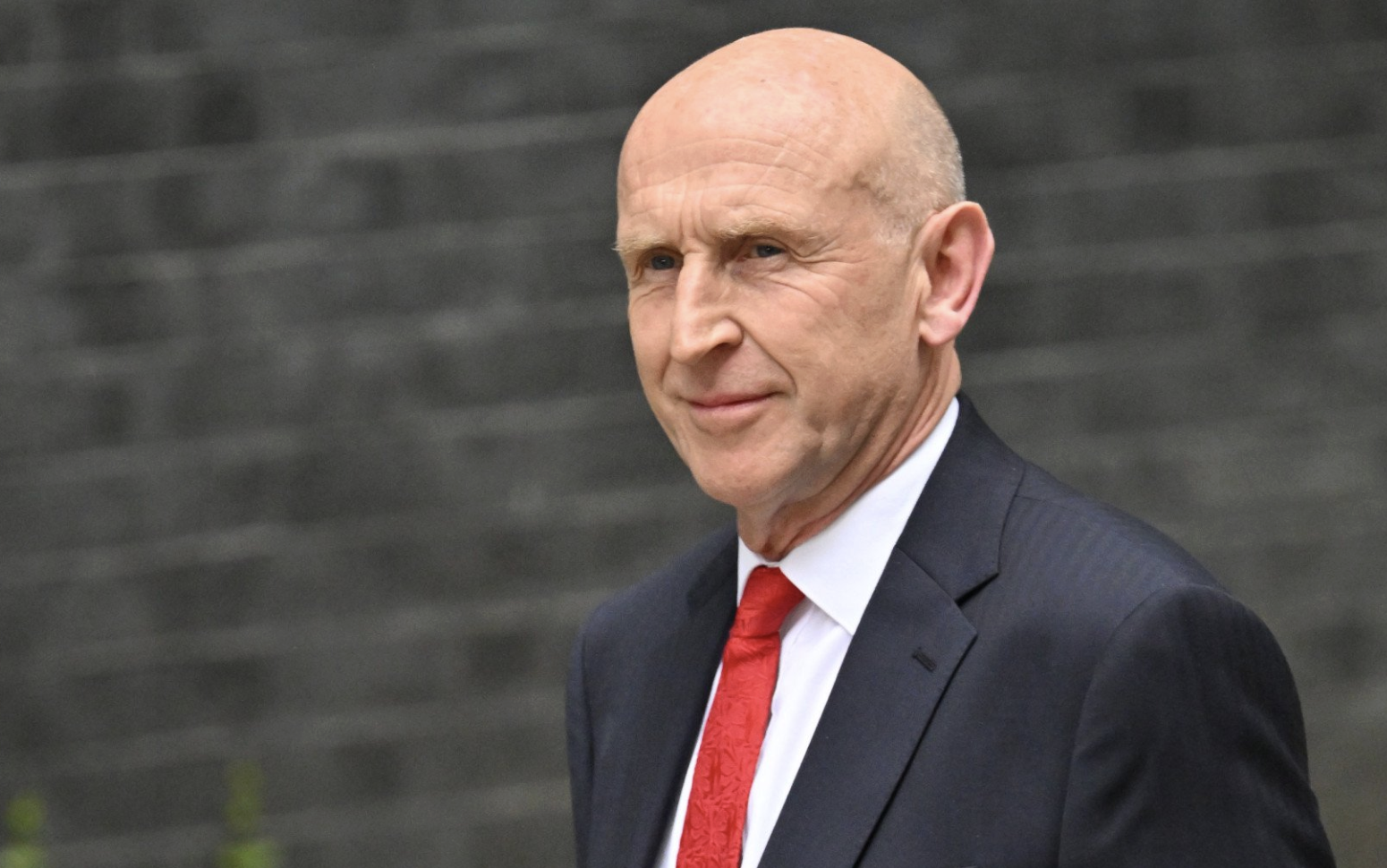
LONDON (Realist English). British Defence Secretary John Healey resigned amid an acute conflict with the government over military funding.
In his explosive letter to Prime Minister Keir Starmer, Healey directly accused the Treasury of being unwilling to allocate the resources needed to protect the country in the face of growing threats, following months of internal disputes, delays and funding cuts.
Ultimatum Letter: “Government Failure”
The key reason for Healey’s departure was a months‑long dispute over the Defence Investment Plan (DIP) — a document intended to determine military funding for the next decade following the Strategic Defence Review (SDR) in June 2025.
In his letter, published on X, Healey harshly criticised the Prime Minister and the Treasury. He recalled that as early as January, cross‑departmental work had confirmed “the scale of the challenges and the growing needs in defence.” Yet after that, Healey said, Keir Starmer “could not” and the Treasury “would not” allocate the necessary resources.
“You know what defence needs. You made a powerful argument at the Munich Security Conference back in February. Without a Defence Investment Plan that matches the seriousness of the moment, I will be forced to make decisions that will reduce the combat readiness of our armed forces, increase the risk to personnel involved in operations, and could make the country less safe,” the letter read.
Healey also stressed that the UK’s political leadership had publicly called on NATO allies to increase spending in the face of pressure from Donald Trump’s administration and threats from Russia, yet had itself failed to meet its own commitments.
He added that the burden on defence had only increased in recent months due to the Middle East conflict, Britain’s leadership of the multinational mission in the Strait of Hormuz, the NATO mission in the Arctic, and the Paris agreement, which provides for a British military presence in Ukraine after a ceasefire.
The Figures: “A Deeply Inadequate Offer”
The main stumbling block was the DIP’s financial figures. According to negotiations, the Ministry of Defence had requested £28 billion in additional funding over the next four years. However, the Treasury under Chancellor Rachel Reeves was only willing to approve about £15 billion, and the final version was cut to roughly £13.5 billion (by other accounts, £13 billion).
Moreover, sources estimated that, given high inflation and growing needs, this amount would actually represent a real‑terms cut in investment.
Healey himself cited the following figures in his letter, which proved decisive for him:
- Current defence spending stands at 2.6% of GDP.
- The proposed plan would only increase it to 2.68% of GDP by 2030.
- In his view, a target of 3% of GDP by 2030 was achievable. Moreover, the government had previously committed to NATO to raise spending to 3.5% of GDP by 2035.
Delays and Questionable “Back‑Loading”
The Defence Investment Plan was announced last year, but its publication was repeatedly delayed. The Prime Minister set the NATO summit in Ankara on 7 July 2026 as the final deadline.
This caused growing irritation both within the military and among the defence industry, which could not plan long‑term contracts.
Healey also expressed concern that a large part of the promised funds would only arrive after 2030. “Operational pressures and the need to accelerate combat readiness are critically important in the first two years,” he stressed in his letter, calling such distribution “back‑loaded.”
Political Context and Chain Reaction
John Healey’s resignation was a powerful blow to Keir Starmer’s already weakened government. This was the second cabinet minister to leave his post in recent weeks. Earlier, in May, Health Secretary Wes Streeting resigned, saying he had “lost confidence” in the Prime Minister’s leadership.
That same evening, Healey was followed by Armed Forces Minister Al Carns, a former Royal Marine. In his statement, he wrote that he could not defend “a level of investment that he knows does not match the task.”
The resignations came at a critical moment — a week before crucial by‑elections, in which Labour MP Andy Burnham (Mayor of Greater Manchester) is trying to return to Westminster to challenge Starmer himself for party leadership.
Reaction from Allies and Opposition
Conservative opposition leader Kemi Badenoch called Healey’s decision “an honest move” and expressed shock that the current funding level puts the lives of servicemen and women at risk. “This government is in chaos, unable to govern and lacking leadership,” said Green Party leader Zack Polanski.
Italian Defence Minister Guido Crosetto replied to Healey’s post: “I fully understand your reflections and the reasons that led you to this choice. It is a choice that cannot leave any of us, your colleagues facing the same challenges, indifferent. I agree with virtually everything you wrote.”
Appointment of a Successor
That same evening, the Prime Minister announced the appointment of a new Defence Secretary: Dan Jarvis, who had previously served as Security Minister. Jarvis is a former British Army paratrooper, and he will now have to finish work on the ill‑fated Defence Investment Plan from which his predecessor had resigned.