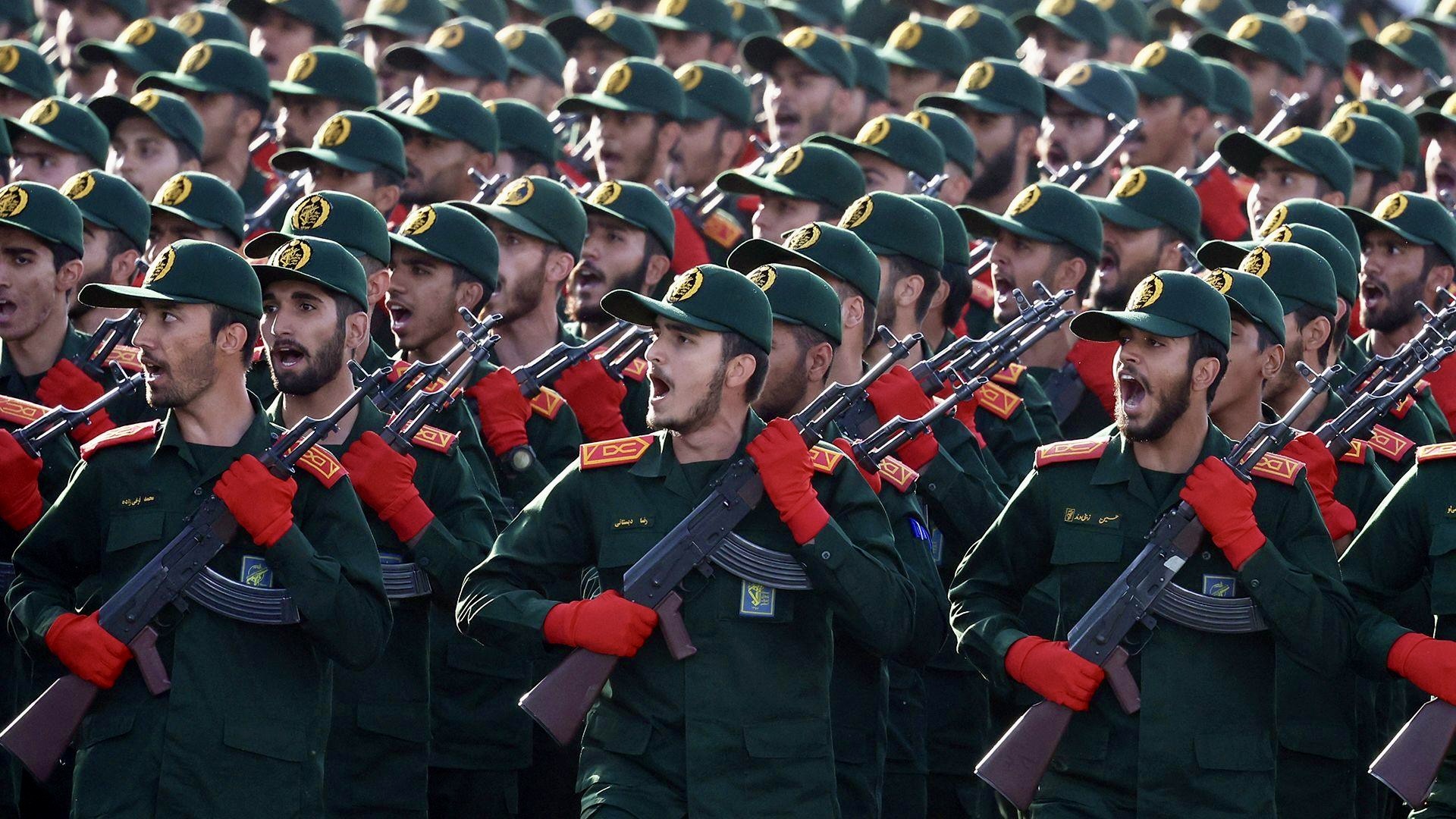
LONDON (Realist English). After three months of war, Iran has become more dangerous than ever. Tehran’s leadership, having survived a joint US-Israeli attack on its territory without collapsing, has finally abandoned strategic patience.
As Rob Geist Pinfold, a lecturer in international security at King’s College London, writes in his article for Foreign Policy, the Islamic Republic’s new leadership is demonstrating a higher risk tolerance and a willingness to use force to deter its rivals, while also reasserting its role as the leader of the “Axis of Resistance.”
New Strategy: From Patience to Aggression
The author reminds us that on June 8, 2026, Iranian missile strikes on northern Israel marked the first direct exchange of fire between the two countries since the April ceasefire. These were followed by an incident involving a US helicopter and an Iranian drone near the Strait of Hormuz, retaliatory US strikes, and new Iranian attacks on Bahrain, Kuwait, and Jordan.
In Pinfold’s view, these events are part of a larger problem. Iran is neither deterred nor desperately in need of a deal. Instead, its new leadership is acting more assertively than ever, discarding the traditional policy of “strategic patience” whereby Iranian forces often refrained from responding to provocations.
“By going toe‑to‑toe with Israel in defense of Hezbollah, Iran is doubling down and reasserting its support for and leadership of the so‑called ‘Axis of Resistance’,” the analyst writes.
Why Trump’s Plan Failed
The US goals at the start of its “special military operation” against Iran in February 2026 were broad: to force Tehran to abandon its sponsorship of a network of violent non‑state actors and roll back its nuclear program — either through regime change or a deal. In Pinfold’s view, however, these efforts have failed.
For a long time, Iran adhered to a strategy of “forward defense,” relying on a network of regional allies and proxies (Hamas, Hezbollah, the Houthis) to provide strategic depth and a force multiplier. Tehran avoided open confrontation, believing that time was on its side.
This strategy began to crack after October 7, 2023, when Hamas attacked Israel. Despite decades of support, Iran stood aside, allowing Israel to wage its campaign in Gaza. It was only in April and October 2024, after Israel bombed the Iranian consulate in Damascus and killed a Hamas leader in Tehran, that the regime finally responded with direct strikes — but it did so weakly, warning in advance and using slow drones that were shot down.
This backfired spectacularly. It not only normalized direct state‑on‑state conflict between Iran and Israel but also created the impression that “Iran’s bark was worse than its bite.”
By last summer, Israel concluded that it could launch a long‑discussed strike on Iran’s nuclear program without paying an exorbitant price. When the US joined the attack, Iran again responded symbolically — warning in advance of a missile strike on a base in Qatar.
Turning Point: February 2026 and the Closure of the Strait
Only after the joint US-Israeli attack in February 2026 (during which Supreme Leader Ayatollah Ali Khamenei was killed) did Iran finally revise its tactics. The regime began striking civilian targets and critical infrastructure across the region and closed the Strait of Hormuz.
Even after the April ceasefire, the strikes did not stop. In the first two weeks of the ceasefire, Iran attacked Qatar, Bahrain, the UAE, and Kuwait, and the US initially did not respond. But as peace talks dragged on, the Trump administration began increasingly using “defensive” and “preventive” measures.
In response, Iran escalated each time, attacking civilian targets. A recent example: the US disabled the engine of a tanker heading for Iran, and Iran in response bombed and severely damaged Kuwait’s international airport, killing one person and injuring more than 60.
New Rules of the Game: Hezbollah and Lebanon
Iran’s strikes on Israel on June 7–8, 2026, were part of the same strategic recalibration. They were a response to an Israeli bombing of a Beirut suburb. Iran sought to establish new “rules of the game” in Israel’s conflict with Hezbollah: that any Israeli attacks significantly north of the Litani River and in Beirut would be unacceptable and would be met with retaliation.
Furthermore, Tehran is trying to demonstrate to the Lebanese population that it and Hezbollah — not Lebanon’s government (which is conducting direct peace talks with Israel) — are its true protectors.
Why Iran Has Become More Dangerous
The author concludes that the evolution of Iran’s way of war explains why the Middle East will likely remain unpredictable and violent for the foreseeable future. The seeming paradox — Iran’s diminished regional influence alongside its growing revisionism — is actually a rational strategic calculation.
Iran has already lived through its “nightmare scenario” — a joint US and Israeli attack on its own territory. It happened twice, but the regime did not collapse. Having weathered this threat, it has become more assertive, more risk‑tolerant, and more willing to escalate.
“That is why Iran is doubling down on its support for the Axis of Resistance while jettisoning strategic patience. All of this is aimed at compensating for the systemic flaws in Iran’s grand strategy and the challenges it has faced since October 7, 2023. And so far, it is working,” Pinfold concludes.