BAGHDAD (Realist English). Iraq – one of the world’s leaders in oil reserves – finds itself on the verge of systemic collapse. The blockade of the Strait of Hormuz, triggered by the US‑Iran war, has slashed hydrocarbon exports by more than half, depriving the budget of critical foreign currency revenues. Against this backdrop, domestic debt, corruption, social discontent, as well as the threat of renewed inter‑religious conflict and external intervention, are all growing rapidly.
The situation is analysed for Realist English by Stanislav Ivanov, a leading researcher at the Institute of World Economy and International Relations (IMEMO) of the Russian Academy of Sciences, and a Candidate of Historical Sciences.
Oil exports cut in half
Iraq ranks fifth in the world in proven oil reserves, behind only Venezuela, Saudi Arabia, Iran and Canada. It is also the second‑largest oil producer and reserve holder among OPEC members, after Saudi Arabia. The country’s proven reserves stand at approximately 145–148 billion barrels.
Until recently, oil exports allowed the Iraqi government to maintain a positive budget balance, overcome the consequences of armed conflicts, and develop science, industry, agriculture and infrastructure, ensuring a reasonably acceptable standard of living for the population.
However, the blockade of the Strait of Hormuz by the US and Iran has had a catastrophic impact on the country’s overall situation. Iraqi oil exports have more than halved – from 3.5 to 1.5 million barrels per day – causing the state budget to lose critical amounts of foreign currency.
Baghdad’s attempts to urgently activate alternative export routes, in particular the pipeline from the northern fields of Iraq’s Kirkuk province to Turkey’s Mediterranean port of Ceyhan, are still at the negotiation stage and require considerable time.
As is known, Turkey suspended oil exports from northern Iraq on 25 March 2023, after the International Court of Arbitration in Paris ruled that Turkey had violated a bilateral agreement by facilitating independent pipeline shipments of oil and gas by the Regional Government of Iraqi Kurdistan without the permission of federal authorities. Ankara was ordered to pay Baghdad $1.5 billion in compensation for purchases of Iraqi hydrocarbons in 2014–2018.
The approximately three‑year halt in the Kirkuk–Ceyhan pipeline’s operations had a negative impact on the work of Russian companies Gazprom Neft and Rosneft, which were carrying out large‑scale oil and gas production projects in northern Iraq.
Although Kurdish authorities agreed to transfer the right to sign contracts for hydrocarbon exports from their region’s fields to the central government, it took time to renegotiate the entire package of agreements in this area. According to Iraqi Oil Minister Basem Mohammed Khudair, a provisional agreement signed with Ankara in late July 2026 sets the maximum export capacity of the Kirkuk–Ceyhan pipeline at 750,000 barrels per day, with current flows of only about 180,000–200,000 barrels per day.
The sides, however, intend to develop a long‑term agreement to raise the export ceiling to 1.5 million barrels per day. These plans are being hindered by disputes over production sharing between Iraq’s national oil company SOMO and foreign oil and gas companies. Recently, an agreement was signed to transfer a 15% stake in BP Energy Company of Kirkuk Limited, which manages oil and gas fields in the Kirkuk area, to Turkey’s state‑owned TPAO.
Russia’s Ambassador to Iraq, Elbrus Kutrashev, has previously noted that Russian oil and gas companies have invested significant funds in developing Kurdish fields in northern Iraq, but when these fields come under Baghdad’s jurisdiction, investor revenues are substantially reduced. According to him, this calls into question the economic viability of continuing joint Russian‑Iraqi projects in this area.
New pipeline projects
Iraqi authorities are also considering a project to build a new extensive pipeline that would connect the largest oil fields near the city of Basra in southern Iraq with Haditha in the west, and then onward to the port of Ceyhan in Turkey and the port of Banias on the Syrian coast. Lebanese Prime Minister Nawaf Salam, during his visit to Baghdad on 26 July 2026, proposed using Lebanese territory as an additional outlet for Iraq to the Mediterranean Sea.
The project envisages a branch of the new Iraqi pipeline along the Syrian Mediterranean coast to the Lebanese port of Tripoli. The Lebanese are reportedly ready not only to ensure the export of Iraqi oil by tankers to the world market, but also to build a refinery for processing it on site.
While alternative routes for Iraqi oil exports are still at the discussion and memorandum‑of‑understanding stage, Iraq is sinking into an ever‑deepening financial, economic and social crisis. Growing revenue deficits are compounded by other negative factors that destabilise the overall situation in the country.
National debt exceeds $70 billion
The country has recorded record domestic debt (over $70 billion). The government has warned of possible delays in salary payments to public sector employees. At the same time, rampant corruption in the state apparatus is noted. Iraq’s inclusion in the FATF “grey list” due to money‑laundering risks, as well as US sanctions against Iraqi officials and banks, have complicated dollar transactions.
There are serious disruptions in electricity and water supply. The country is critically dependent on the dwindling water resources of the Tigris and Euphrates rivers and on gas supplies from Iran for electricity generation, making its energy system extremely vulnerable.
The risk of a new major war
One of the main dangers for the country is the risk of Iraqi territory becoming a staging ground for armed confrontation between the US and its regional allies, on the one hand, and Iran and its proxy forces, on the other. In recent times, strikes by Iran’s Armed Forces and the IRGC against US targets in Iraq and against camps for Kurdish refugees in the north of the country, where militants of Kurdish groups opposed to Tehran are allegedly based, have become regular.
Pro‑Iranian Shia militias such as Hashd al‑Shaabi, Kata’ib Hezbollah and similar groups are also carrying out drone and rocket attacks on American and Saudi targets in the region. In response, the US Armed Forces are striking the IRGC and its proxy forces in Iraq. Civilians are being killed, and civilian facilities and infrastructure are being destroyed.
The consequences of the 2014–2018 war against the Islamic Caliphate have not been overcome. More than one million Iraqis remain internally displaced, living in refugee camps and destroyed homes without documents or access to healthcare.
The threat of a resurgence of the “Islamic State” (banned in Russia) also persists. In rural and remote areas of the country, in the northern and central provinces, underground cells and scattered groups of jihadist militants are active, carrying out terrorist attacks and regular raids. The Arab‑Sunni population of Iraq sees them as defenders against the aforementioned Shia militias and tacitly supports the militants. With the rise of radical Islamists to power in Syria, an influx of IS militants and their families fleeing Syrian camps and prisons has been noted.
Threat of state disintegration
The problem of state disintegration along ethno‑confessional lines remains on the agenda. Iraq, hastily cobbled together by British colonisers from the remnants of the Ottoman Empire, continues to be under threat of decentralisation. In the southern province of Basra, a movement of Arab Shias for economic autonomy and the transformation of the region into a federal subject, modelled on Iraqi Kurdistan, has gained momentum. Iraq’s constitution allows this.
Although the Arab‑Shia majority of Iraq (up to 65% of the population) is largely pro‑Iranian, there is also no unity within its ranks. The influential spiritual leader of Iraqi Shias, Muqtada al‑Sadr, advocates greater independence for the country and an equidistant foreign policy from both Tehran and Washington.
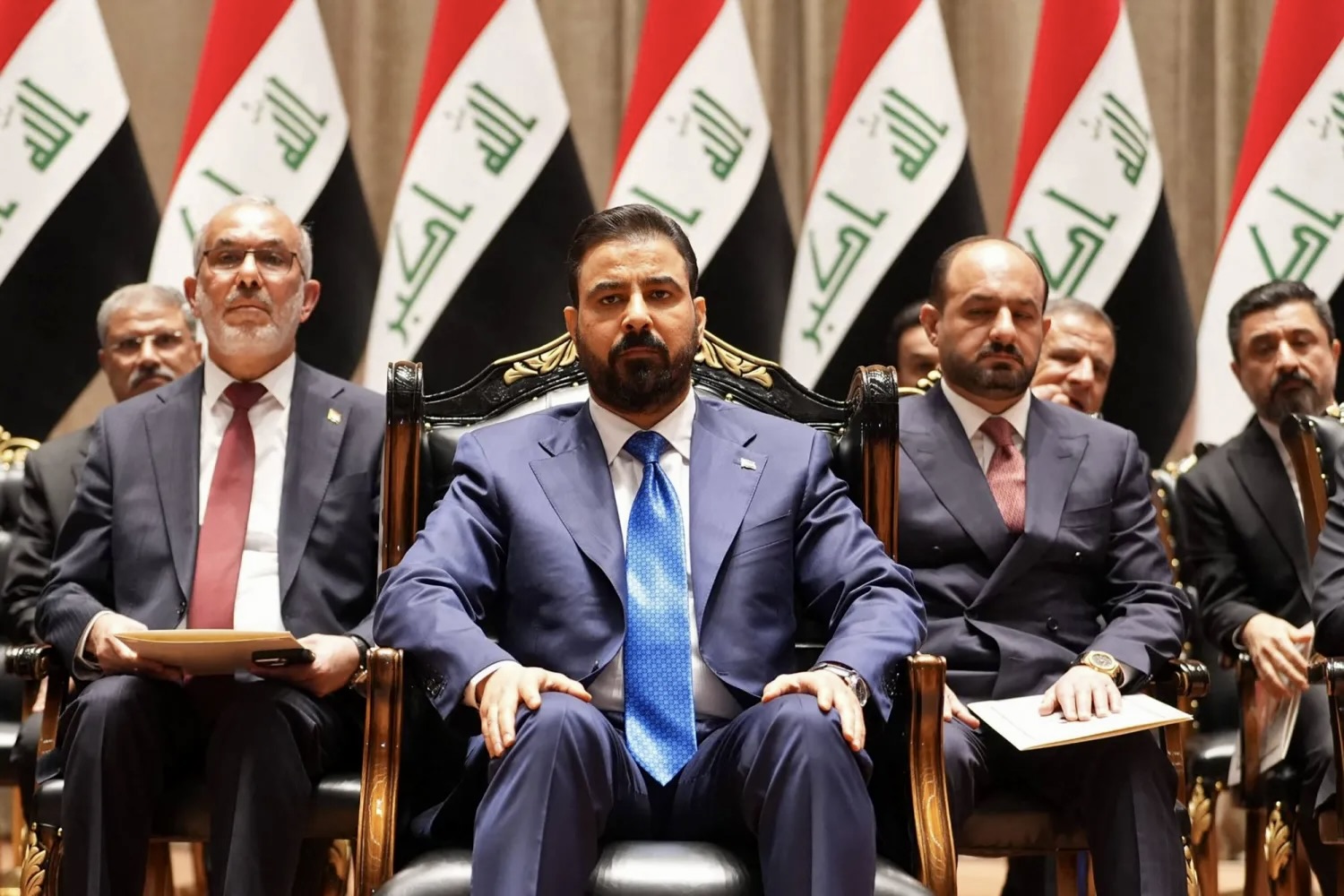
Overall, the currently fragile balance of power in the country’s leadership – with an Arab‑Shia prime minister, an Arab‑Sunni speaker of parliament and a Kurdish president – has so far allowed the post‑Saddam Iraqi state to survive. However, the mounting financial, economic and social crisis caused by oil export disruptions and budget deficits could trigger domestic unrest, another government crisis and intervention in Iraq’s affairs by external powers (Iran, Turkey, the US and the Gulf monarchies). Much in Iraq and the region will depend on when the Strait of Hormuz is reopened to shipping.
Stanislav Ivanov is a Candidate of Historical Sciences and a leading researcher at IMEMO RAS, writing exclusively for Realist English.