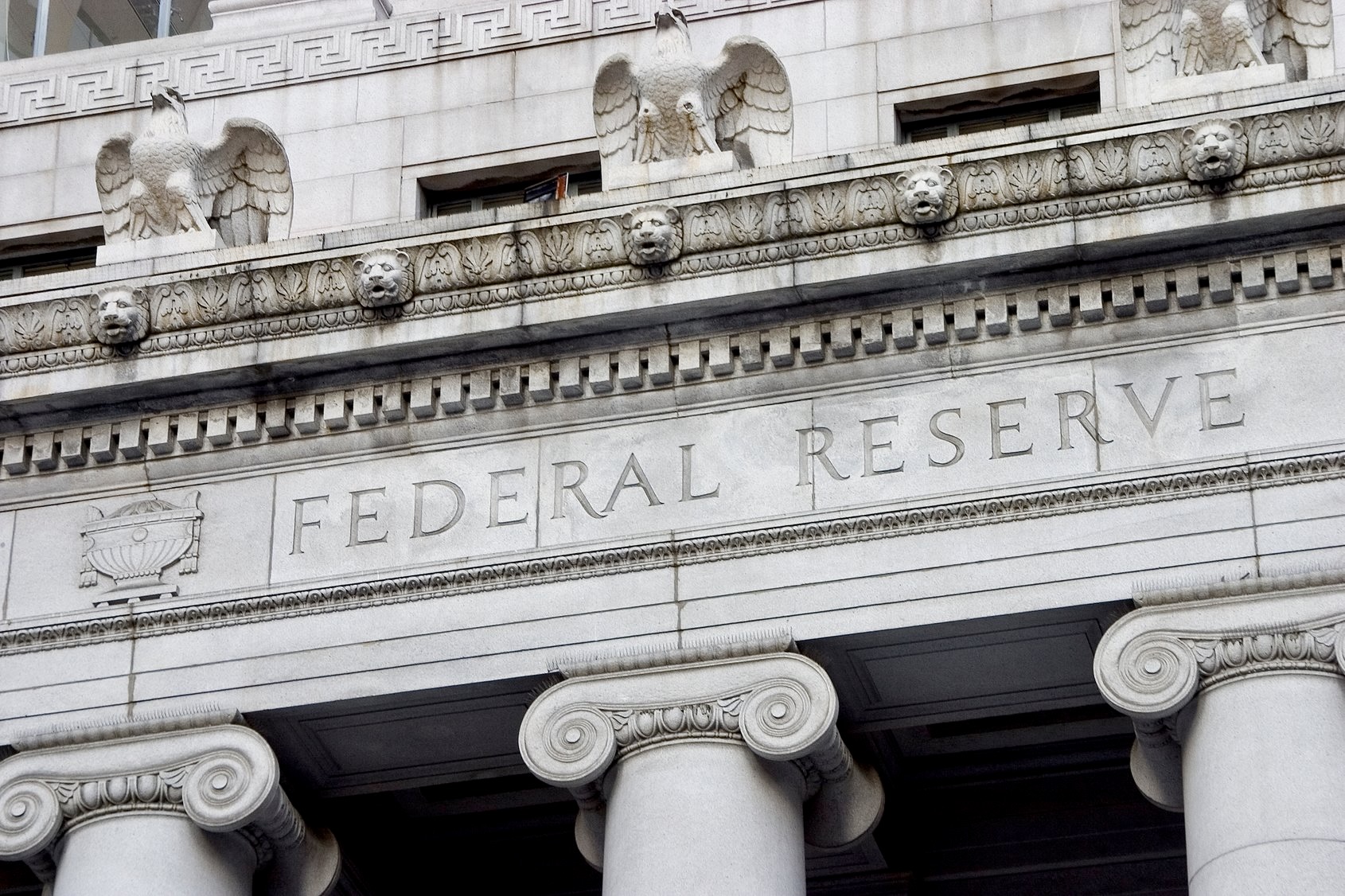
WASHINGTON (Realist English). Ahead of the first Federal Reserve meeting under new chairman Kevin Warsh, renowned financier and bestselling author Ruchir Sharma has called on the central bank to raise interest rates immediately.
In his column in the Financial Times, he argues that the Fed has been “failing at its job” for years, prioritizing employment over price stability, and that now is the time for a populist tightening of policy.
The Fed’s chronic failure
Sharma, chairman of Rockefeller International, notes that the US economy has been near full employment for 55 consecutive months, while inflation has exceeded the Fed’s 2% target for 63 straight months. In his view, this string of failures is comparable only to the Great Inflation of the 1970s.
Moreover, he questions the 2% target itself, citing Warren Buffett, who calls it “too high” and prefers a zero target, since even modest inflation “dramatically” erodes savings and purchasing power over time.
Sharma emphasizes that those hurt most by rising prices are the poor and the middle class – the very base that left- and right-wing populists, who traditionally push for low rates, claim to represent.
Inflation as the top political issue
Consumer prices in the US have risen 30% over recent years, and the rising cost of living has become the hottest issue in domestic politics. Yet, Sharma laments, there is no public outcry for rate hikes.
Cheap-money advocates continue to blame inflation on temporary supply shocks – the pandemic, Trump’s tariffs, the Iran war. But one shock always follows another (El Niño, for example), and the Fed cannot endlessly “accommodate” them.
The pain of high prices outweighs the pain of high rates
The analyst argues that it is persistent inflation, not the cost of borrowing, that undermines Americans’ wellbeing. Real wages are not rising, and delinquencies on mortgages, credit cards, and auto loans are increasing.
A Fed study links the surge in auto loan defaults not to higher borrowing costs, but to the fact that buyers had to take out larger loans to cover rising sticker prices (up nearly 40% this decade).
AI is no excuse
Sharma also dismisses the fashionable argument for easy money – artificial intelligence. He recalls that in the 1990s, Alan Greenspan justified cheap money with the promise of future productivity gains from the internet. Today, however, Big Tech’s spending on AI is inflationary: it drives up prices for electricity, computing power, semiconductors, and much more.
The ‘third mandate’ and market bubbles
Beyond employment and prices, the Fed has an unwritten “third mandate” – financial system stability. The Fed’s own financial conditions index shows conditions remain among the loosest on record. Nominal rates are below nominal GDP growth – a classic recipe for capital misallocation.
Asset prices have soared, enriching mainly the super-rich, who are convinced the Fed will always bail them out at the first sign of trouble. The central bank has effectively socialized market losses while placing no cap on gains.
Lessons from the 1970s and risks in 2026
Sharma warns that while inflation has not yet spun out of control as it did in the 1970s, today’s system is far more vulnerable. Financial markets, the budget deficit, and public debt are a much larger share of the economy than half a century ago.
If Paul Volcker had to repeat his sharp rate hikes (as in 1979) today, the damage would be many times greater. Even a 15% drop in the S&P 500 could slow US growth by nearly half.
Better to act now, before inflation rises further and forces the Fed to jack up rates more aggressively. Meanwhile, with real rates near zero, the Fed is effectively accommodating the fiscal deficit, adding fuel to both consumer and asset price inflation.
What Kevin Warsh can do
The new Fed chair, who admires Paul Volcker and has criticized past expansionary policies, should start tightening policy right now. Warsh will face resistance from Donald Trump, but – Sharma writes – the president has no real answer to the argument that inflation acts as a regressive tax on his own populist base.
Having promised reform, Warsh could begin by ending the Fed’s “bias for easy money.”