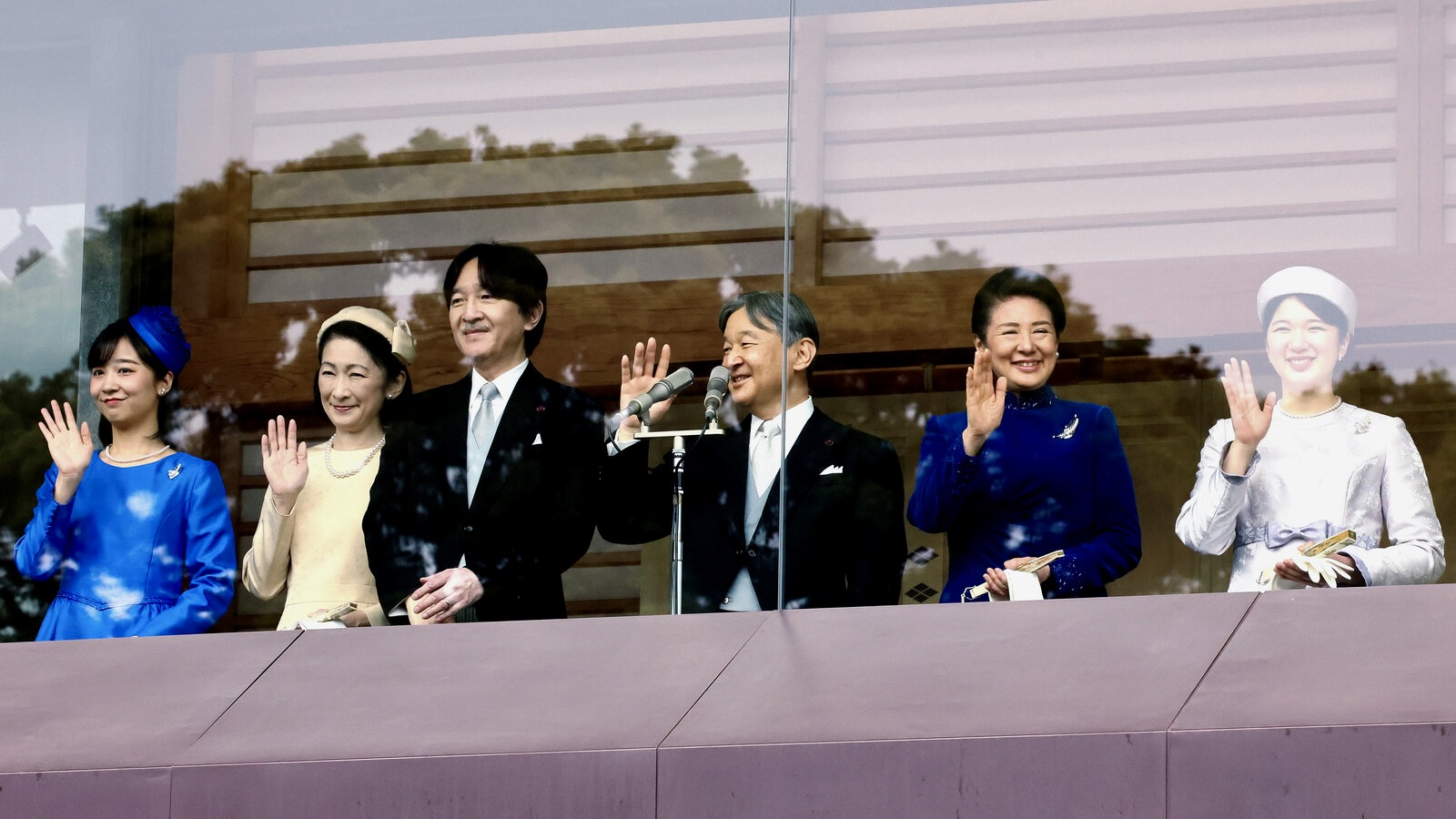
TOKYO (Realist English). Japan’s imperial family, the oldest continuous monarchy in the world, is facing an existential crisis: only three heirs to the throne remain, two of whom are 90-year-old Prince Hitachi and 66-year-old Emperor Naruhito. The only heir of the next generation is 19-year-old Prince Hisahito.
Meanwhile, 24-year-old Princess Aiko, the only daughter of Emperor Naruhito and Empress Masako, whom the Japanese describe as “sincere, modest, and beloved,” has no right to the throne under current law. Moreover, a new bill being pushed through parliament by the government officially closes that possibility for her forever.
Three for 123 Million: How Japan Reached the Brink
Japan’s imperial family today consists of just 16 members — five men and eleven women. The line of succession has only three people:
- Prince Hitachi — 90 years old, the emperor’s uncle
- Crown Prince Fumihito — 60 years old, the emperor’s younger brother
- Prince Hisahito — 19 years old, the crown prince’s son
In pre-war Japan, the problem of finding an heir was not so acute — the imperial family was significantly larger and included collateral branches. However, in 1947, amid a war-ravaged economy, the American occupation administration insisted on downsizing the imperial house. 51 members of 11 collateral branches were stripped of their status.
This reform, conceived as an austerity measure, has today turned into a demographic catastrophe for the monarchy.
Government Plan: “Adopt” Adult Men, but Don’t Allow Women
Instead of allowing women to inherit the throne, the government of Prime Minister Sanae Takaichi — the first woman to hold this post — is pushing a bill to amend the 1947 Imperial House Law.
The document provides for two key measures:
- “Adoption” of adult men from the 11 former imperial branches that lost their status in 1947. Adopted men do not receive the right to the throne, but their sons become heirs.
- Retention of imperial status for women after marrying a commoner — previously they would automatically lose it.
The bill passed the lower house of parliament on July 10, 2026, and is awaiting a vote in the upper house.
83% in Favor of a Woman on the Throne, but Politicians Don’t Listen
Public opinion in Japan has long and unequivocally spoken out in favor of changing the rules.
A Kyodo News poll showed: 83% of Japanese support the possibility of a woman on the throne. According to an Asahi Shimbun poll, 72% were in favor of a female emperor, and 74% supported succession through the maternal line.
Nevertheless, the ruling Liberal Democratic Party (LDP) consistently ignores this data. As one party veteran admitted in a private conversation, the topic of the imperial family is taboo within the LDP. Even conservative lawmakers who privately do not oppose a woman on the throne are afraid to publicly voice this position — they would “lose votes in the next election” and become targets for harassment from conservative voters.
“No One Will Want to Marry Her”: Lawmaker’s Scandalous Statement
In June 2026, LDP upper house lawmaker Hirofumi Nakasone stated that Princess Aiko “cannot become emperor” and that “no one will want to marry her” if she takes the throne — because she would be under immense pressure to bear a son.
The next day, Nakasone apologized, but the very fact of such a statement eloquently characterizes the attitude of Japan’s political establishment toward women.
Historical Paradox: Japan Has Already Had Female Emperors
Prior to the adoption of the 1889 Imperial House Law, Japan was ruled by eight female emperors. Most often this occurred when male heirs were too young.
Professor Makoto Okawa of Chuo University calls the current ban “misogyny”: “It is difficult to find any rational justification for refusing a woman to become emperor. The idea of preemptively excluding women as incapable of taking the throne must be understood as misogyny.” He also emphasizes that the country’s constitution does not prohibit women from inheriting the throne.
The bill must be passed before the current parliamentary session ends on July 17. The opposition has already vowed to challenge it. The main opposition Constitutional Democratic Party intends to propose an amendment excluding the “adoption” of adult men.
Experts and activists warn: the current plan is not a solution but merely a postponement of the crisis. The “adoption” of adult men from former imperial branches who have lived as ordinary citizens for decades raises questions from the standpoint of the constitutional principle of equality.
Moreover, even if the law is passed, no immediate adoptions will follow — it is merely an “emergency contingency plan.”
The paradox of Japan’s crisis is that a country on the verge of getting its first female prime minister is simultaneously doing everything possible to prevent a woman from ascending the imperial throne. And while the conservative elite clings to a “tradition” that in fact did not exist for most of Japanese history, the world’s oldest monarchy risks being left without an heir.