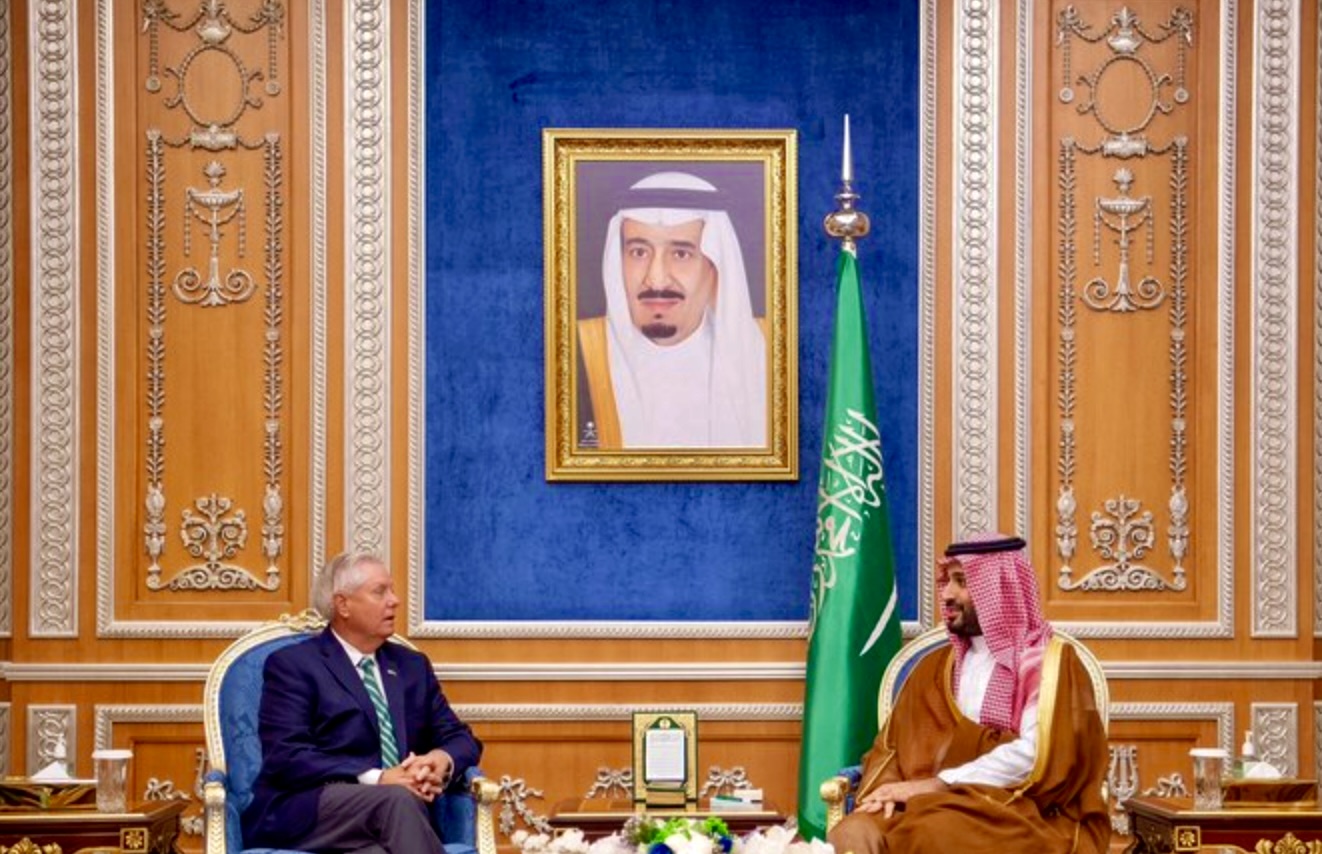
WASHINGTON (Realist English). — In the final weeks of his life, US Senator Lindsey Graham was actively preparing a major diplomatic initiative to normalize relations between Israel and Saudi Arabia.
According to Axios, citing conversations with Graham himself, the Republican considered this deal the “grand prize” of the war with Iran and a key element of the post-war Middle East order.
Graham passed away on July 11, 2026, at the age of 71 from a heart attack caused by atherosclerosis. However, until his final hours, he continued working on ambitious foreign policy projects.
Background: Years of Work
Graham had been working on the issue of normalizing relations between Israel and Saudi Arabia for many years, including during the Biden administration. He saw in such an agreement the potential to fundamentally reshape the region and create a durable Arab-Israeli alliance against Iran.
In mid-May 2026, Graham began urging President Donald Trump to make Saudi-Israeli normalization a central part of a broader post-war strategy. About a week later, during a telephone conference with leaders of Arab and Muslim countries, Trump expressed his desire to establish relations with Israel, provided an agreement was reached to end the war with Iran. The main focus of this initiative was Saudi Arabia.
Graham’s Plan: Timeline and Goals
According to the senator’s plan, an intensive diplomatic campaign was to begin after the Israeli elections in late October 2026 and the US midterm elections. The goal was to reach an agreement by January 2027, when the new Congress would convene.
Graham calculated that if a diplomatic window opened, intensive work should begin in September, with the main elements of the deal ready by November. He planned to visit Israel and Saudi Arabia in August to assess the parties’ readiness to resume negotiations.
Key Figures and Consultations
In his final weeks, Graham held a series of consultations with key players:
- Donald Trump — Graham discussed the initiative with the president, and they agreed to act in coordination.
- Jared Kushner and Steve Witkoff — US special envoys who supported the plan.
- Ron Dermer — a confidant of Israeli Prime Minister Benjamin Netanyahu.
- Princess Reema bint Bandar — Saudi Arabia’s ambassador to Washington.
- Prince Faisal bin Farhan — Saudi Arabia’s foreign minister.
Obstacles: The Palestinian Issue and Congress
Graham was aware that the deal would face two major political challenges.
First — the US Congress. The central element of the proposed agreement was a US-Saudi mutual defense treaty, the text of which had largely been agreed upon during the Biden administration. Such a treaty requires a two-thirds majority in the Senate. To secure enough Democratic votes, the deal had to include meaningful progress on the Palestinian issue — including an Israeli commitment regarding a future Palestinian state and concrete steps in that direction.
Second — Israel’s position. Saudi Arabia insisted that any agreement include an “irreversible, time-bound path to a Palestinian state.” Netanyahu’s far-right government rejected this condition. Graham intended to work with Trump to convey to Netanyahu and other Israeli leaders before the elections that this was Washington’s expectation. However, it was unclear whether the next Israeli government — especially if negotiations began while a coalition was being formed — would be able to make such concessions.
Final Hours
On the evening of July 11, just hours before his death, Graham spoke by phone with Trump. He reported on his recent trip to Ukraine and discussed the Russia sanctions bill he was pushing in the Senate. Trump, in turn, informed the senator about preparations for new strikes on Iran following another attack on commercial vessels in the Strait of Hormuz.
Shortly after the call, Graham complained of feeling unwell. He was advised to seek immediate medical attention, but he replied that he would do so on the morning of July 12 — after his scheduled appearance on NBC.
Graham joked: “I can’t die now. I still need to deal with Russia sanctions, sort out Iran, and achieve Israeli-Saudi normalization.”
Graham’s death leaves uncertainty around the future of this initiative. He was one of the key foreign policy voices in Washington and the main advocate for Saudi-Israeli normalization in Republican circles.
However, his plan followed a clear schedule: elections in Israel in October, US midterms in November, and the lame-duck session of Congress after November as the only realistic window for treaty ratification. Without Graham, who had been leading this work for many years, including during the Biden administration, the realization of his vision may be in question.
At the same time, the underlying logic of the post-war Middle East order that Graham considered urgent remains relevant. The question is whether a new champion for this idea will emerge in Washington, one capable of overcoming political obstacles in Congress, Jerusalem, and Riyadh.