TEL AVIV (Realist English). — Israel has been rocked by an escalation of criminal violence, with at least 13 grenade attacks in the central part of the country over the past week, linked to a feud between two powerful crime families — the Mosley and Jarushi clans.
Against this backdrop, the Knesset rushed through a series of controversial laws, including extending mandatory military service to 32 months and enshrining Torah study as a Basic Law.
Meanwhile, Iran expanded the geography of its strikes on US facilities in the region, and a group of Breslov Hasidim became embroiled in an incident in the Palestinian village of Mukhmas in the West Bank.
Criminal War: Grenades and Restaurants
On the night of July 13–14, a series of explosions rocked the country. Seven fragmentation grenades were thrown at residential buildings and commercial properties in six cities. One person in Tel Aviv sustained minor injuries; in other cases, only property was damaged.
The epicenter of the attacks was the Japanika sushi restaurant chain, owned by businessman Barak Abramov. Over the past few days, four branches of the chain have been targeted:
- On the night of July 13, a grenade was thrown at the Kfar Saba branch, setting the building on fire.
- Later that same night, a grenade exploded near the Afula branch.
- On Tuesday morning, an armed attack was carried out on the Herzliya restaurant.
- Earlier, similar attacks occurred in Givatayim, Ramat Gan, Kiryat Ono, and Netanya.
Police suspect the wave of violence is linked to the feud between the Mosley and Jarushi clans. The Mosley family, originating from the Tel Aviv neighborhoods of Atikva and Kfar Shalem, is considered one of Israel’s most influential criminal organizations.
Barak Abramov was previously close to the Mosley clan, but according to law enforcement, he has now developed ties with the rival Jarushi family.
In addition, police are investigating incidents involving stolen military grenades: one was thrown at a residential building in Nes Ziona, and another in Rishon LeZion.
Political Background: Conscription and Torah Study
Amid the criminal escalation, the Knesset passed two controversial bills.
Extension of mandatory service. The Knesset Foreign Affairs and Defense Committee approved extending mandatory military service for men from 30 to 32 months. The previously planned reduction to 30 months for draftees of July 2024 has been postponed for five years and will only take effect for those enlisting in June 2029. Meanwhile, the military itself acknowledges that even 32 months are insufficient to cover personnel shortages.
Enshrinement of Torah study as a Basic Law. The Knesset adopted a quasi-constitutional measure declaring Torah study a “fundamental value” of the Jewish people and the State of Israel. This initiative, promoted by ultra-Orthodox parties, is seen as an attempt to create legal protection against future Supreme Court rulings that could compel ultra-Orthodox Jews to serve in the military. Prime Minister Benjamin Netanyahu conspicuously abstained from the vote, and some members of his own Likud party voted against it.
The opposition and human rights organizations have already filed petitions with the High Court demanding the freeze and annulment of the new law.
Hasidim in a Palestinian Village
Last week, a group of Breslov Hasidim came under scrutiny after entering the Palestinian village of Mukhmas in the Binyamin region of the West Bank to visit graves of righteous figures.
According to the Israel Defense Forces, contact with the group was lost, and the military launched extensive searches. It was later discovered that the Hasidim had left the village on their own. According to some reports, the group consisted of about ten people.
Social media showed a video of a nearly destroyed vehicle with Israeli license plates, with Hasidic hats visible on the seats. In another incident, Breslov Hasidim also entered a village to visit graves of righteous figures.
Iran Strikes US Facilities
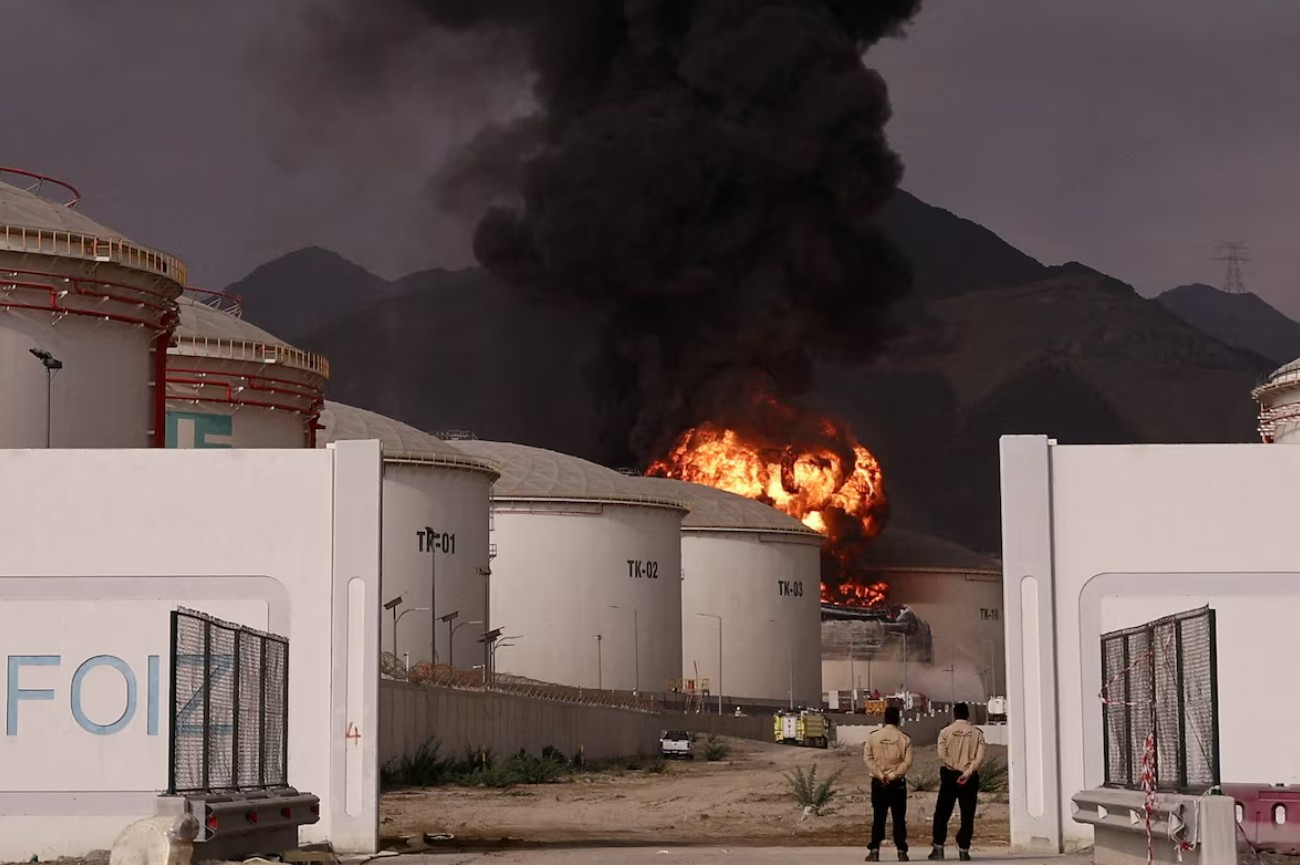
Iran’s Islamic Revolutionary Guard Corps (IRGC) expanded the geography of strikes on US facilities in the region.
According to the IRGC, US military facilities in Bahrain and Kuwait were struck, radar systems in Oman were destroyed, and strikes were also carried out on fuel and ammunition depots at Prince Hassan Air Base in Jordan.
On July 14, Iran claimed it had struck a US air base in Jordan with ballistic missiles. Jordanian military officials reported intercepting four Iranian missiles. In Bahrain, home to the US Fifth Fleet headquarters, air raid sirens sounded for the third time.
The IRGC stated that its strikes in Bahrain hit a US Patriot radar, the Fifth Fleet’s air traffic control radar, and other military systems.
At the same time, the IRGC struck two UAE-flagged tankers in Omani territorial waters south of the Strait of Hormuz. The attack resulted in one crew member killed and eight wounded.
Iran’s strikes came in response to a third consecutive night of US airstrikes on Iranian targets, including the port cities of Bandar Abbas, Bushehr, Jask, Konarak, Chabahar, and the islands of Kish, Qeshm, and Abu Musa.
The situation in and around Israel remains extremely tense. The domestic political crisis is worsening due to a coalition rift and opposition protests against the new laws. The criminal war between the clans threatens public safety, while the regional escalation involving Iran and the US could extend beyond the Strait of Hormuz.