TEHRAN (Realist English). Iran’s Vice President for Strategic Affairs and former Foreign Minister Mohammad Javad Zarif has published an article in Foreign Affairs titled “A New Middle East,” in which he outlines Tehran’s vision for ending the war and establishing lasting peace in the region.
Zarif’s central argument is that the conflict can be ended and peace secured only through a new regional security architecture created by the states of the region themselves, rather than imposed from the outside.
The Memorandum’s Collapse: “The Question Was Not If, but When”
Zarif begins his article by analysing the failure of the June memorandum of understanding between the US and Iran, concluded in Switzerland. In his view, the collapse of the agreement was not unexpected. The reason: fundamentally different interpretations of key provisions, particularly regarding the Strait of Hormuz.
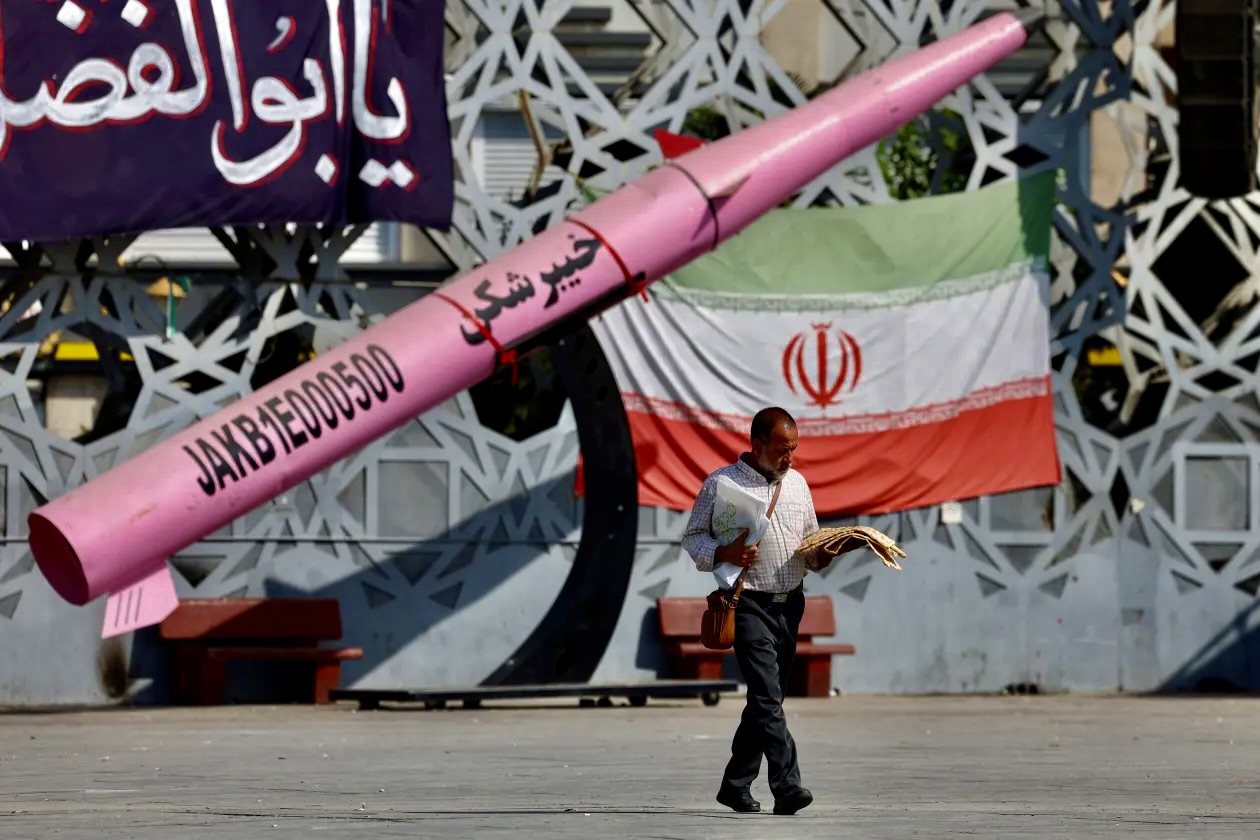
Tehran believed it had undertaken to “use best efforts to ensure the safe passage of commercial vessels without charging fees for 60 days,” and that together with Oman and other Gulf states it would “determine the future management and maritime services in the Strait of Hormuz.”
Washington, however, believed Iran had agreed to unconditional free passage through the strait and that the US was not obliged to respect any arrangements established by Iran.
“The agreement could not survive such dissonance. The resumption of military confrontation was a question not of ‘if’ but of ‘when,'” Zarif writes.
Strategic Deadlock: Why Washington Cannot Win
Zarif argues that the US and Israeli military campaigns against Iran — including unprecedented strikes on political and military leadership and significant infrastructure damage — have not achieved their goals. Tehran has not capitulated, and its territorial integrity and political system have withstood the test.
“Iran’s territorial integrity and its political system have withstood the test, proving the resilience of the Iranian nation and its ability to defend its sovereignty even under the most extreme circumstances,” the author emphasises.
In his view, external players must recognise that Iran cannot be eliminated militarily. Iran’s ability to withstand sustained military pressure makes it impossible to exclude Tehran from any future regional security architecture.
The “Pivot to Asia” and the Illusion of Easy Victory
Zarif draws attention to Washington’s strategic error. For more than a decade, US administrations have aimed to reduce America’s burden in West Asia and focus on the Indo‑Pacific — the so‑called “pivot to Asia.”
According to Zarif, all previous US policies towards Iran — the 2015 nuclear deal, the Abraham Accords, the June 2025 strikes, and the war that began in February 2026 — were instruments to achieve that goal. However, the current conflict clearly demonstrates that Washington cannot “remove” the Iranian government.
“Only diplomacy, a new peace agreement, and a new security structure created by and for regional states will allow the United States to turn its attention elsewhere,” Zarif concludes.
A New Regional Architecture: Dialogue Instead of Confrontation
The central idea of the article is the need for a fundamental shift in the approach to regional security. Zarif proposes:
- Abandoning the policy of maximum pressure and regime change attempts.
- Returning to diplomacy and resuming negotiations on the nuclear deal (JCPOA).
- Creating a regional security structure involving all West Asian states, including Iran, Arab countries, Turkey, and others.
- Ensuring maritime security in the Strait of Hormuz through collective arrangements rather than unilateral actions.
Zarif also warns Tehran against overusing the Strait of Hormuz leverage, so as not to turn the international community against it, and calls on Washington to “restrain Israel,” which, in his view, remains a factor of instability.
Zarif’s article, published amid the eleventh night of US airstrikes on Iran, signals Tehran’s readiness for a diplomatic settlement. However, its key message is addressed not only to Washington but also to regional players: stability in West Asia is impossible without Iran’s participation.
As Zarif noted in an interview with Arab media, “Iran must combine its newly gained confidence with a readiness to extend a hand of friendship to its neighbours and to strive for security through cooperation alongside deterrence.”
The question is whether Washington is ready to hear this signal or whether it will prefer to continue a war that, by Zarif’s own admission, holds no strategic prospect for the United States.