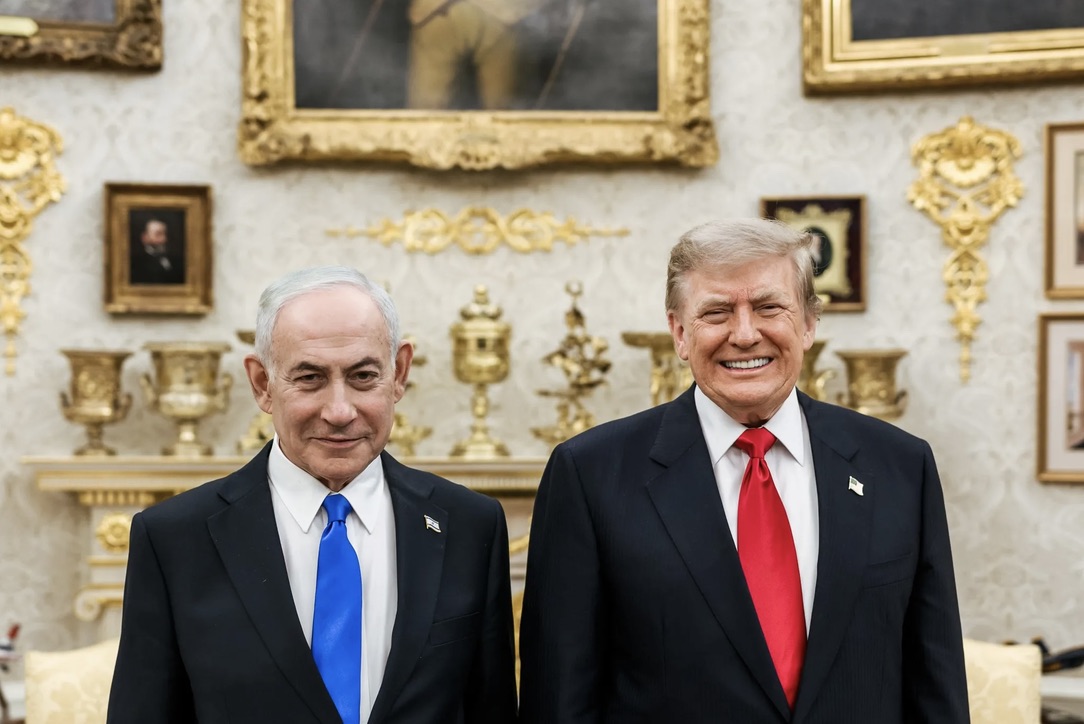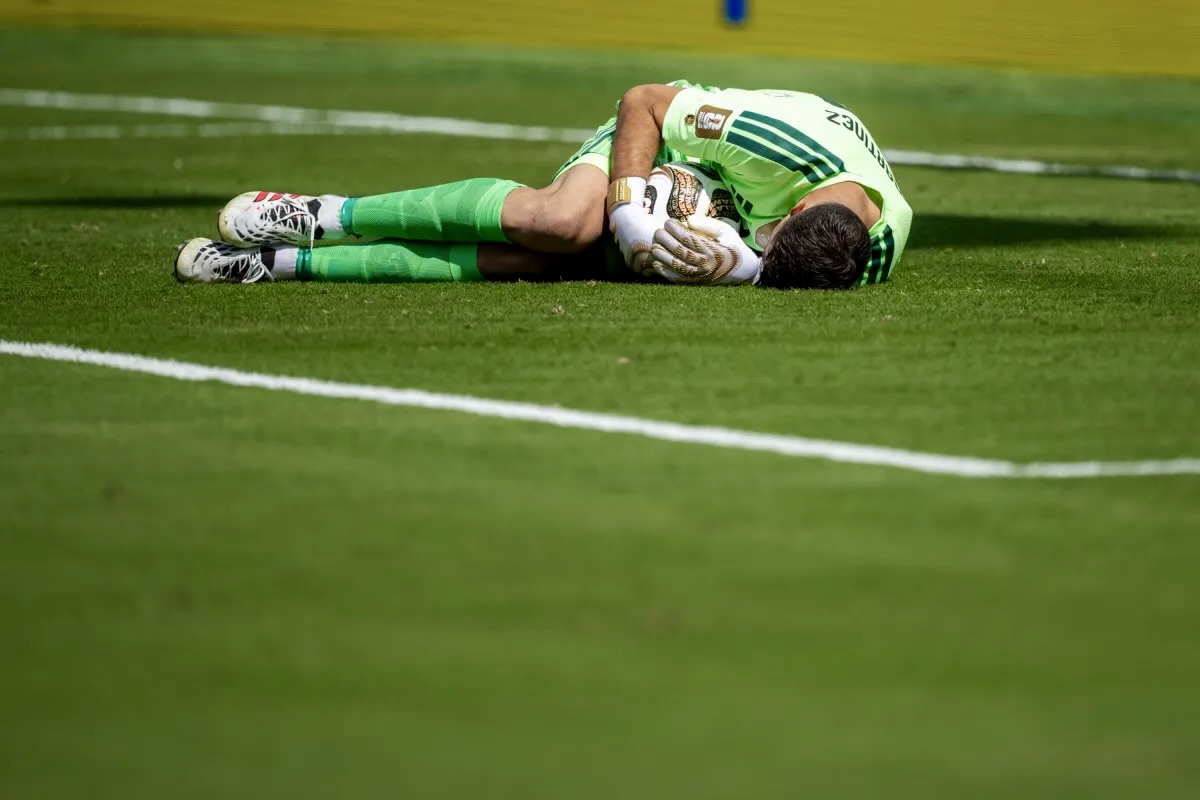
ZURICH (Realist English). FIFA President Gianni Infantino has found himself in the deepest isolation of his entire tenure. In just 48 hours, three confederations have united against him, a senior advisor has resigned, and the organisation’s Chief Operating Officer has accused the president of having “deceived” staff.
All of this is a reaction to Infantino’s plan to sell a 20% stake in FIFA’s commercial subsidiary to private investors, including a company linked to Joshua Kushner – the brother of Jared Kushner, son‑in‑law of US President Donald Trump.
“This is not just a leadership failure. It is FIFA’s abdication of its duty to be the guardian of world football,” UEFA said in a sharp statement.
Infantino’s plan: $20 billion and a ‘cornerstone investor’ from Trump’s circle
The crux of the conflict is FIFA’s plan to create a commercial subsidiary, FIFA Forward Enterprise (FFE), valued at $20 billion, with a 20% stake to be sold to private investors. The “cornerstone investor” would be the New York‑based investment firm Thrive Eternal, founded by Joshua Kushner – brother of Jared Kushner, Donald Trump’s son‑in‑law.
Infantino sent letters to all 211 national associations, promising each of them $40 million ($30 million) in additional funding if they supported the initiative. The deadline for responses was set for 19 September.
Infantino’s senior advisor for global strategy and governance, Carlos Cordeiro – a former vice‑chairman of Goldman Sachs and former president of the US Soccer Federation – publicly stated that he was not involved in the development of the plan and is “categorically” opposed to it.
“I cannot stand by while FIFA considers selling a stake in the World Cup,” Cordeiro said in his resignation statement. “This is a bad deal for FIFA’s member associations, a bad deal for football, and a bad deal for the long‑term future of the game.” He stressed that FIFA is “sitting on billions in reserves and has no debt,” and that selling “the most valuable asset” for $4.2 billion “makes no sense.”
Confederation revolt: UEFA, CONCACAF and AFC against Infantino
UEFA, at an emergency online meeting on 30 July, unanimously (55 votes in favour) voted to boycott all FIFA tournaments – including the men’s and women’s World Cups – if the plan is not fully withdrawn. “The World Cup cannot be treated as an investment product. It is not for sale,” UEFA’s statement reads.
CONCACAF (41 associations) on the same day said it “rejects” the plan, expressing “deep concern about the lack of due process, the artificially short timeframe, and the absence of any consideration or approval by FIFA’s governance bodies.”
The Asian Football Confederation (AFC) issued a statement on 31 July expressing “solidarity with UEFA and CONCACAF.” The AFC stated that Infantino’s plan “cannot realistically achieve the necessary broad consensus.”
The three confederations control 136 votes out of 211 in FIFA. Infantino needs 106 votes for approval. Even if all the remaining associations vote in favour, the plan may fail to secure the required majority.
‘A one‑man project’: FIFA COO accuses president of deception
On Friday, 31 July, FIFA’s Chief Operating Officer Kevin Lamour – a long‑time colleague of Infantino at both FIFA and UEFA – issued an unprecedentedly harsh statement. He called the plan “a one‑man project” and said that staff had been “deceived” by a lack of transparency.
“Our mission is to serve football. The president should unite people, inspire them. Today we are seeing the opposite,” Lamour wrote. “If this means I lose my job, so be it. At least I will sleep soundly.”
Lamour’s statements were echoed by UK Prime Minister Andy Burnham, who called Infantino “not the right person to lead the organisation.”
Origins of the ‘global war’: emotional backlash and loss of trust
As analysts explain, the fierce reaction to Infantino’s plan has deep emotional roots that go far beyond financial arguments.
First, it is a matter of identity and legacy. The World Cup is not just a tournament. For millions of fans, players and national associations, it is a sacred symbol built over generations. The idea of handing over part of that legacy to private investors is seen as sacrilege.
Second, secrecy and lack of dialogue. As Norwegian Football Federation President Lise Klaveness noted, “a project that changes the very essence of our shared model was developed in secret, outside the elected bodies, and presented as a fait accompli without any consultation.” Key figures, including FIFA vice‑presidents and the senior advisor, were unaware of the plan.
Third, the Trump‑Kushner connection. The involvement of a company linked to the US president’s family raised suspicions of political influence over sport.
Fourth, the ‘carrot and stick’ approach. The offer of $40 million to each federation in exchange for a ‘yes’ vote was seen by many as a bribe. UEFA Vice‑President Laura McAllister called it “blackmail.”
Fifth, the threat of tournament expansion. Analysts fear that private investors will demand more matches and more participants to maximise profits, which would destroy the calendar and overburden players.
Infantino finds himself in a situation from which there is no easy way out. He can:
- withdraw the plan – but that would mean political defeat;
- try to push the plan through a vote – but 136 votes are already against him;
- seek a compromise – but UEFA demands a “complete abandonment” of the idea.
As the BBC notes, “no one knows what will happen next, and no one knows what the future holds for Infantino.” His re‑election as FIFA president in March 2027 is now in doubt. UEFA is already discussing the possibility of fielding its own candidate.
“Football belongs to the fans, not to billionaire investors. Enough is enough. It’s time to take a principled stand to protect our game,” said UK Culture Secretary Lisa Nandy.
For the first time in the history of world football, European teams are prepared to refuse to take part in the World Cup. The question is whether Gianni Infantino can find a compromise – or whether world football faces a split the likes of which has not been seen since the creation of UEFA itself.