RIYADH (Realist English). Against the backdrop of escalating conflict in the Middle East, Saudi Arabia has announced the creation of a multinational maritime defence alliance with the participation of 14 countries.
Almost simultaneously, Iran launched a series of strikes on US facilities in the region, breaking several days of relative calm. Analysts attribute Tehran’s resumption of attacks to a change in strategy and Iran’s attempt to regain the initiative.
New maritime alliance: 14 nations under Saudi Arabia’s auspices
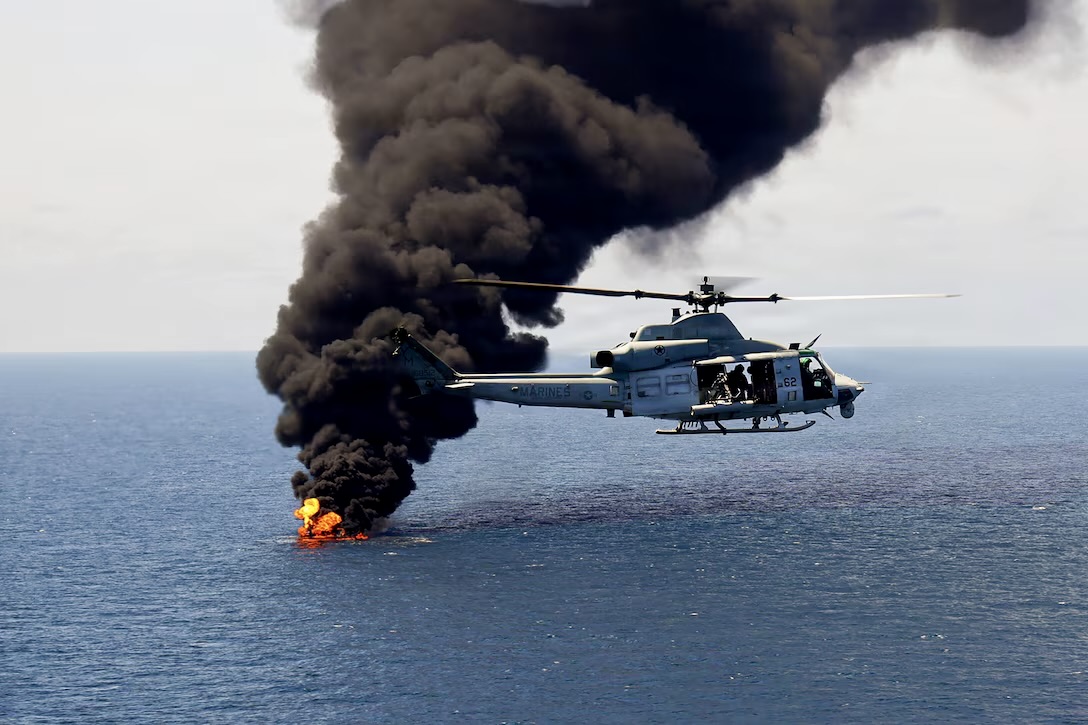
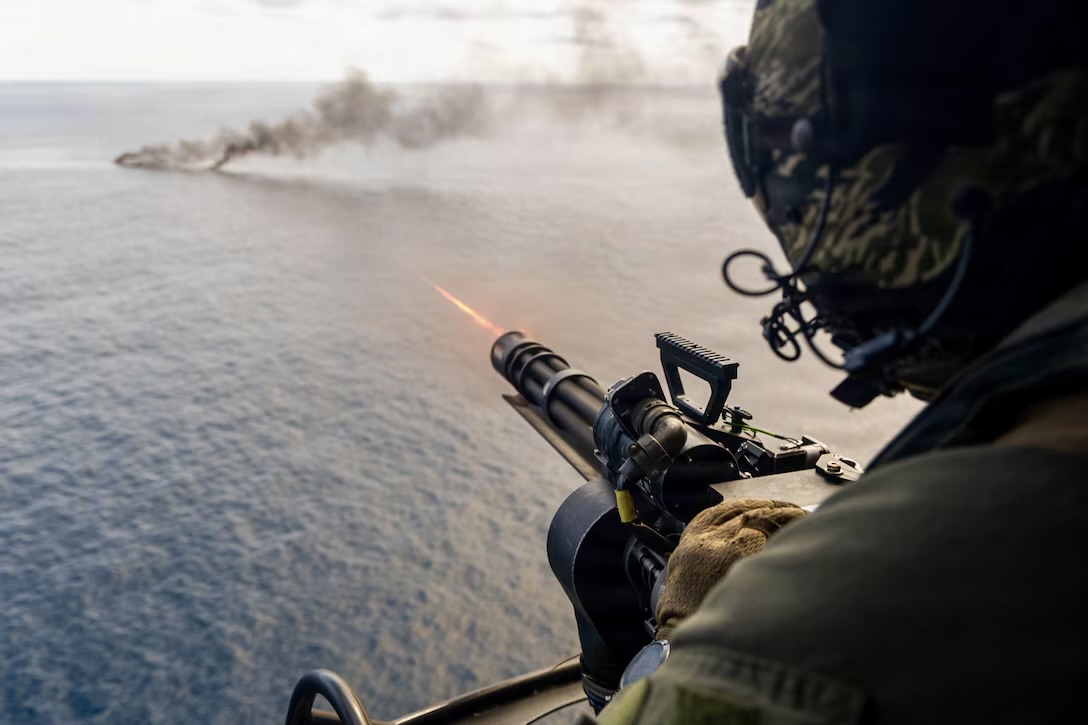
On 30 July, Saudi Arabia’s Ministry of Defence announced the creation of a Multinational Maritime Defence Alliance to ensure freedom of navigation in the Bab el‑Mandeb Strait, the Red Sea and the Gulf of Aden.
A joint statement by the participating countries said the alliance was established “to strengthen maritime security, protect freedom of navigation, and secure international trade routes and energy supply lines.” The 14 signatory countries are: Saudi Arabia, Kuwait, Bahrain, Qatar, Pakistan, Turkey, Egypt, Jordan, Yemen, Bangladesh, Nigeria, Sudan, Djibouti and Somalia.
The alliance’s creation was preceded by a 20 July statement by Yemen’s Houthis announcing a naval blockade of Saudi Arabia. Since then, the Houthis have attacked several vessels and have not abandoned the blockade even after Saudi strikes on Houthi‑controlled areas in Yemen.
The Riyadh meeting was attended by representatives of 43 countries and organisations out of 51 invited, including a European Union delegation. Saudi Arabia will be the alliance’s founding country and will host its headquarters.
The alliance’s headquarters will include a joint command, a combined operations centre and a general secretariat. As Saudi defence officials stressed, the coalition is purely defensive in nature, not directed against any specific country, and will operate in accordance with international law. Participation remains open to other countries after completion of internal procedures.
Why Iran resumed strikes: a change of strategy
Just one day after the alliance was announced, on 31 July, the Iranian army launched drone strikes on US facilities at the Shaykh Isa airbase in southern Bahrain. Targets included power generators, navigation systems, and command and reserve buildings. Earlier that same day, the Islamic Revolutionary Guard Corps (IRGC) claimed attacks on US facilities at the Ali Al‑Salem airbase in Kuwait and the Al‑Azraq airbase in Jordan.
These strikes followed a series of attacks that began on 29 July, when Iran launched missile strikes on US military facilities after the US, jointly with Saudi Arabia, attacked Tehran‑backed militias in Iraq. At least 20 fighters were killed in the strikes on Iraq.
The key question: why did Iran decide to resume strikes despite the US pause?
Analysts say Tehran has fundamentally changed its tactics. Instead of simply responding to US airstrikes, Iran proactively reignited the conflict, seeking to steer the course of the war according to its own scenario.
Hamid Reza Azizi, a researcher at the German Institute for International and Security Affairs, said that “something has fundamentally changed in Iran’s approach, especially its willingness to take the initiative if it sees this as the only viable option.”
According to experts, several factors influenced Iran’s decision:
First, the attack came shortly after Israeli Prime Minister Benjamin Netanyahu’s meeting with US President Donald Trump in Washington. Hours before the meeting, Israel’s defence minister said Israel had considered attacking Iran’s energy infrastructure but was stopped by the US administration. As Azizi believes, “the attack was most likely a signal linked to Netanyahu’s White House visit.”
Second, Tehran appears to have concluded that “escalating pressure is worth the risk of resuming night‑time airstrikes.” Iranian leaders, it seems, decided that maintaining initiative and demonstrating resolve was more important than a short‑term respite.
Third, Iran demonstrated that it feels no obligation to respect the pause that Trump spoke of. Last week, the US president said the suspension of attacks had been carried out at Iran’s request because Tehran had “very politely asked” and wanted to negotiate. However, Iran never publicly committed to this truce.
Expanding geography of the conflict
On Wednesday, 29 July, US and Saudi fighter jets struck Iran‑linked militias in Iraq, ending several days of relative calm. Iran’s allies in Iraq and Yemen, and possibly Lebanon, have joined the fighting.
That same day, two vessels in Egypt’s port of Damietta, including a floating storage unit belonging to a US company, caught fire following drone attacks. As the Associated Press notes, if it is confirmed that the attacks on ships in Egypt are linked to Iran or its allies, it could indicate a further expansion of the conflict to new countries in the region.
Oil prices surged: Brent approached $90 per barrel, while global energy supplies remain under threat due to the de facto blockade of the Strait of Hormuz.
The creation by Saudi Arabia of a maritime alliance of 14 nations is a direct consequence of the conflict’s expansion. Riyadh, which long avoided direct involvement in hostilities, is now taking a leading role in ensuring the security of key sea lanes.
Iran, for its part, has demonstrated its readiness for further escalation. As CNN notes, “Iranian leaders appear to have concluded that escalating pressure is worth the risk of resuming night‑time airstrikes.”
The conflict, which began in February 2026, continues to expand both geographically and in terms of the number of parties involved. The Saudi‑led maritime alliance and Iran’s proactive strategy are two poles of a new reality in which the Middle East is moving further away from the fragile equilibrium of recent weeks.