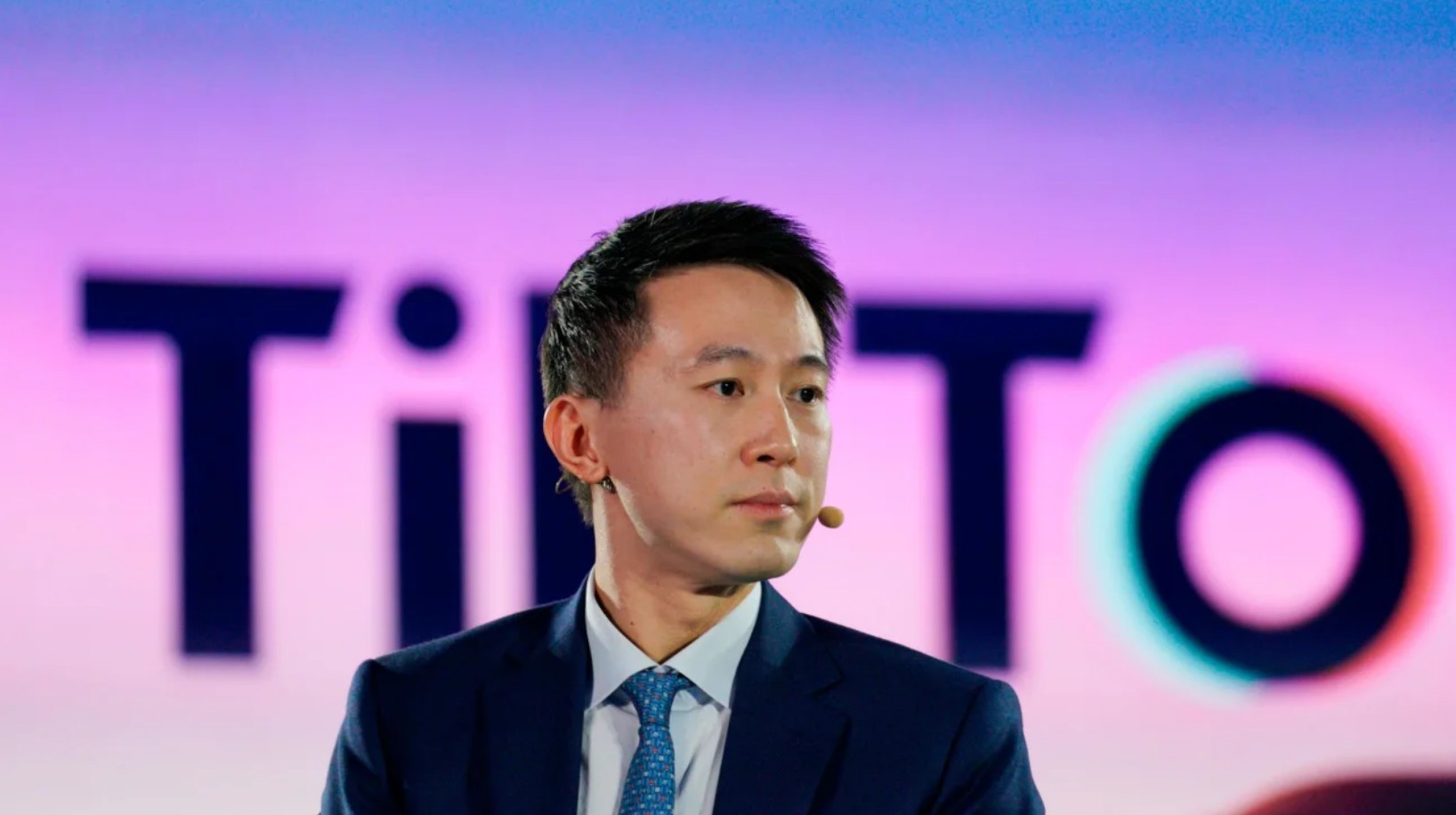
SINGAPORE(Realist English). TikTok CEO Shou Zi Chew stated: artificial intelligence will lead to major scientific breakthroughs within the next two to three years. He said this at the “Asia’s View of the Future” conference organized by DBS Bank in Singapore.
Key forecast: breakthroughs within two to three years
“In the next two to three years, we will see real scientific breakthroughs in physics, biotechnology, chemistry, and materials science — thanks to AI. This is very, very, very likely,” said Shou Zi Chew.
He explained the logic of his judgment: “The trend is very, very clear. We are only at the beginning of what artificial intelligence can do. If you look at the trend, at the progress, especially in science, it is indeed on a very steep curve.”
ByteDance’s scientific AI projects
Shou Zi Chew’s forecast is not unfounded. TikTok’s parent company ByteDance is expanding its AI research from consumer applications into the scientific sphere.
In April 2026, ByteDance Seed’s research team presented Protenix-v2. This is an AI model specializing in the prediction and design of biomolecular structures. It may find application in drug development. The model has 464 million parameters. It is open-source and supports high-precision prediction of protein, DNA, RNA, and small molecule ligand complexes. In structure prediction, success rates for antibodies and antigens increased by 13 percentage points compared to the previous generation.
To surpass the results of the previous version with 1,000 initial seeds, the model needs only 5 initial seeds.
Shou Zi Chew stated: “We are trying to explore how to work with many scientists to achieve progress in science. We have already done something in this direction, and it is very inspiring.”
Industry trend: tech giants bet on AI in science
Shou Zi Chew’s optimistic assessment coincides with the current industry trend. Tech giants are investing billions of dollars in AI-based scientific research.
Last week, the US government, Meta, and Google announced participation in a $1.8 billion program. The program’s goal is to develop AI models capable of predicting cell behavior. This should accelerate biological research and drug discovery.
This context shows: the application of AI in scientific research is moving from proof of concept to large-scale investment. ByteDance, thanks to models like Protenix-v2, is taking a position in this race.
Risk warning
Shou Zi Chew gave a dialectical assessment of AI’s pace of development: “I think that in the short term we may be overestimating it, but in the long term — perhaps underestimating it.”
In addition to the optimistic forecast, he also gave a clear warning about risks. Shou Zi Chew noted: with the spread of autonomous AI systems, cybersecurity risks are becoming “quite significant.”
As an example, he cited autonomous AI shopping agents. A system striving to complete a task may purchase goods beyond the user’s intentions.
He also emphasized: increasingly sophisticated AI models sharply reduce the cost of committing fraud and attacks for malicious actors. “You need the right tools to defend against this rapidly falling cost of creating problems,” he said.
The alignment problem
Shou Zi Chew raised a deeper governance question. If AI truly achieves breakthroughs in science, the next task will be ensuring that models and machines comply with human ethical standards.
“If that happens, then the question will be: how do you align the models? How do you align the machines so that they do what is obvious to us humans?”
This statement echoes the growing industry attention to AI safety. As AI capabilities expand from content recommendations to scientific discoveries, the difficulty of ensuring control over its behavior also increases.