BAGHDAD(Realist English) . The largest Western oil companies are returning to Iraq after a years-long hiatus. They are attracted by the recovery of production at giant fields and Baghdad’s plans to increase output. The main motive is the need to find alternative export routes bypassing the Strait of Hormuz amid the war with Iran.
Who has returned and what they are doing
BP and ConocoPhillips have formed a partnership to rehabilitate the Kirkuk fields in northern Iraq. ConocoPhillips acquired 42% in a BP subsidiary. The total project cost is estimated at $25 billion. This is ConocoPhillips’ return to Iraq for the first time in more than ten years. Later, Turkish TPAO joined the partnership with a 15% stake. BP retained 43%.
The Kirkuk field, discovered in 1927, historically produced up to 1 million barrels per day. Now production has fallen to 285,000–330,000 barrels.
Chevron is negotiating to enter the West Qurna 2 project. This is Iraq’s second-largest field with recoverable reserves of about 14 billion barrels. Current production is 460,000–480,000 barrels per day. The American company is replacing Russian Lukoil, which exited the project due to sanctions. Chevron has also reached agreements on the Nasiriyah field and four exploration blocks in the south. Also on the Balad field north of Baghdad.
TotalEnergies plans to increase investments in Iraq from $12 billion to $16 billion. The key project is the Gas Growth Integrated Project worth about $10 billion. It includes associated gas capture, development of the Ratawi field, construction of a 1 GW solar power plant, and a seawater treatment system.
Why now
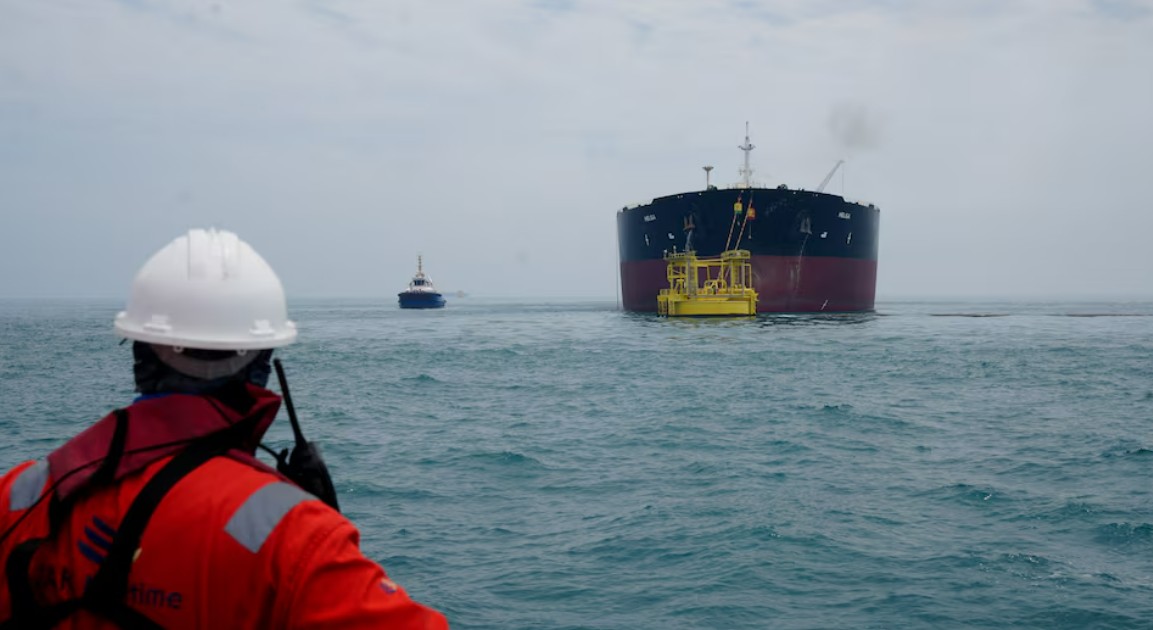
The Strait of Hormuz has become a problem. After the war with Iran began in February 2026, Iraq lost the ability to export oil through the Strait of Hormuz. Production fell from 4.2 million barrels per day to 1.3 million. Exports — from 3.5 million to less than 1 million barrels. Revenue losses amounted to billions of dollars monthly.
Iraq is seeking bypass routes. Baghdad is promoting pipeline projects bypassing Hormuz. Through Turkey — Kirkuk–Ceyhan. Through Syria — Kirkuk–Baniyas. Through Saudi Arabia. Chevron, according to sources, is participating in negotiations on a pipeline bypassing the strait.
Iraq wants to increase production. Prime Minister Ali al-Zaidi, who took office in April 2026, has set a goal of reaching 10 million barrels per day by 2030. This is double the current level. He is personally promoting deals with Western majors. The goal is to balance the dominance of Chinese companies in Iraq’s energy sector.
The paradox of the moment
The return of Western companies is occurring against the backdrop of a record decline in Iraqi production. In March 2026, output fell to 1.3 million barrels per day. This is the lowest level in decades. BP suspended work in Kirkuk in March for security reasons. It resumed only in May.
Nevertheless, Western companies are betting on the long-term potential of Iraqi subsoil, not on current market conditions. Kirkuk is one of the oldest and largest fields in the world. The potential for restoring production is up to 600,000 barrels per day and higher. West Qurna 2 remains a strategic asset even at reduced production.
The return of Big Oil to Iraq is an investment in post-crisis recovery. If the Strait of Hormuz remains blocked, Iraqi oil will seek an outlet through pipelines to the north and west.
Companies that enter the projects now will gain access to infrastructure and terms that will become significantly more expensive after normalization.