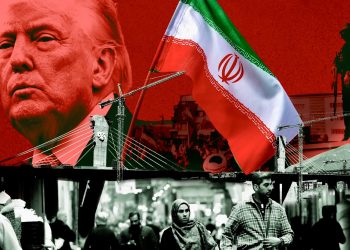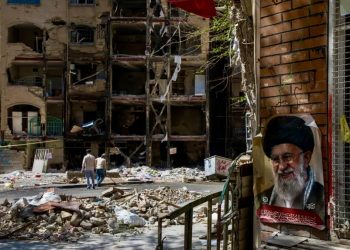


WASHINGTON (Realist English). US President Donald Trump has said he may not extend the temporary ceasefire between the United States and Iran if negotiations fail to produce an agreement by April 22. The statement, made on April 17 aboard Air Force One, raises the prospect of renewed military action.
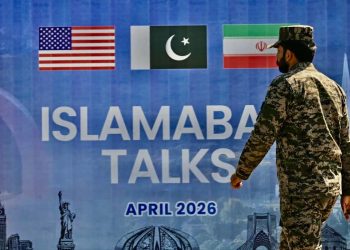
According to Iranian sources, a new round of negotiations between US and Iranian delegations is scheduled for Monday, April 20. US officials have not yet confirmed this date, although Trump earlier expressed confidence that both sides are close to a deal.
Iran’s uranium: “we’ll take it anyway”
Trump also said the United States would obtain Iran’s stockpile of highly enriched uranium one way or another, warning that the transfer could come “in a much more unfriendly form” if negotiations fail.
“No troops,” Trump replied when asked by CBS whether the operation would require US boots on the ground. He added: “We’ll go down and get it with them, and then we’ll take it. We’ll be getting it together because by that time, we’ll have an agreement and there’s no need for fighting when there’s an agreement.”
Later at a rally in Arizona, he repeated the claim: “The USA will get all nuclear dust. You know what the nuclear dust is? That was that white powdery substance created by our B2 bombers… We were going to take it anyway, but taking it that way is slightly more dangerous.”
Trump uses the term “nuclear dust” to refer to Iran’s stockpile of highly enriched uranium — a term not recognised in the nuclear energy industry.
Tehran: demands unacceptable
A senior Iranian official called Trump’s claims “alternative facts.” He denied that Iran had agreed to ship its stockpile of enriched uranium to the United States, calling the demand a “non-starter.”
The source also rejected the US leader’s assertion that Iran had agreed to indefinitely halt uranium enrichment, saying that Tehran would “never accept” being an “exception from international law.” The enrichment question remains one of the main sticking points between the two sides.
Strait of Hormuz: open, but ships are not moving
Iranian Foreign Minister Abbas Araghchi said on April 17 that the Strait of Hormuz would be “completely open” to commercial vessels for the remaining period of the 10-day ceasefire in Lebanon. However, the Islamic Revolutionary Guard Corps (IRGC) Navy laid out conditions, including requiring permission for transit.
Iranian Parliament Speaker Mohammad Bagher Ghalibaf warned that the strait would close again if the United States does not lift its blockade. Transit would be through a “designated route” and with “Iran’s authorization.”
Despite the announcements, only a handful of ships passed through the waterway. According to ship tracking data, no oil tankers exited the Persian Gulf, with only five cargo ships and one tanker reaching the Gulf of Oman. US Central Command reported that 21 vessels had turned around and headed back to Iran since the blockade began on April 13.
Trump, for his part, insisted that no tolls would be charged for passage through the strait. “Nope, no way,” he replied when asked about possible restrictions or fees. Shipping companies remain cautious.
US will pursue Iran-linked ships in Indo-Pacific
Chairman of the Joint Chiefs of Staff General Dan Caine said on April 16 that US forces would pursue Iran-linked ships far beyond the Middle East, specifically in the Indo-Pacific region. A significant portion of the “dark fleet” of tankers carrying sanctioned Iranian oil is concentrated there.
Caine also noted that the United States is conducting similar interdiction operations in the Pacific area of responsibility. Satellite imagery showed the expeditionary sea base USS Miguel Keith heading toward the Strait of Malacca.
Sanctions on Russian oil temporarily lifted again
The US Treasury Department issued another waiver on April 17 allowing the delivery and sale of sanctioned Russian seaborne oil. The license applies exclusively to crude oil and petroleum products loaded onto vessels from April 17 through May 16.
A Treasury spokesperson explained that “as negotiations accelerate, Treasury wants to ensure oil is available to those who need it.” A source added that G20 partners had asked the United States to extend the waiver due to ongoing pressures on Asian markets.
Against this backdrop, oil prices plunged. Brent crude closed at $90.38 per barrel, losing 9.07% — its lowest level since March 10.