
Realist: news and analytics

Русский / English / العربية

  • News
  • Russia
  • Caucasus
  • Opinion
  • Interviews
  • Experts
No Result
View All Result
Realist: news and analytics
  • News
  • Russia
  • Caucasus
  • Opinion
  • Interviews
  • Experts
No Result
View All Result
Realist: news and analytics

US Vice President says no agreement with Iran, ceasefire in doubt

21 hours of talks between the United States and Iran in the Pakistani capital ended without result. US Vice President JD Vance said on April 12 that Tehran had not committed to forgoing nuclear weapons, while the US side offered its “best and final” proposal.

     
April 12, 2026, 10:12
World
US Vice President says no agreement with Iran, ceasefire in doubt

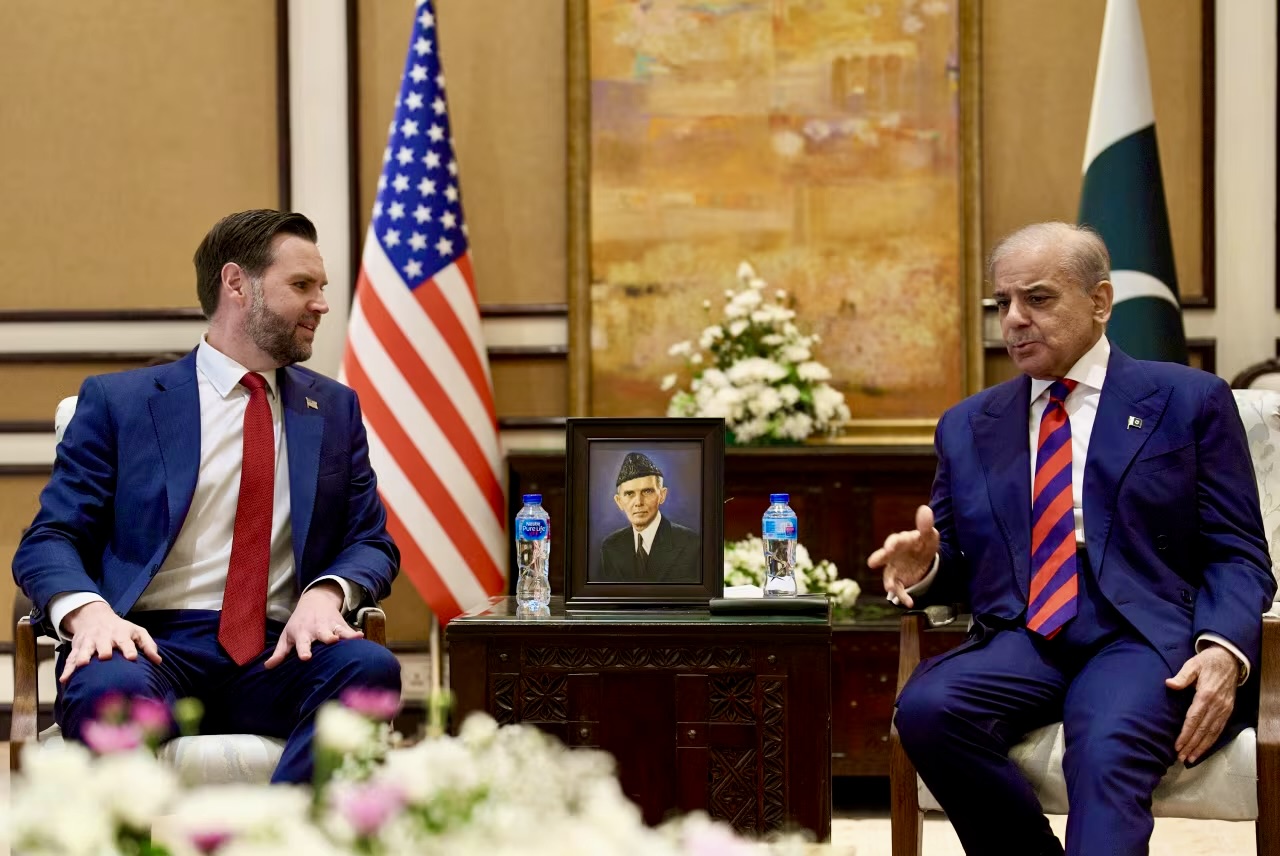
US Vice President JD Vance meets with Pakistan’s Prime Minister Shehbaz Sharif on April 11, 2026, in Islamabad for talks on Iran. Photo: AP

ISLAMABAD (Realist English). Talks between the United States and Iran held in Islamabad on April 11–12 failed to produce an agreement on a permanent end to the war. US Vice President JD Vance announced this at a press conference on April 12.

The meeting, which marked the highest level of direct contact between the two countries since the 1979 Islamic revolution, lasted all night, but the parties parted ways unable to overcome their differences.

“Bad news for Iran”: what Vance said

Vance called the outcome of the talks “bad news for Iran.”

“We are returning to the United States without having reached an agreement,” he said.

The American side, according to him, had been “quite flexible” and offered its “best and final” proposal.

However, the Iranian negotiators refused to accept it.

The key sticking point was Tehran’s nuclear program. “The question is, do we see a fundamental commitment of will for the Iranians not to develop a nuclear weapon not just now, not just two years from now but for the long term? We haven’t seen that yet, though we hope we will,” Vance said.

He also said that throughout the negotiations he had been in constant contact with President Donald Trump, Secretary of State Marco Rubio and Secretary of Defense Pete Hegseth.

Iran: “diplomacy never comes to an end.” 

Iranian Foreign Ministry spokesman Esmaeil Baqaei acknowledged in an interview with state television on April 12 that the sides had reached agreement on some issues, but “two or three key issues” remained unresolved. He described US demands as “excessive.”

At the same time, Baqaei rejected claims that the dialogue had ended entirely: “Diplomacy never comes to an end. There should have been no expectation that we could reach an agreement in a single session.”

Nevertheless, the state-run Fars news agency, citing a source close to the delegation, reported that Tehran had “no plans for a next round of negotiations.” The source also stressed: “Iran is in no hurry, and until the US agrees to a reasonable deal, there will be no change in the status of the Strait of Hormuz.”

Pakistan remains mediator

Pakistani Foreign Minister Ishaq Dar said on April 12 that Islamabad “has been and will continue to play its role” in facilitating dialogue between Iran and the US.

He thanked both sides for agreeing to a two-week ceasefire and for holding talks in the Pakistani capital. Dar also said that together with army chief General Asim Munir he had participated in several rounds of “intense and constructive negotiations.”

Experts: Iran holds more cards

Former State Department Middle East negotiator Aaron David Miller told CNN on April 12 that “the Iranians hold more cards than the Americans.”

“They still have highly enriched uranium. They’ve demonstrated they’ve weaponized geography, they control and now manage the Strait of Hormuz. The regime has survived,” Miller said.

“They’ve demonstrated a terrifying capacity to undermine security and stability.” In his view, Iran would rather risk returning to US and Israeli military strikes than walk away from negotiations empty-handed.

US begins mine-clearing in Strait of Hormuz

US Central Command (CENTCOM) reported on April 11 that two destroyers — the USS Frank E. Petersen Jr. and the USS Michael Murphy — had begun an operation to clear sea mines laid by Iran’s Islamic Revolutionary Guard Corps in March.

Admiral Brad Cooper said: “Today, we began the process of establishing a new passage and we will share this safe pathway with the maritime industry soon to encourage the free flow of commerce.”

President Trump wrote on his Truth Social platform that the US was starting to clear the strait “as a favor to countries all over the world.” Since the ceasefire was announced on April 8, only about 30 ships have passed through the strait, according to CNN.

Trump at UFC and the future of the war

While talks were underway in Islamabad, President Trump attended a UFC event in Miami on April 11.

Asked by reporters about the progress of negotiations, he replied: “Whether we make a deal or not makes no difference to me,” adding that the US had already supposedly achieved military victory over Iran.

However, analysts note that the failure to reach an agreement casts doubt on the two-week ceasefire. Without Iran’s commitment to reopen the Strait of Hormuz, global energy supplies will remain under threat.

Trump had previously promised that if Tehran refused, “a whole civilization will die,” but observers believe his administration has little appetite for resuming a war that has become deeply unpopular among Americans.

IranIran’s Foreign PolicyJD VanceUS Foreign PolicyUS-Iran Relations
Previous Post

Christ is Risen! Orthodox Christians in Russia and beyond celebrate Easter

Next Post

$4.7 billion for interceptors: Iran war forces US to shift defense industry to “wartime footing”

Related Posts

Trump gives Iran a reprieve, but strikes could resume at any moment
World

Trump gives Iran a reprieve, but strikes could resume at any moment

19 May, 2026
Netanyahu and Trump Discuss New Round of Pressure on Tehran
World

Netanyahu and Trump Discuss New Round of Pressure on Tehran

18 May, 2026
US and Iran fail to reach Hormuz deal as Trump threatens new strikes
World

US and Iran fail to reach Hormuz deal as Trump threatens new strikes

18 May, 2026
Trump issues ultimatum to Iran: “If they don’t reach a deal, it will be very bad for them”
World

Trump issues ultimatum to Iran: “If they don’t reach a deal, it will be very bad for them”

17 May, 2026
Iran threatens to cut internet cables in the Strait of Hormuz
World

Iran threatens to cut internet cables in the Strait of Hormuz

17 May, 2026
Saudi Arabia and its allies prepare non-aggression pact with Iran
World

Saudi Arabia and its allies prepare non-aggression pact with Iran

16 May, 2026
Most Popular
Most Popular
“Restrictions Alone Are Not Enough — Children Need to Be Engaged”: Paata Amonashvili on Meaningful Alternatives to Gadgets

“Restrictions Alone Are Not Enough — Children Need to Be Engaged”: Paata Amonashvili on Meaningful Alternatives to Gadgets

18 May, 2026

TBILISI (Realist English). Restrictions alone are not enough to overcome children’s dependence on gadgets — children must be offered meaningful...

US and Iran fail to reach Hormuz deal as Trump threatens new strikes

US and Iran fail to reach Hormuz deal as Trump threatens new strikes

18 May, 2026

WASHINGTON (Realist English). The United States and Iran remain far from reaching an agreement to end the war and reopen...

Israel prepares for new war with Iran – from bombing to commando landings

Israel prepares for new war with Iran – from bombing to commando landings

17 May, 2026

TEL AVIV (Realist English). With US‑Iran talks deadlocked, the Israeli leadership has stepped up preparations for a resumption of full‑scale hostilities....

Raúl Castro remains Cuba’s “shadow king”

Raúl Castro remains Cuba’s “shadow king”

17 May, 2026

HAVANA (Realist English). From the very moment in April 2021 when legendary General Raúl Castro, brother of the great Fidel, handed...

Opinion

Replacing Baathists with Islamists: why Kurds and other minorities in Syria have not seen equality

Replacing Baathists with Islamists: why Kurds and other minorities in Syria have not seen equality

19 May, 2026

HASAKAH (Realist English). The overthrow of Bashar al‑Assad and the rise to power in Damascus of radical Islamist groups has not...

Russia seeks its place in China’s new transport corridor

Russia seeks its place in China’s new transport corridor

17 May, 2026

MOSCOW (Realist English). Ahead of Russian President Vladimir Putin’s official visit to Beijing, experts are increasingly discussing the hidden contradictions...

From Hormuz to Solar Panels: How Iran Accelerated the Global Shift to Renewables

From Hormuz to Solar Panels: How Iran Accelerated the Global Shift to Renewables

16 May, 2026

WASHINGTON (Realist English). An analytical article by Benjamin Bradlow, professor of sociology and international affairs at Princeton University, published in...

China No Longer Seeks U.S. Approval

China No Longer Seeks U.S. Approval

15 May, 2026

BEIJING (Realist English). U.S. President Donald Trump’s visit to China on May 14–15 passed with surprising calm and almost none...

All rights reserved.

© 2017-2026

  • About Us
  • Mission and Values
  • Contact Us
  • Privacy Policy

Follow Realist English

No Result
View All Result
  • News
  • Russia
  • Caucasus
  • Opinion
  • Interviews
  • Experts

Русский / English / العربية