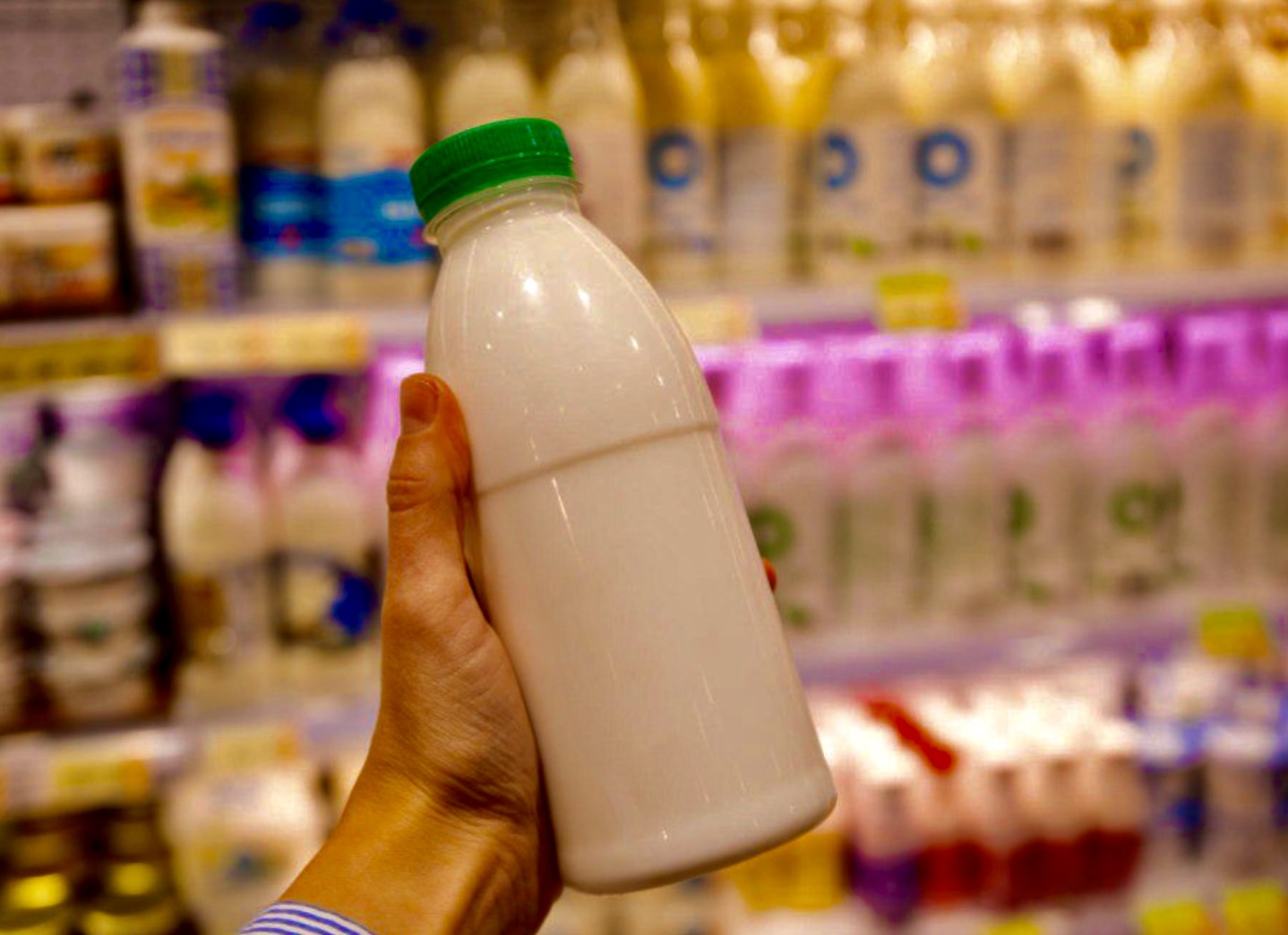
MOSCOW (Realist English). Russia’s Federal Service for Veterinary and Phytosanitary Surveillance (Rosselkhoznadzor) will impose restrictions on dairy imports from Armenia starting July 27.
According to the agency’s website, a corresponding letter has been sent to the Armenian Food Safety Inspection Body requesting the suspension of veterinary certification for dairy products from all Armenian enterprises destined for Russian recipients.
Inspection Reveals Systemic Violations
From July 14 to 21, 2026, Rosselkhoznadzor specialists inspected Armenian dairy processing plants that supply products to Russia under the guarantees of the republic’s veterinary service. The inspection revealed violations that, as the agency notes, had already been recorded during inspections in 2023–2024.
Use of Milk from Infected Livestock
The main grounds for the restrictions are the established fact of using milk from infected livestock to produce products destined for Russia.
According to Rosselkhoznadzor, cases have been confirmed of using raw materials from third countries to produce high‑fat products for the Russian market, despite earlier assurances from Armenia’s veterinary service that domestic raw materials or materials from EAEU enterprises were being used.
Lack of Traceability
The agency notes that Armenia has still not established a system that would allow verification of the origin and safety of the milk or other dairy raw materials used in production. Of particular concern is the processing of milk from private individuals who cannot guarantee the safety of their products.
In addition, systemic problems have been identified in the processing of veterinary accompanying documents for raw materials and finished goods, the conduct of veterinary and sanitary inspections of incoming raw materials, the functioning of risk management systems, and the implementation of production control programmes.
Details of the Restrictions
Rosselkhoznadzor has requested that the Armenian regulator, starting July 27, 2026, suspend veterinary certification of dairy products from all Armenian enterprises to Russian recipients.
In a letter from Rosselkhoznadzor Deputy Head Konstantin Savenkov to the heads of the agency’s territorial offices and Russia’s Federal Customs Service, it states: “I order that control be ensured to prevent the import of dairy products from Armenia into the Russian Federation starting 27.07.2026.”
Pashinyan’s Pseudo‑Agenda: EU Talk Diverges from Reality
The Rosselkhoznadzor decision comes amid active rhetoric from Armenian Prime Minister Nikol Pashinyan about European integration, which, however, has not been backed up by the actual actions of the Armenian authorities.
In June 2026, Pashinyan stated that Armenia is objectively not ready for EU membership: “A referendum will take place when there is a subject for the referendum. And the subject of the referendum should be at least an official application from Armenia to join the European Union, or Armenia’s status as an EU member state. Neither of these two conditions currently exists.”
At the same time, he repeatedly stressed that the country would continue its course toward EU integration and even announced plans to achieve a visa‑free regime with the EU by 2029.
On July 2, 2026, at a joint briefing with European Commission President Ursula von der Leyen, Pashinyan ruled out the possibility of Armenia abandoning its European course, but acknowledged that it would take time for the decision on duty‑free exports of Armenian products to the EU to take effect.
The European Commission President promised Armenia financial support of €38 million and the opening of the European market to 80% of Armenian goods. However, in practice, Armenian producers have failed to break through the bureaucratic wall.
European markets remain closed to private Armenian companies. In particular, as Gor Grigoryan, head of the Fishermen’s Union, stated, it is impossible to sell even 15 tonnes of live fish in Europe, and some products returned after attempting to cross the Russian border are now being stored in refrigerators.
“The European market is inaccessible to us. The volumes we currently have — 15,000 tonnes of live fish — are impossible to sell on the European market,” Grigoryan said.
The Armenian Food Safety Inspection Body admitted that only one European company had applied for purchases — no one else from Europe showed interest.
On July 20, Armenian farmers blocked the Yerevan‑Yeraskh highway, demanding that the government take urgent measures to solve the problem of selling their harvest, which had become impossible to sell.
According to Politico, the EU did not open its market to Armenian tomatoes to the extent that the Armenian authorities had expected. The topic of European integration was actively used by Pashinyan during the parliamentary election campaign, but after victory, the expected support from Brussels did not materialise.
Context and Reaction
The Rosselkhoznadzor decision is part of measures to prevent the introduction of particularly dangerous infections into Russia and the sale of unsafe dairy products on the domestic market. The Armenian side has not yet officially commented on the restrictions.
Earlier, in June 2026, Russia had already imposed a ban on imports of stone fruits and grapes from Armenia, as well as restrictions on imports of mineral water, alcohol, fish products, vegetables, fruits, and flowers.
Yerevan acknowledged that violations do exist but preferred to politicise the issue, accusing Moscow of political pressure. However, as experts note, the main responsibility for the current situation lies with Prime Minister Pashinyan, who has once again failed to meet the expectations of his own citizens.
The restrictions take effect on July 27, 2026. Resumption of supplies will be possible only after the Armenian side eliminates the identified violations and establishes a proper quality control and traceability system for dairy raw materials.
Meanwhile, Pashinyan is trying to sit on two chairs: launching negotiations on food supplies to the United States while simultaneously resuming economic dialogue with Moscow, which is critical for 98% of fish export revenues. However, as practice shows, European promises have once again not been backed by real action, and Russia continues to consistently demand that Yerevan comply with sanitary norms and quality standards.