BEIJING (Realist English). The new front in the sanctions war against Russian liquefied natural gas (LNG) runs through China.
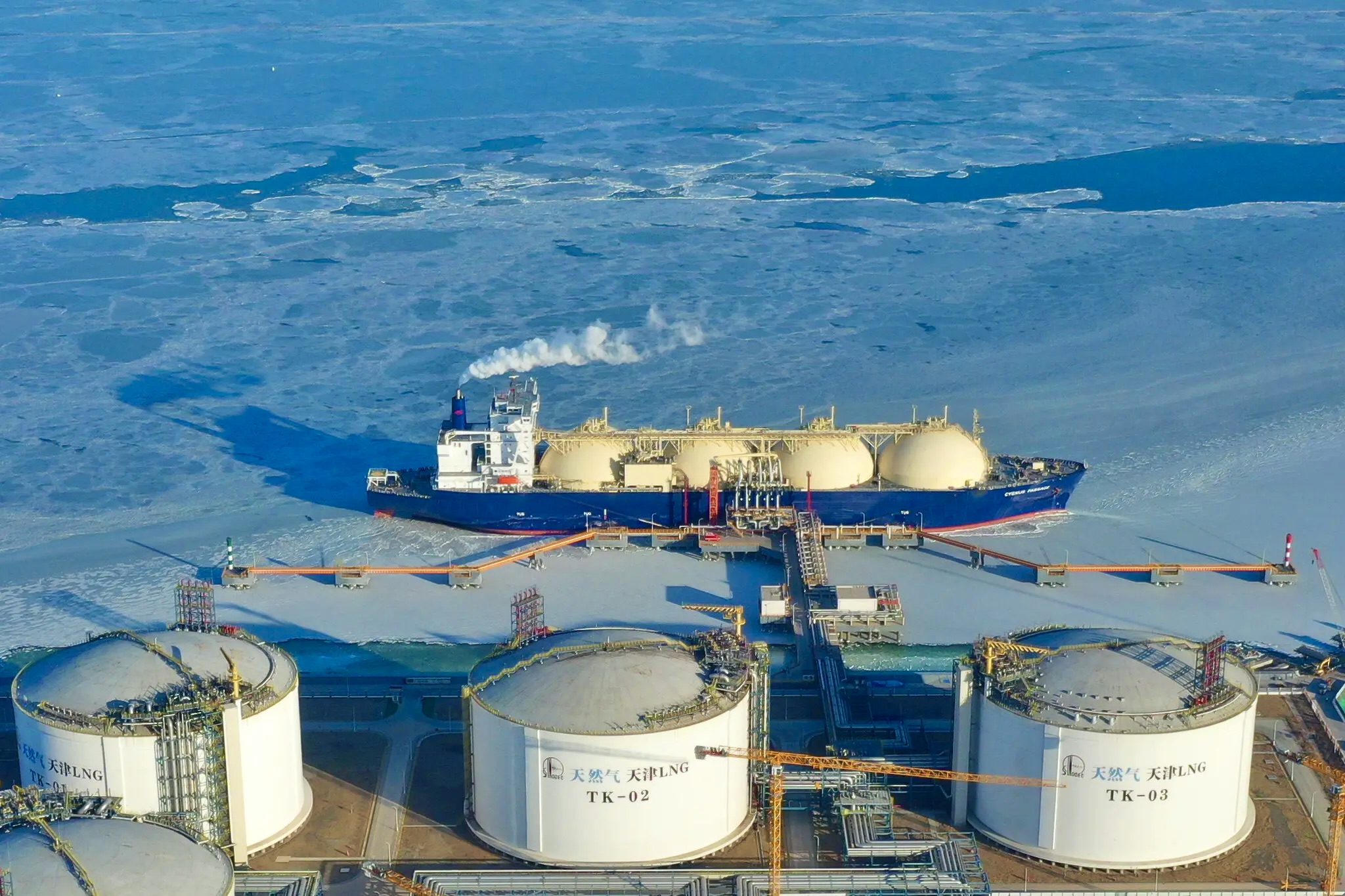
From August 2025 to June 2026, the southern Chinese port of Beihai received more than 40 cargoes from Russia’s US-sanctioned Arctic LNG 2 project.
According to the Kyiv School of Economics (KSE), in June 2026, tankers linked exclusively to companies outside the EU and G7 jurisdictions transported 55% of all Russian LNG – double the share from the first quarter. China is becoming an indispensable “lifeline” for Russia’s gas export infrastructure.
The discount deal: how China buys sanctioned gas
Russian LNG producer Novatek is offering Chinese buyers sanctioned cargoes at a discount of 30% to 40% off Asian spot prices. Since August 2025, when the first cargo was delivered, Novatek has sold 14 additional shipments at prices roughly $3–4 per million BTU below the Asian benchmark.
China remains the world’s largest importer of Russian fossil fuels, accounting for 43% of Russia’s energy export revenues. In the first half of 2026, Russian LNG imports to China rose by 27.8% compared to the same period last year, reaching 3.593 million tonnes.
Two ports for sanctioned gas
Beijing is not limiting itself to one port. After Beihai received 41 cargoes (about 2.6 million tonnes of LNG) from Arctic LNG 2, China is preparing a second terminal in Longkou (Shandong province) to receive sanctioned Russian shipments.
The first phase of the Longkou terminal has a capacity of 5 million tonnes per year. Arctic LNG 2 – the Kremlin’s flagship $21 billion project with a designed capacity of 19.8 million tonnes per year – is effectively getting a second life. Construction of the project’s second train, according to media reports, is already underway.
The LNG ‘shadow fleet’ evades sanctions
A key element of the new system is the “shadow fleet” for LNG transportation. Russia is expanding it in preparation for the EU’s full ban on Russian LNG imports, which will take effect on 1 January 2027.
According to Ukraine’s Foreign Ministry, Russia has already added four new LNG tankers to its shadow fleet. The main sanctions evasion methods include:
- using ageing vessels with opaque ownership structures;
- switching off Automatic Identification Systems (AIS);
- re‑registering vessels under third‑country flags;
- using a forged Guyana flag, first recorded in May 2026.
The Buran, one of the key shadow fleet tankers, encountered serious problems navigating the Northern Sea Route due to early ice formation – highlighting the operational risks of such logistics.
The EU paradox: Europe buys record volumes while preparing for a ban
The paradox is that Europe, while preparing for a ban, is ramping up purchases. In the first half of 2026, 96.7% of exports from the Yamal LNG project went to Europe. In the first five months of 2026, European ports received 8.37 million tonnes from Yamal LNG – 17.9% more than in the same period in 2025. During the same period, only four cargoes were delivered to China.
In the 21st sanctions package, the EU proposed a ban on the sale of LNG tankers to Russian interests and the expansion of sanctions against the shadow fleet. However, under pressure from Greece and fears that sanctions would hand control of key assets to China, the EU was forced to make concessions.
China as an ‘indispensable lifeline’
As analyst Petras Katinas notes in Foreign Policy, China is becoming an “indispensable lifeline” for sanctioned Russian LNG. Without solving two problems – exporting sanctioned LNG from Russia and finding a reliable destination – this system could not exist.
Russia solved the first problem by building a maritime logistics chain: floating storage, “dark” ship‑to‑ship transfers and a growing shadow fleet. China is solving the second.
By 2027, when the EU fully bans Russian LNG imports, China is likely to become the main buyer of Russian liquefied gas. As Reuters notes, “lost European volumes are already being absorbed by China and Japan.”
The US has not yet imposed secondary sanctions on Chinese buyers of Arctic LNG 2. However, imposing sanctions on PipeChina could complicate US LNG exports: since February 2026, China has not imported American gas due to trade tariffs.
The new front in the sanctions war runs through China, and the outcome of this standoff will determine not only the fate of Russian LNG exports but also the balance of power in the global energy market.