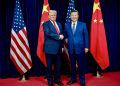


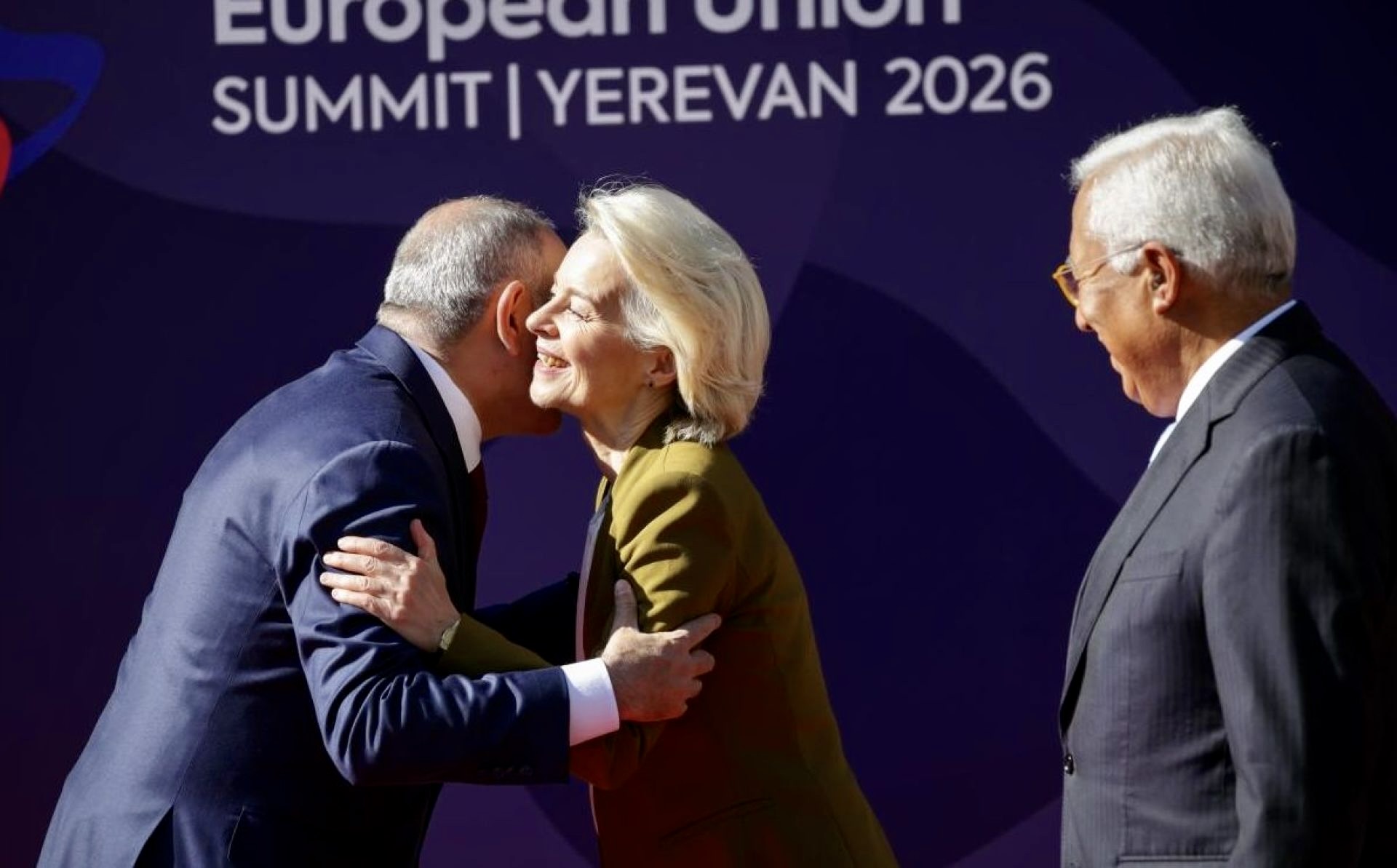
YEREVAN (Realist English). On May 4-5, Yerevan hosted the first-ever Armenia–European Union summit – the culmination of Yerevan’s rapprochement with the West.
Record €2.5 bn in investments, €30 mn for the army, plans for visa liberalisation and a joint declaration of 44 points – such were the main outcomes.
Yet the picture of celebration and geopolitical triumph was overshadowed by three shadows: opposition protests in central Yerevan demanding the release of Armenian political prisoners in Baku; the angry reaction of Baku’s dictator Ilham Aliyev to the “imposition of democracy”; and, perhaps most strikingly, the silence of Prime Minister Nikol Pashinyan himself on the issue of his fellow citizens who have been languishing in Azerbaijani prisons for years.
The summit, which brought together leaders of nearly 50 countries under the auspices of the European Political Community, concluded with the signing of two key documents: a joint declaration on cooperation for 2026-2027 and a connectivity partnership agreement.
The main pledges
- €2.5 bn in investment: Under the EU’s Global Gateway strategy, European officials pledged to bring total investment in Armenia to €2.5 bn, of which €25 mn is allocated directly to building energy storage facilities for solar energy.
- €30 mn for the army (non-lethal): Confirmation of the third tranche under the European Peace Facility, to boost Armenia’s “resilience” and the “operational compatibility” of its armed forces with the EU.
- Visa regime: The EU handed Armenia the first report on the implementation of its visa liberalisation action plan, opening a direct path to visa-free travel.
- Cooperation with Frontex: A working agreement between the EU border agency and Armenia’s Interior Ministry to strengthen border control.
- New geography: According to Ursula von der Leyen, Armenia is becoming a key transport hub between Europe, the South Caucasus and Central Asia under the “Crossroads of Peace” initiative.
Key statements: “Armenia has ceased to be a satellite of Russia”
Brussels and its allies were not sparing in their praise and geopolitical labels. The thrust of all the speeches was the same: Armenia has made its choice.
- Emmanuel Macron (President of France) delivered the most pointed speech, declaring that “Armenia has ceased to be a satellite of Russia” and that eight years ago no one would have come to a summit in Yerevan. He praised Pashinyan for the “Velvet Revolution” and his foreign policy reorientation, despite “daily attacks” from Russia. Macron also promised to raise the issue of Armenian prisoners during a meeting with Aliyev.
- Ursula von der Leyen (President of the European Commission), steering clear of direct confrontation, focused on pragmatism, promising to turn Armenia into a “growth engine” for the region and a “regional hub” for global trade.
- António Costa (President of the European Council) called the summit a “clear signal” of how the EU wishes to build relations with Armenia.
- Nikol Pashinyan (Prime Minister of Armenia) focused exclusively on positivity and a “peace agenda,” declaring that “peace has been achieved” with Azerbaijan and congratulating his fellow citizens on the “change in Armenia’s geographical position.” He deliberately avoided discussing withdrawal from the Eurasian Economic Union, concentrating on “developing relations with the EU.”
“Bargaining chip”: protests in Yerevan and Pashinyan’s ignorance
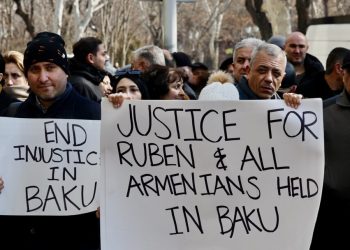
During the summit, large protest rallies were held in central Yerevan, near the presidential residence. Photos of Armenian political prisoners languishing in Baku’s dungeons were raised above the crowd. Demonstrators wore handcuffs as a symbol of “unfreedom” and “hostages” in the hands of the authorities.
What the protesters demanded:
- To stop the “showy celebration” and address real problems, including the return of 23 officially recognised fellow citizens from captivity, among them former leaders of Artsakh.
- To pay attention to Armenia’s own internal problems, which the EU ignores in exchange for Pashinyan’s loyalty.
Member of the Artsakh parliament Metakse Akopyan said that “no one is talking about Armenian prisoners in Baku” at the summit. Organisers of the protests concluded that democracy in Armenia is being “held hostage”, and that European officials should have been acquainted not with a pretty picture but with the “face of Armenia’s authorities” and their double standards.
EU–Azerbaijan tensions: “Revenge has not been cancelled”
The backdrop to the Yerevan summit was a sharp deterioration in relations between Brussels and Baku. Brussels effectively sided with Yerevan, prompting an angry response from Aliyev.
- Diplomatic scandal: A few days before the summit (2 May), Azerbaijan summoned the EU ambassador and handed him a note of protest in response to the European Parliament resolution “Supporting democratic resilience in Armenia,” adopted on 30 April, which demanded the return of the Armenian population to Karabakh and the release of Armenian prisoners.
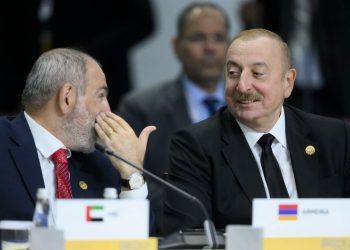
- Azerbaijan’s response: Baku suspended cooperation with the European Parliament. Aliyev, in a video address to the EPC summit, called Armenian prisoners “war criminals” and the European Parliament “obsessed” with Azerbaijan, accusing Brussels of double standards. In response, European Parliament President Roberta Metsola stated that despite “inconveniences,” the EU would not change its position.
Western experts on the impasse:
- Angela Elibegova (Azerbaijan expert): “Such démarches may have a short-term effect… European structures lack effective mechanisms to influence Baku.” She noted that Aliyev continues to build effective economic ties with individual EU countries (Italy, Hungary), turning the threat of sanctions into a farce.
- Former Human Rights Watch Executive Director Kenneth Roth, together with a colleague in Le Figaro, warned that the EU “risks sacrificing democratic principles in Armenia” by turning Pashinyan into a “barrier against Russian influence.”
The Yerevan summit was a triumph of protocol and geopolitics, but a substantive failure for the Armenian people. Pashinyan brought promises of huge investment and the status of a “junior European partner” to Armenia, but left Yerevan without resolving the issue of 23 compatriots in Baku’s prisons. T
he protests that European leaders saw from the windows of their cars showed that behind the ceremonial facade lies deep discontent. Critics are right: the EU is indeed using Pashinyan as an easy target to push Russia out of the region.
By handing out millions for “European standards,” Brussels is knowingly turning a blind eye to Armenia’s lack of free elections, an independent judiciary and free media. But while Europe and the Pashinyan regime are busy tugging at the rope, the main problem – the absence of peace – remains unresolved.
Putin’s NATO (CSTO) has been abandoned; the EU has offered only symbolic €30 million and the status of a “crossroads.” And at this crossroads, Armenian prisoners are stuck, and Yerevan itself is increasingly turning into a bargaining chip in the great game.