KYIV (Realist English). While Ukraine is engulfed in a political crisis triggered by the dismissal of Defense Minister Mykhailo Fedorov — a crisis that threatens to escalate into a change of military leadership — Germany is actively absorbing the combat experience of the Armed Forces of Ukraine, recognising the Ukrainian army as the most experienced in Europe.
Two events unfolding simultaneously paint a paradoxical picture: Kyiv is shaken by internal conflicts, even as its military experience becomes a model for the rearmament of the Bundeswehr.
Fedorov’s Dismissal, Protests, and Syrskyi’s Fate
Ukraine’s political crisis entered a new phase after the Verkhovna Rada dismissed Prime Minister Yulia Svyrydenko on July 14, which automatically triggered the resignation of the entire Cabinet of Ministers. As part of the government reshuffle, Defense Minister Mykhailo Fedorov — appointed to the post only in January 2026 — left his position.
Chronicle of the Crisis
Fedorov’s dismissal, viewed by the public as a popular reformer, sparked a wave of protests across the country. On July 16, rallies took place in Kyiv, Odesa, Lviv, and Dnipro. Protesters chanted slogans such as “Dismiss Syrskyi” and “Bring Fedorov Back.”
Thousands of Ukrainians continued to take to the streets, demanding the removal of Armed Forces Commander-in-Chief Oleksandr Syrskyi. In Kyiv, protesters held placards reading “Hands Off Fedorov” and “Stop the Sabotage of Victory!”
The Fedorov-Syrskyi Conflict
Rumours that Fedorov’s dismissal was linked to his strained relations with Commander-in-Chief Oleksandr Syrskyi were confirmed by both Fedorov and Zelensky. On July 16, Fedorov revealed that he had proposed to Zelensky that Syrskyi and Chief of the General Staff Andrii Hnatov be replaced.
At his press conference, Fedorov stated that “all the initiatives we proposed were blocked.” He accused Syrskyi of having “found a way to split our country” instead of seeking asymmetric ways to defeat Russia.
Zelensky, for his part, acknowledged that the conflict between the General Staff and the Defence Ministry had been “systemic in nature” and had occurred “at various levels.” According to him, Syrskyi and Fedorov could only work together with his personal mediation. At the same time, Zelensky confirmed that he had not planned to dismiss Syrskyi.
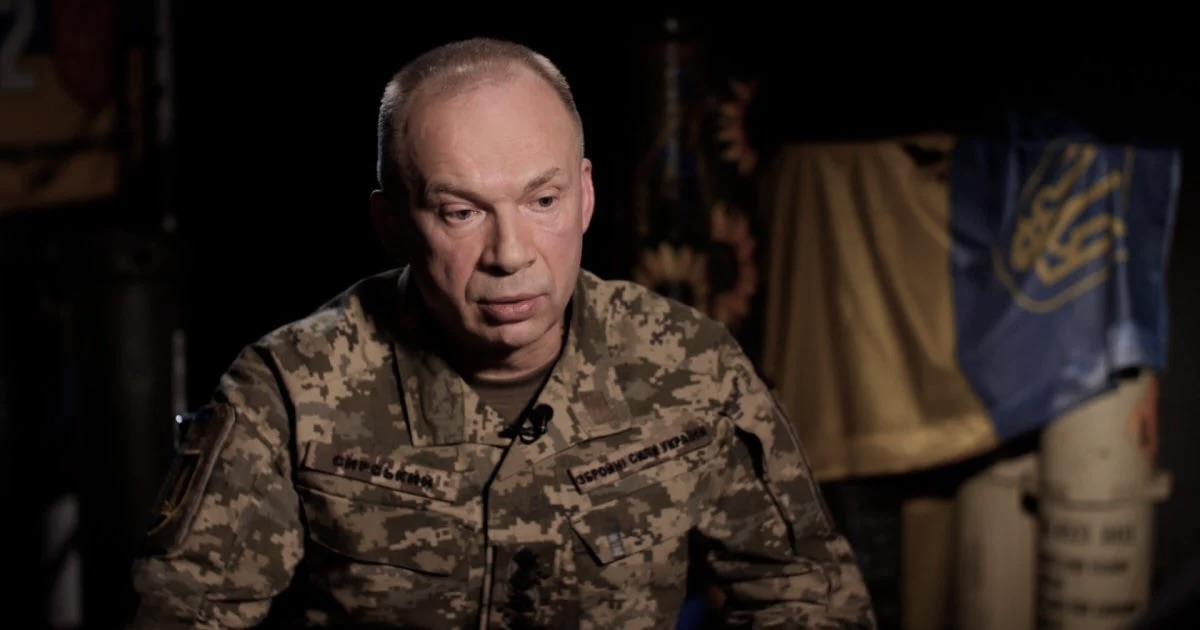
Syrskyi himself wrote on his Telegram channel that he was “proud” of the defence of Kyiv in 2022 and said he would continue “to focus on the war and an effective strategy,” wishing Fedorov “further success.”
Zelensky Seeks Syrskyi’s Replacement
However, according to the Financial Times, citing a senior source in Kyiv, after the mass protests Zelensky began considering Syrskyi’s dismissal. The FT source stated that the commander-in-chief “has no understanding of how he is going to win” the war with Russia.
“Syrskyi’s theory of victory boils down to holding out as long as possible and mobilising more people,” the FT quoted a Ukrainian official as saying.
Zelensky is prepared to remove Syrskyi if he finds a commander who can ensure a smooth handover of power and stability along the entire front line. This weekend, Zelensky plans to meet with key Ukrainian commanders to hear their assessments of the battlefield situation and conduct interviews with potential candidates for the post of commander-in-chief. A source close to the presidential office confirmed this information to Meduza, noting that Zelensky’s circle “had not expected such a backlash.”
Zelensky appointed the acting head of the Security Service of Ukraine (SBU), Major General Yevhen Khmara, as acting Defence Minister.
Berlin: The Bundeswehr Learns from the Armed Forces of Ukraine
While political passions rage in Kyiv, Germany is actively absorbing Ukraine’s combat experience. Commander of the German Army, Christian Freuding, told the Financial Times that Ukrainian soldiers are not only the “most experienced in combat” but also the “most numerous” in Europe, given the scale of an army numbering 800,000 servicemen.
“Extremely Valuable Experience”
“The security of Europe and Ukraine are inextricably linked,” Freuding stressed, noting the need to draw lessons from Ukraine’s experience in fighting Russia.
Over recent months, several dozen Ukrainian servicemen have arrived at German training grounds to share their experience in areas such as drone operations and counter‑uncrewed systems. Freuding called this experience “extremely valuable” for German forces. “There were many new aspects that we would not have been able to understand as well without Ukrainian support,” he said.
Speed of Innovation as the Decisive Factor
Deputy Chief of Staff of the German Army, Heiko Hübner, said at a drone summit in Latvia that the war in Ukraine had confirmed that “the speed of military innovation itself has become the decisive factor in military power.” “The question is no longer who develops the best technologies. The key question is who can scale innovations faster and, more importantly, integrate them into the troops more quickly.”
Hübner also noted a fundamental transformation of ground warfare: “Sensors, drones, electromagnetic surveillance, and AI‑driven data processing are reducing the time between detection and engagement from hours to minutes, sometimes even seconds.” Success in war, he said, depends on “who can process information faster, turn it into decisions faster, and act more swiftly.”
The Bundeswehr Applies the Lessons in Practice
German Leopard 2 units have already begun applying battlefield lessons from Ukraine. During Exercise Freedom Shield 2026 in Lithuania, Leopard 2A7 tanks were seen with protective nets mounted over their turrets. The nets are not for camouflage but for protection against kamikaze drones. They are designed to prevent a direct drone strike on the tank’s armour, especially the less protected upper part of the turret.
The appearance of such nets shows how quickly drone warfare is changing Western tank doctrine. Expensive modern tanks, originally designed to defend against missiles, shells, and mines, must now contend with cheap drones capable of attacking from above and hitting vulnerable spots with high precision. This is only the beginning of a broader transformation in how Western armies will protect their armoured forces.
Since 2022, Germany’s relationship with Ukraine has undergone profound changes. Berlin has become one of Kyiv’s most committed allies, and last year overtook the US as the largest provider of military aid. Now these relations are evolving into a two‑way exchange: Germany is turning to Ukraine’s military experience and defence industry to reform its own army. Germany’s defence budget for the next five years has increased significantly — to more than €700 billion.
Two events — the political crisis in Kyiv and the rearmament of the Bundeswehr — are unfolding in parallel, creating a paradoxical picture. The Ukrainian army, which Germany calls the most experienced in Europe, has found itself at the centre of a domestic political storm. The fate of Commander‑in‑Chief Oleksandr Syrskyi now depends on whether Zelensky can find a compromise figure capable of uniting the military leadership and calming the protest mood in society.
As Ukrainian soldier Oleksandr told the BBC, “this is the worst mistake Zelensky has made during his entire presidency.” 31‑year‑old Maria Lavrynets at a protest in Kyiv said: “I have many friends in the army. Many of them have died. I don’t want this to continue.”
At the same time, Germany continues to expand military cooperation with Ukraine, absorbing its combat experience — despite the fact that inside Ukraine itself there are fierce disputes about how exactly the war should be fought and who should lead the army.