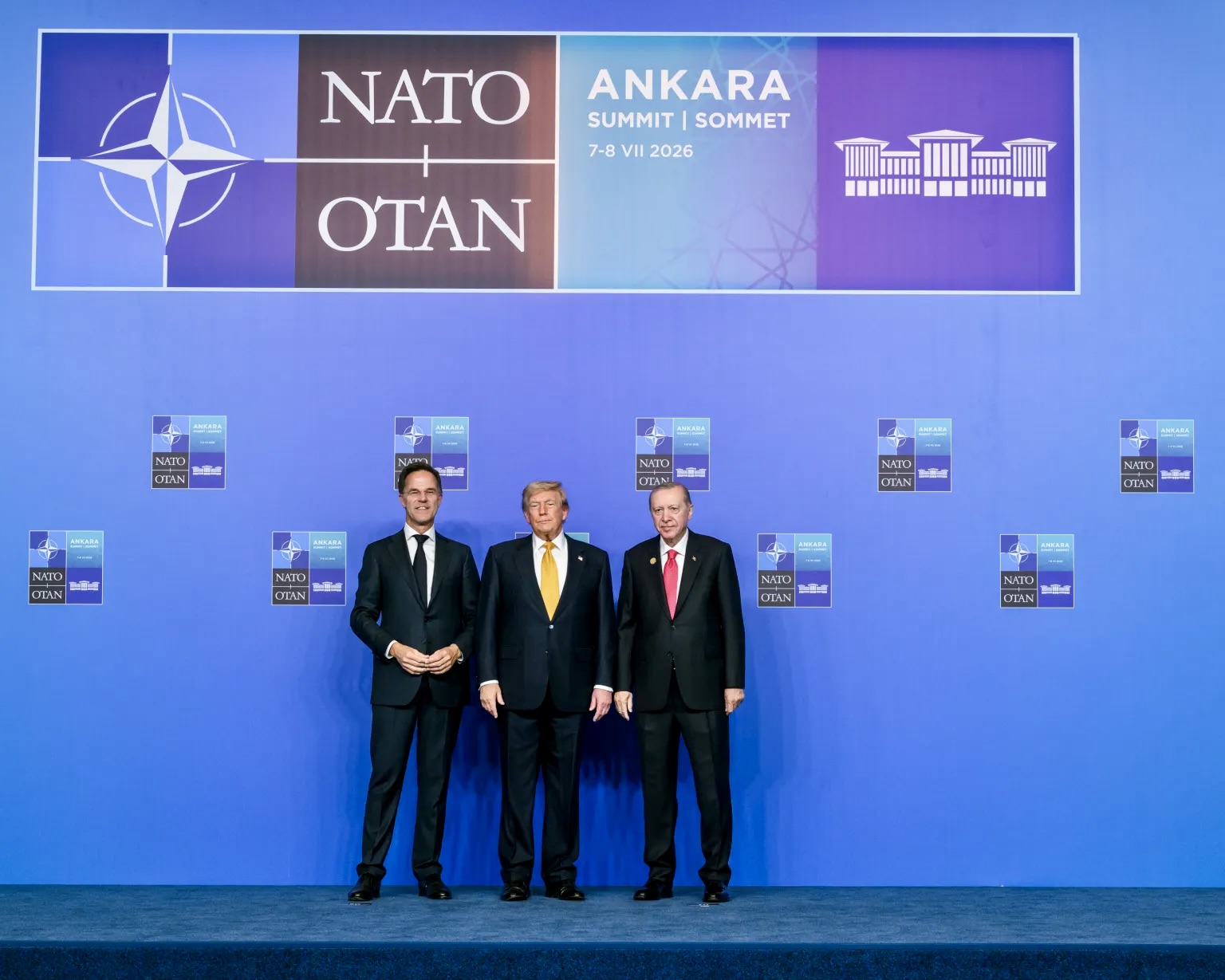
WASHINGTON (Realist English). President Donald Trump’s decision to lift sanctions on Turkey and resume F-35 fighter jet deliveries has sparked jubilation not only in Ankara but far beyond its borders.
As Foreign Policy notes, India and other buyers of Russian weapons stand to benefit from the easing of restrictions.
Trump’s decision, announced on July 7 on the sidelines of the NATO summit in Ankara, effectively undermines the CAATSA sanctions regime — Washington’s primary tool for restricting Russian arms exports.
The Deal: Sanctions Relief and Return to F-35
On July 7, during the first US presidential visit to Turkey in 11 years, Donald Trump announced the lifting of sanctions imposed on Ankara in 2020 over its purchase of Russian S‑400 air defence systems. “We will lift the sanctions. We don’t want to impose sanctions on friends,” Trump said.
At the same time, the US president signalled his readiness to consider Turkey’s return to the F‑35 programme. “Turkey was in many ways much more loyal than other countries we consider loyal. It’s a great plane, the best at the moment. And that’s definitely something we will consider,” Trump said.
According to Reuters, Trump said he had “no concerns” about Turkey continuing to possess Russian S‑400s. Turkish President Recep Tayyip Erdoğan, for his part, expressed hope for a positive outcome and reminded that Ankara had already paid $1.3 billion for the F‑35.
CAATSA Under Fire: How Trump’s Decision Undermines the Sanctions Regime
At the centre of the controversy is the Countering America’s Adversaries Through Sanctions Act (CAATSA), passed by Congress with overwhelming bipartisan support and signed into law by Trump himself in 2017. CAATSA establishes a secondary sanctions regime, allowing the US to punish foreign governments, companies, and banks for “significant transactions” with Russia’s defence or intelligence sectors.
Turkey was hit with CAATSA sanctions precisely for the S‑400 purchase, which also led to its expulsion from the F‑35 programme. Now Trump is effectively ignoring his own law.
As Foreign Policy notes, the decision has consequences far beyond Turkey. If the administration can simply “waive” CAATSA sanctions for one buyer of Russian weapons, why not do the same for others?
Notably, Trump did not specify whether the sanctions would be lifted only for Turkey or for all countries possessing Russian military systems. As The New Republic points out, this leaves the door open for other buyers of Russian arms to demand similar concessions.
Who’s Next: India and Other Buyers of Russian Arms
The main beneficiary of Trump’s decision could be India — the largest buyer of Russian weapons. New Delhi has for decades purchased air defence systems, fighter jets, and other arms from Moscow, including the S‑400. Now India can expect that the US will not apply CAATSA sanctions against it, citing the Turkish precedent.
As Foreign Policy argues, lifting sanctions on Turkey “sets a precedent that could undermine the entire sanctions system.” Other buyers of Russian weapons — Egypt, Algeria, Vietnam, Myanmar — may also demand similar treatment.
Trump called Erdoğan a “reliable partner” and said relations with Turkey are now “better than ever.” However, Congress, where CAATSA enjoys bipartisan support, could block the deal.
Legal Hurdles: Congress and the 2019 Law
Despite Trump’s statements, the deal faces serious legal obstacles. In late 2019, Congress passed a law barring the transfer of F‑35s to Turkey as long as the country continues to possess S‑400s.
As Reuters notes, “Congress passed a law banning any F‑35 sales to Turkey as long as it keeps the S‑400, arguing that the Russian system poses a security threat to US combat aircraft.” The law also prohibits Turkey from simultaneously participating in the F‑35 programme and possessing S‑400s.
Last week, a group of six Republicans and four Democrats sent Trump a letter urging him not to sell F‑35s to Turkey. “Given President Erdoğan’s continued aggression against our greatest partners, as well as his alarming defence partnerships with our adversaries, selling them F‑35s is not in our national interest,” the lawmakers wrote.
Israel also opposes selling F‑35s to Turkey. Prime Minister Benjamin Netanyahu told Fox News that it would “disrupt the balance of power in the Middle East, which is ultimately guaranteed by Israeli air superiority.”
The Fate of the S‑400: Resale to a Third Country
One possible solution being discussed to bypass legal obstacles is reselling the Russian S‑400s to a third country. According to Turkish newspaper Hürriyet, Turkey has already sold the S‑400 systems to one of the Gulf states. The buyer could be the United Arab Emirates or Qatar.
As Hürriyet notes, Ankara’s renunciation of the Russian S‑400s could facilitate the lifting of US sanctions and Turkey’s return to the F‑35 programme. However, the Kremlin has stated that it is in negotiations with Turkey over the future of the S‑400s.
Turkey acquired four S‑400 batteries from Russia in 2017 for $2.5 billion. In October 2019, Rosoboronexport confirmed that the systems had been delivered. Reselling the S‑400s to a third country would be an unprecedented move and could seriously complicate Ankara’s relations with Moscow.
Russia’s Reaction: Cautious Optimism
Moscow does not appear to view Trump’s decision as a threat. According to TASS, Trump spoke highly of his July 4 phone call with Russian President Vladimir Putin, saying both sides were “committed to a settlement” in Ukraine.
Earlier, Russia had stated that it had no objection to Turkey buying F‑35s. However, reselling the S‑400s to a third country could be a painful blow to the prestige of Russian military equipment.
Trump’s decision creates a dangerous precedent. If Congress cannot block the deal, CAATSA as a tool for curbing Russian arms exports could lose its effectiveness. India, Egypt, Algeria, and other buyers of Russian weapons will gain a powerful argument in negotiations with Washington: “If Turkey can do it, why can’t we?”
As The New Republic wryly notes, Trump is handing Turkey — and Russia — a “massive gift.” The question is how many more US laws and sanctions regimes will be sacrificed to the president’s personal sympathies and his desire to please “friends.”