TEHRAN (Realist English). A domestic political crisis is deepening in Iran, CNN reports. Ultra-conservative circles are openly accusing the country’s top leadership of preparing a “coup” amid negotiations with the United States and the resumption of hostilities in the Strait of Hormuz.
The death of Supreme Leader Ali Khamenei in May 2026 and the subsequent signing of a memorandum of understanding with Washington have led to a sharp split in Iran’s elite, threatening to escalate into open confrontation.
“Warning to the People of Iran: Is a Coup Underway?”
The key figure raising the alarm is radical parliamentarian Mahmoud Nabavian. Even before Ali Khamenei’s funeral, he posted a provocative message on X (formerly Twitter): “Warning to the people of Iran: is a coup underway?”
Later, he wrote: “In these moments of farewell to the martyred Imam (Khamenei), we raise the banner of vengeance for his blood and firmly oppose the coup.”
The accusations come amid catastrophic events for Iran’s leadership. On July 10, during the funeral of Ali Khamenei — who, according to media reports, was killed in US-Israeli airstrikes on the first day of the war — the crowd greeted President Masoud Pezeshkian with chants of “death to the compromiser.”
Iran’s top diplomat Abbas Araghchi, who personally signed the agreement with the Trump administration, was forced to flee the ceremony, escaping a crowd that pelted him with stones and called him a “traitor.”
“Soft Coup” and the Figure of the New Supreme Leader
The main source of tension is the new Supreme Leader, Mojtaba Khamenei, the son of the late ayatollah. Since his appointment, he has almost never appeared in public. According to some reports, he is in hiding out of fear for his life; according to others, he is incapacitated.
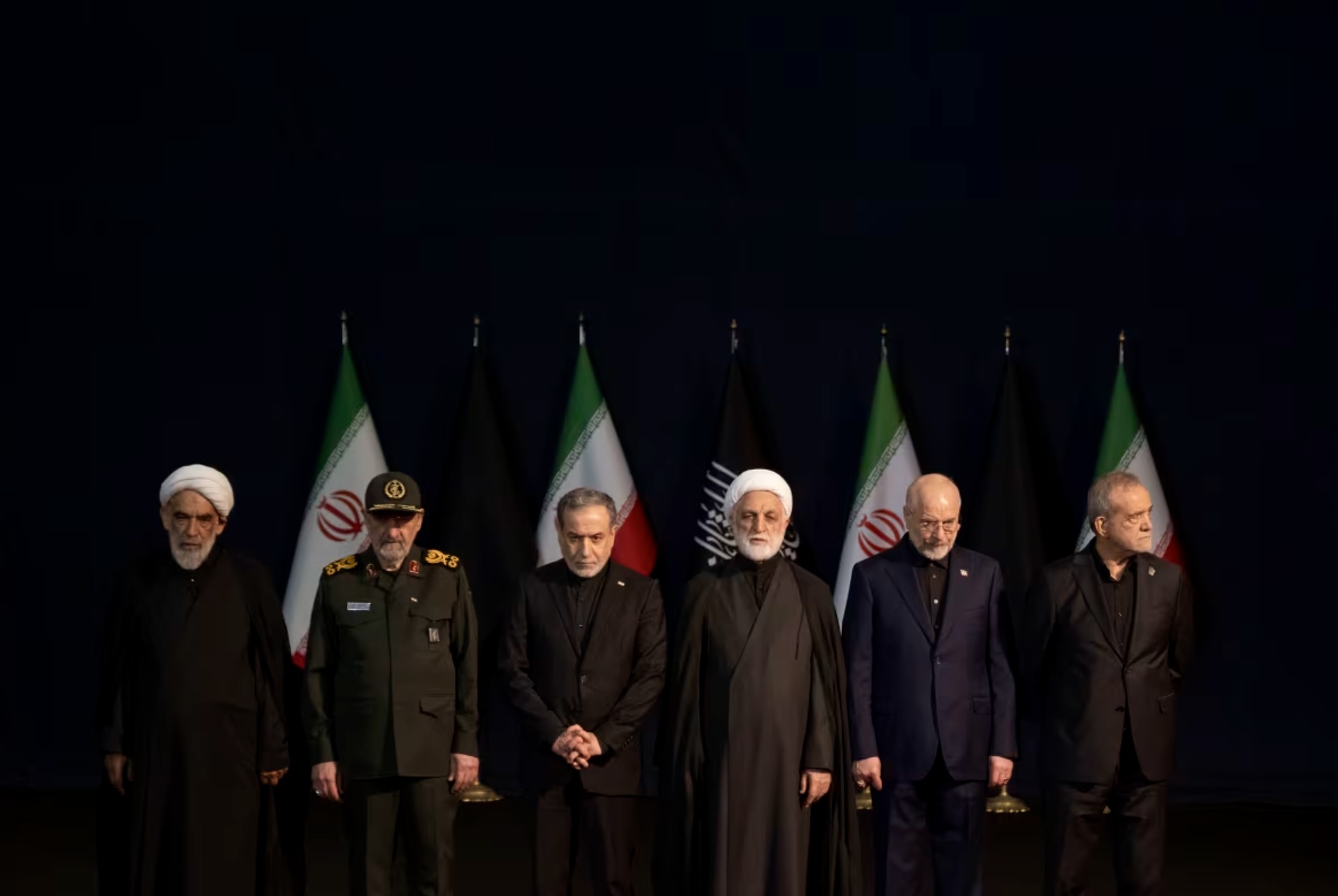
In the absence of the Supreme Leader, real power has fallen into the hands of President Masoud Pezeshkian, Parliament Speaker Mohammad Bagher Ghalibaf, and Foreign Minister Abbas Araghchi.
It is precisely this trio that the ultra-conservatives accuse of orchestrating a “soft coup” that undermines the authority of the new Supreme Leader and revolutionary ideals.
Iranian expert Arash Azizi explained to CNN that radicals are convinced that “instead of avenging Khamenei’s murder, Iranian officials surrendered by signing an agreement that contradicts the decrees of the new Supreme Leader.” According to the ultra-conservatives, the country’s visible leadership has usurped power, dissolved parliament, and suppressed street protests that were the backbone of the fundamentalists.
Parliamentary Split and the Battle for “Red Lines”
These accusations are backed by real actions. On July 13, after a long recess, Iran’s parliament resumed work.
During reshuffles in the key National Security and Foreign Policy Committee, supporters of diplomacy with Washington, associated with Ghalibaf, strengthened their positions. One of the most vocal critics of the talks, Mahmoud Nabavian, lost his post as first deputy chairman of the committee.
The ultra-conservative Paydari wing, left in the minority, immediately called this a “soft coup against the country’s security.” At the same time, a bill was introduced in parliament tightening control over negotiations with the US and reaffirming Iran’s full control over the Strait of Hormuz, which could create new obstacles to implementing the memorandum.
Strategic Context: Who Benefits from War?
As NPR notes, the conflict between ultra-conservatives and proponents of negotiations has deep economic roots. Analysts point out that the war and sanctions have created “an entire class, often linked to the Islamic Revolutionary Guard Corps (IRGC), that has enriched itself by creating channels to circumvent sanctions.”
It is this group that controls the black market and has no interest in the economic openness that a peace agreement would bring. Thus, calls to continue the war are not only an ideological but also an economic issue for an influential part of Iran’s elite.
Despite their radical rhetoric, the ultra-conservatives themselves remain a minority. However, as International Crisis Group expert Ali Vaez notes, they are the force that is “ready to take to the streets and fight any internal opponents to ensure the regime’s survival.”
Iran has found itself in a deep political impasse. The memorandum signed with the US has effectively collapsed due to the resumption of hostilities. The new Supreme Leader remains invisible to the public, and his legitimacy has been called into question.
The ultra-conservatives, feeling pushed aside, are preparing for a decisive confrontation. Against the backdrop of war with the US and the escalating situation in the Strait of Hormuz, the internal rift in Tehran could prove no less dangerous than the external threat.