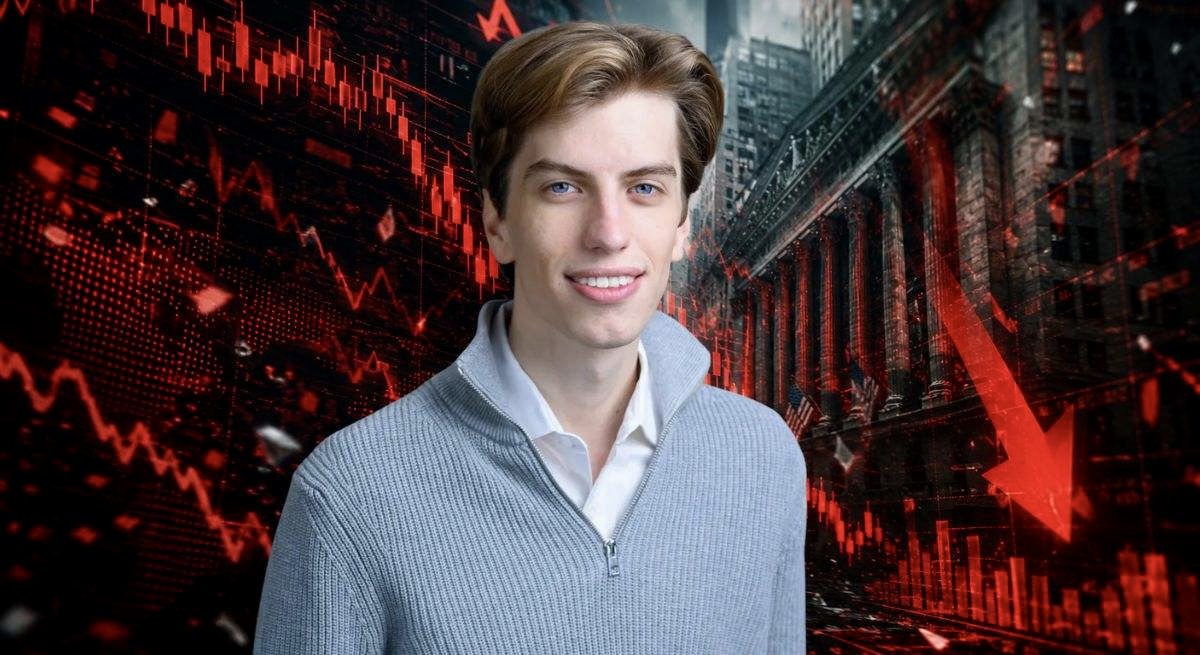
NEW YORK (Realist English). The Situational Awareness fund, managed by former OpenAI researcher Leopold Aschenbrenner, lost 67% of its value in July amid a collapse in AI‑related technology stocks.
The fund, which was valued at $45 billion** at the beginning of the month, had shrunk to approximately **$10 billion by the end of July.
In a letter to investors sent on 30 July, the 25‑year‑old manager admitted: “We let you down this month. We approached a line we cannot accept — the risk of permanent capital loss.” Aschenbrenner promised to learn from the experience and “fight another day.” Despite the catastrophic month, the fund remains +80% year‑to‑date.
From $100 million to $45 billion in two years
Aschenbrenner founded Situational Awareness in 2024 at the age of 22. In November of that year, he raised $100 million from prominent figures in the tech world and immediately began actively investing in AI.
By the end of June 2026, the fund had achieved an impressive return of 439% year‑to‑date and 1,551% since inception. Aschenbrenner was called a “prodigy” and the “golden child” of AI trading.
His strategy was based on a simple idea: artificial intelligence would require massive expansion of computing power, chip production, memory, and electricity. He invested in chipmakers (SanDisk, SK Hynix), data centre operators (CoreWeave, Nebius Group), and cryptocurrency mining companies.
What went wrong: AI stock crash and leverage
In July 2026, a global downturn in the chip and AI stock sector crushed the fund’s key positions. Shares of all four of the fund’s largest holdings fell more than 35% over the month. Short positions against software companies such as Adobe also moved sharply against the fund.
The key factor was leverage. Aschenbrenner actively used borrowed funds from banks to increase his bets. The leverage reportedly reached 400%. When the market turned, banks demanded additional collateral (margin calls). The fund was trapped: positions were plummeting, and market liquidity was drying up.
“These processes are like a bank panic: vulnerability breeds even more vulnerability,” Aschenbrenner wrote in the letter.
Citadel steps in
To save the fund, Aschenbrenner sold the bulk of the public portfolio to Ken Griffin’s Citadel. The deal was struck at a discount.
All short positions were closed, and all borrowed funds were repaid. The fund now manages a fully paid‑up portfolio with no margin risk.
Negotiations to sell its stake in Anthropic (valued at approximately $3.5 billion) did not materialise — the fund retained this valuable asset.
Remarkably, the height of the crisis coincided with the day before Aschenbrenner’s wedding, scheduled for the weekend. His fiancée is Avital Balwit, chief of staff to Anthropic CEO Dario Amodei.
How Aschenbrenner explained the crash to investors
In his letter, Aschenbrenner highlighted several key points:
- Extreme market moves — many AI stocks fell by half or more, and his long/short positions turned sharply against him.
- The ‘bank panic’ effect — as soon as the market learned of the fund’s problems, other players began trading against its public positions, exacerbating the decline.
- Decisive action — overnight from Wednesday to Thursday, the fund executed a block trade, eliminating all leverage and preventing further losses.
- Fully paid portfolio — all positions are now fully paid, with no margin call risk.
“I will do everything I can to ensure we draw the necessary lessons from this experience,” he promised.
Market reaction and criticism
The collapse of Situational Awareness became the most high‑profile loss case amid AI‑boom volatility.
Critics pointed to Aschenbrenner’s lack of money‑management experience before launching the fund. Some investors in New York, whom he met to raise capital, considered him a “lightweight” and a “one‑day sensation.” The largest hedge‑fund investor, Blackstone, declined to invest. One investor asked Aschenbrenner what would happen if the AI revolution did not go according to plan — and received no detailed answer.
Some recalled his dismissal from OpenAI in 2024 on charges of leaking internal information (Aschenbrenner denied the allegations).
Supporters noted that even after the 67% drop, the fund remains up 80% year‑to‑date.
Aschenbrenner has promised to “fight another day.” The fund will continue to manage a fully paid portfolio without leverage. However, investor confidence has been shaken. Aschenbrenner, who was supposed to be the “golden child” of Wall Street, must now prove that his collapse is not the end of the story but merely a temporary defeat.
As The New York Times writes, “this crisis has become a serious test for the investment strategy that made Aschenbrenner one of the most watched figures in AI trading.”
The story of Situational Awareness is a classic example of how a brilliant idea and high leverage can lead to disaster when the market turns against you. Aschenbrenner has promised to learn the lessons. The question is whether investors will give him a second chance.