WASHINGTON (Realist English). Two developments converged on September 13 to expose the deepening strains of America’s war with Iran: a Pentagon scandal over the politicisation of a rescue mission, and a fresh attack on commercial shipping in the Strait of Hormuz.
Hegseth’s Push for ’60 Minutes’
Defence Secretary Pete Hegseth and political appointees in his department pressed the two crew members of an F-15E shot down over Iran in April to participate in a “60 Minutes” interview about their rescue, according to a CNN investigation published September 12.
Both airmen initially expressed reservations. One raised concerns about being ordered to take part, while military officials warned that classified details of the rescue operation could be exposed. Political appointees in Hegseth’s office, however, were “adamant” that both crew members sit for interviews.
After the survivors voiced concerns, Hegseth met with them privately and asked if they wanted to participate rather than forcing their cooperation. One pilot, identified by the call sign “Bravo,” agreed; the other, “Alpha,” refused.
Active-duty service members told CNN they believed the programme was an attempt to use the heroism of US troops “for political purposes”. Chairman of the Joint Chiefs of Staff Dan Caine also expressed concern that the interview could inadvertently reveal military tactics, though he ultimately decided to participate himself.
Chief Pentagon spokesman Sean Parnell rejected the reporting as “a complete lie,” insisting the decision was “each pilot’s alone” and that the department “took great care to ensure operational security”.
The episode underscores the pressure on Hegseth to shape the narrative around an increasingly unpopular war.
Vessel Struck Near Qeshm
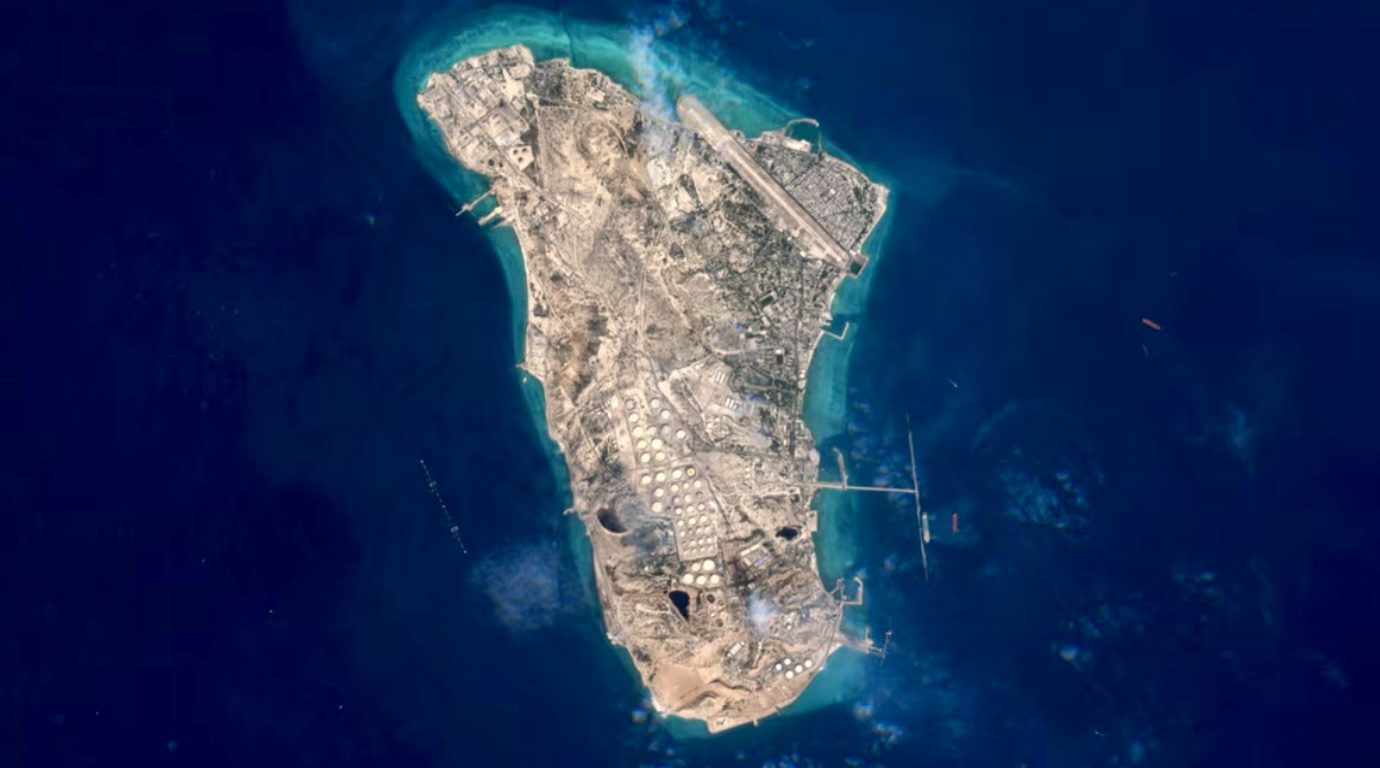
Hours later, Iranian state media reported that a commercial vessel was struck early Sunday near Qeshm Island in the Strait of Hormuz. The Qeshm governor told IRIB that one crew member was killed and three others wounded, and that the projectile’s type was unknown. Iran’s IRNA news agency quoted the governor blaming a “terrorist enemy”.
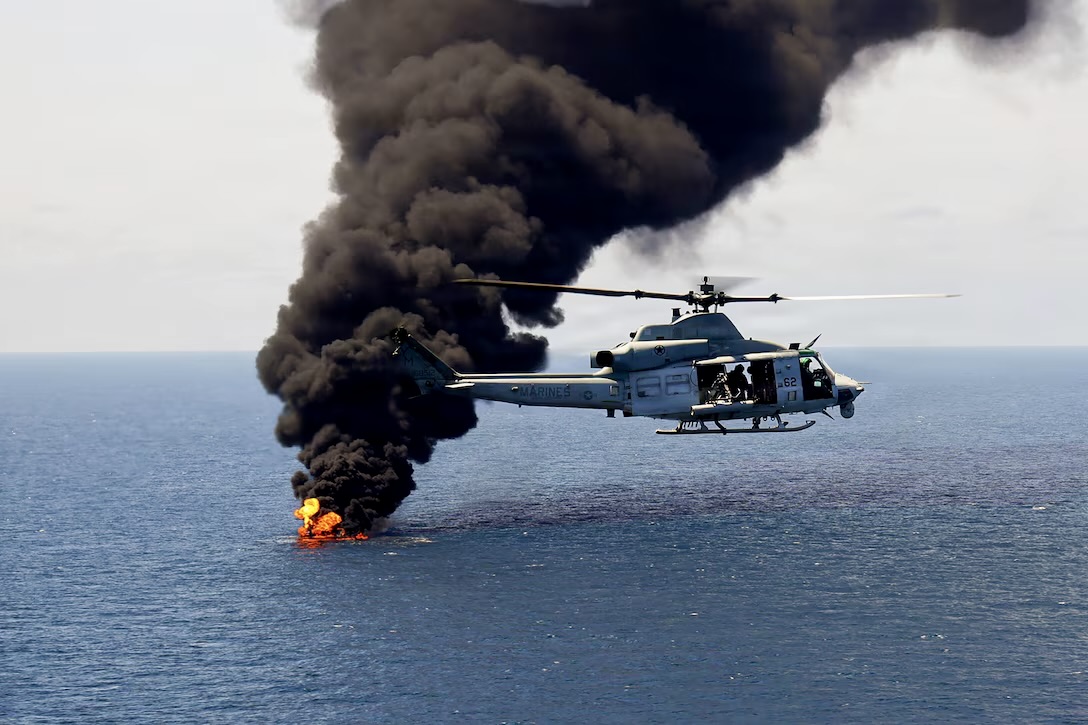
Separately, the UK Maritime Trade Operations (UKMTO) reported that a vessel was struck by an unknown projectile while transiting the strait late Saturday, with a fire breaking out aboard and local authorities assisting in evacuating crew members. The UKMTO did not specify the vessel’s flag.
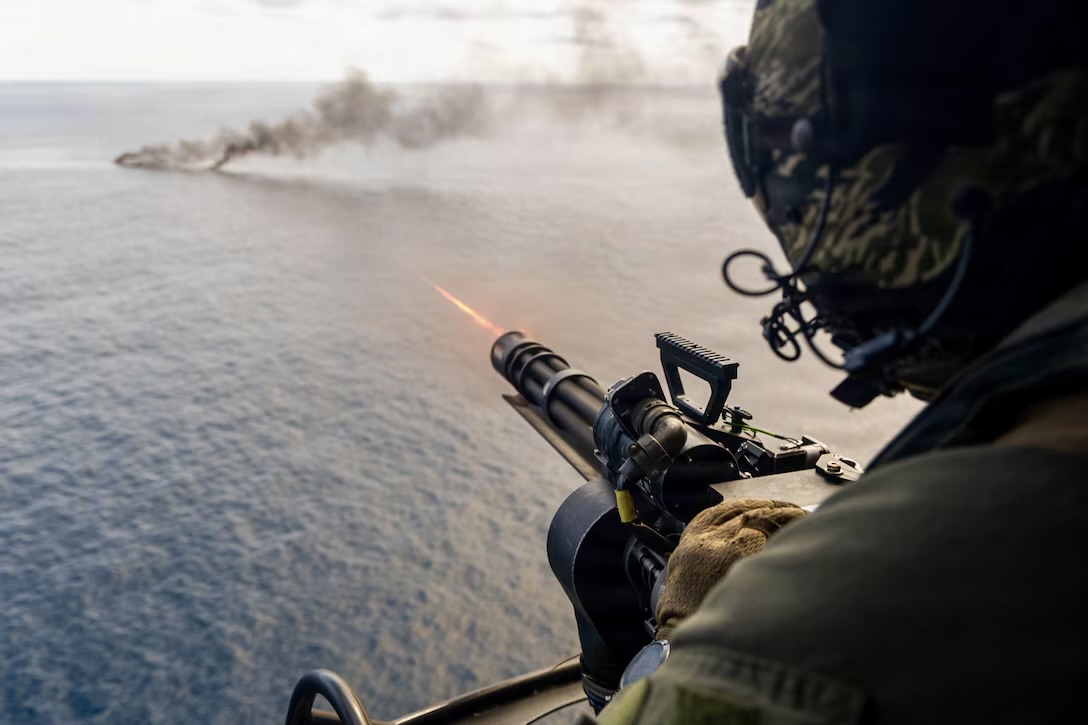
The US military has not commented on the attack. US forces have previously struck Iranian-flagged vessels as part of a blockade of Iranian ports, while facing Iranian ballistic missile attacks on their warships.
Context: A Chokepoint Under Siege
Qeshm Island, located about 22 kilometres from the port city of Bandar Abbas, is key to Iran’s assertion of control over the strait. Before the war, around 20 million barrels of oil passed through Hormuz daily — about 20% of global production. Traffic is now roughly 90% below pre-conflict levels.
The attack came a day before Tehran was set to meet regional leaders in Oman to discuss managing shipping traffic through the waterway. Bahrain has said it will not attend. Iranian President Masoud Pezeshkian told India Today TV that “the waterway would be opened up on the condition that the US will terminate its blockade”.
Ebrahim Azizi, head of the Iranian parliament’s national security committee, said on X: “As long as the American side does not accept all of Iran’s conditions, dialogue and negotiation are of no use”.
A War Without a Narrative
The two stories reveal a war effort struggling on both fronts. Militarily, the US cannot secure the Strait of Hormuz despite its naval blockade and repeated strikes. Politically, the Pentagon is attempting to manufacture a narrative of success — and facing internal resistance from the very service members it seeks to showcase.
The attack on a commercial vessel, meanwhile, underscores the human and economic cost of the stalemate. One crew member is dead, another vessel is ablaze, and oil flows remain a fraction of their pre-war levels.
Open questions remain. Will the “60 Minutes” controversy further erode trust between the Pentagon’s political leadership and the uniformed military? Can the US and Iran find a negotiated exit from the Hormuz impasse, or is the strait destined to remain a permanent battleground? And most importantly — how many more vessels will be struck before either side blinks?
For now, the war grinds on — in the Pentagon’s briefing rooms and in the waters of the Gulf.