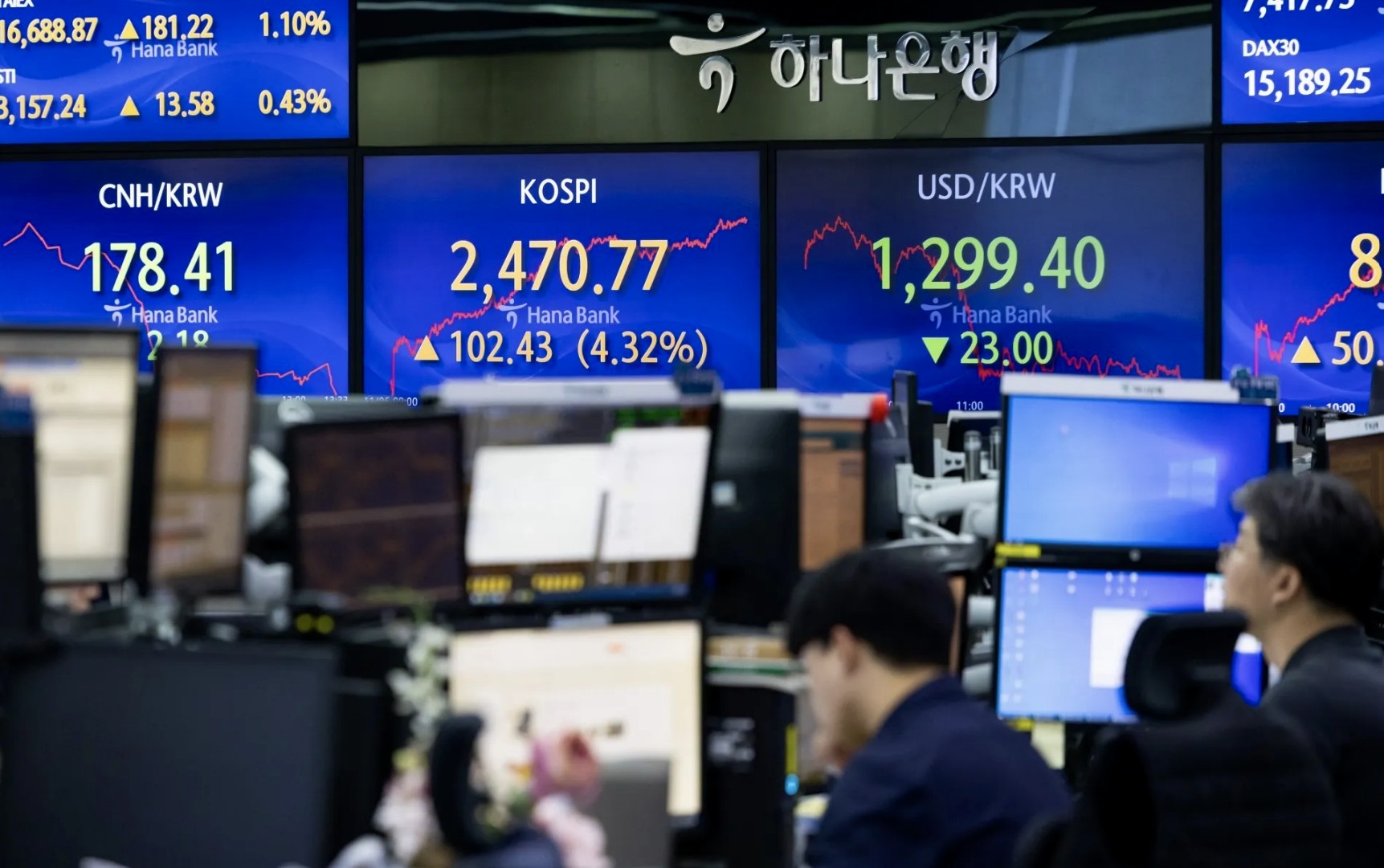
SEOUL (Realist English). From September 14, the Korea Exchange (KRX) is launching an evening trading session: almost all stocks listed on Kospi and Kosdaq will be available for buying and selling until 8:00 PM after the main session closes at 3:30 PM.
This is the first such move among leading Asian exchanges, following the global trend of round-the-clock trading set by Nasdaq and the New York Stock Exchange.
The step is the first phase on KRX’s path to ensuring round-the-clock trading by December 2027. The exchange also plans to launch a morning session by the end of 2027.
Coverage and Mechanism
The new evening session will cover almost all local Kospi and Kosdaq stocks, including short-selling transactions, but ETFs are not yet included. As of September 11, 831 stocks were listed on Kospi and 1,811 on Kosdaq.
Notably, evening trading is not entirely new. The alternative trading system Nextrade launched morning and evening sessions back in March 2025, covering about 600 stocks, and within a few months captured almost a third of trading activity. KRX is significantly expanding coverage — to approximately 2,400 stocks.
Taking into account Nextrade’s morning session (from 8:00 AM), the total trading time on the Korean market will increase to 12 hours.
Motivation: The Fight for Global Investors
The main goal of the extension is to attract international investors, especially by offering the ability to trade during European hours. KRX Chairman Jeong Eun-bo previously promised to extend trading hours, stating that the exchange would “actively respond to the transformation of the multi-exchange system and global competition for liquidity between venues.”
Edward Kim, head of Korean equity sales at Bank of America, called it “another step in the ongoing evolution of the Korean capital market and its accessibility to global investors.”
Lee Yong-jae, senior investment manager at London-based Pictet Asset Management, noted: “A longer trading window usually means greater flexibility for investors, making the market more efficient. Investors with higher turnover or hedge funds will likely use it more often.”
The Key Question: Is Liquidity “Created” or “Redistributed”?
The market is cautiously assessing whether the extension will meet expectations.
Dave Mazza, CEO of Roundhill Financial, stated bluntly: “Extending trading hours doesn’t create liquidity — it only redistributes it.” He expects limited interest in the initial phase.
These concerns are not unfounded. The Kospi index doubled at one point this year amid the artificial intelligence boom, but in July, due to a sharp deterioration in sentiment, a 22% correction occurred, and turnover fell sharply. The benchmark index is still up 64% in 2026, but market enthusiasm has noticeably cooled.
The Nextrade experience provides a benchmark: according to its data, retail investors account for more than 80% of activity in non-standard hours, while sharp price swings and the absence of institutional participants create additional challenges.
Hedging currency risks is another issue. South Korea’s foreign exchange market technically operates around the clock, but during off-peak hours trading is thin, which can make hedging more expensive and deter foreign funds from large investments in evening stock trading.
Park Sang-hyun, founder of Clepsydra Capital, noted: “The main risk is getting stuck in low liquidity.” Moving large blocks of shares in a thin market can result in a purchase price significantly higher than expected or a sale price significantly lower.
A Positive Factor: Reducing Information Asymmetry
Despite liquidity concerns, observers generally support the initiative. Tony Cheong, a consultant at Instinet, stated: “The evening session promotes market fairness by allowing a broader range of investors to react to news after the close, reducing information asymmetry and improving overall market fairness.”
Evening trading gives investors a tool to react more quickly to earnings reports or breaking news, which to a certain extent improves market efficiency.