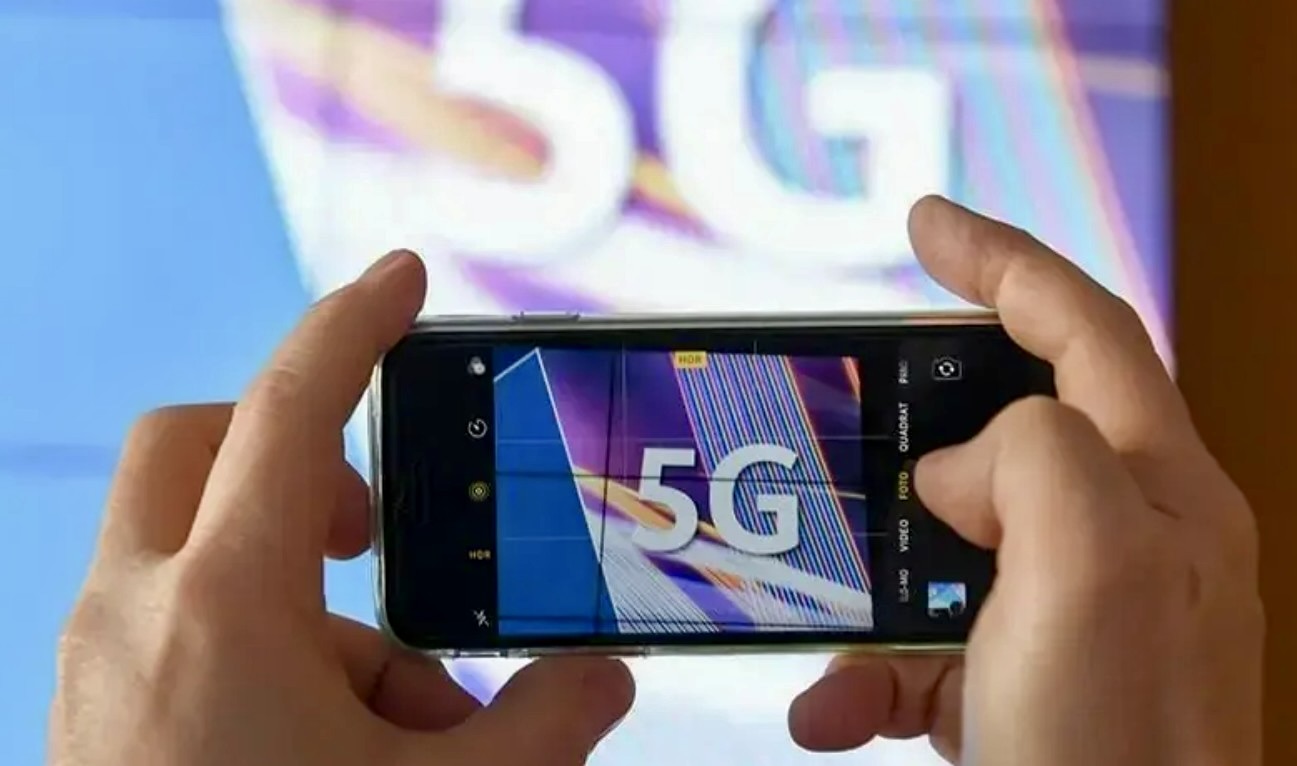
MOSCOW (Realist English). Russia’s digital infrastructure has taken a landmark step forward. On September 11, on the orders of President Vladimir Putin, the country’s first commercial 5G network was launched, covering Moscow, St Petersburg, Yekaterinburg, Novosibirsk, Kazan and 11 other cities. Around 10 million people gained access.
The first services are being provided by the “big four” operators. In Moscow, St Petersburg and Yekaterinburg, all four operators launched; in Novosibirsk and Kazan — Megafon and MTS; in Samara — Beeline and Megafon; in the remaining cities — partially.
The Technical Reality of Phase One: 5G on 4G Frequencies
The 5G launched on September 11 is not “full-fledged.” As Izvestia reports, the network actually operates on existing LTE frequencies under the principle of “technological neutrality.” The speed increase in the first phase is about 20–30%, not a multiple.
Real changes will begin in 2027. At the end of August, the State Commission for Radio Frequencies (SCRF) decided to allocate the 4.63–4.99 GHz band to the “big four” free of charge — 90 MHz each. This band allows mobile internet speeds above 1.5 Gbit/s. However, according to analyst Eldar Murtazin, currently only about 1% of smartphones in Russia (roughly 100,000 devices) support this band.
In addition, the use of existing foreign base station equipment is permitted until 2027, after which a gradual transition to domestic base stations will begin, with the aim of achieving 100% localisation by the end of 2031.
What This Gives Subscribers
For ordinary users, the benefit of 5G at the current stage is limited but real. Alexander Gostishchev, head of network architecture at Megafon, notes that 5G will provide “faster content downloads and stable operation of applications requiring high connection quality” — including HD video, cloud services and online games.
But the truly differentiated experience — virtual reality, “cloud smartphones,” AI-based real-time translation calls — will require a more mature set of interconnected services and devices. MTS analysts believe 5G will make “cloud smartphones” possible: the device itself will be just a screen, while the operating system and applications run in the cloud.
Android owners will be the first to use 5G. Availability for iPhone users depends on Apple’s decision.
What This Gives Business: B2B Is the Main Battleground
Unlike most global markets, the priority scenario for Russian 5G is not consumer video streaming but industrial applications.
According to a forecast by Beeline’s commercial division, in 2027 the 5G market in Russia will reach 35–45 billion roubles, with more than 80% of commercial revenue coming from corporate clients. Mining and metallurgical enterprises account for about 40% of demand, oil and gas — 20–25%.
There are already scenarios with “verifiable economics and a payback period of 2–3 years”: autonomous dump trucks in open-pit mining, digital inspectors at refineries, telemetry at oilfields and automation of port logistics.
An MTS study indicates that in international experience, logistics, retail, industrial production and “smart cities” improve operational performance by 20–80% through 5G-based solutions. Currently, 55% of Russian companies plan to launch 5G pilot projects in the next three years.
Cities and the Public Sector: A New Foundation for “Smart Cities”
Another key 5G track is “smart cities.” Gostishchev notes that 5G supports a connection density of 1 million devices per square kilometre (compared with 100,000 for 4G), which is a prerequisite for scaling video surveillance, transport management, municipal services and public safety systems.
According to Beeline’s forecast, in 2027 government customers could generate up to 1 billion roubles in demand for 5G solutions, primarily for video surveillance and intelligent transport systems. With additional budget support, this segment could double.
Deputy Prime Minister Dmitry Grigorenko stated that 5G will contribute to the development of “unmanned transport and telemedicine,” and will also give a boost to the production of domestic telecom equipment.
Timelines and Prospects
By the end of 2026, 5G is planned to expand to another 50 cities. Anatoly Stoyanovsky, an expert at the Skolkovo School of Management, expects that by 2027 the 5G coverage area will grow rapidly, and by 2030 5G will become the norm for most users in large cities.
Widespread coverage beyond large cities will likely have to wait until after 2030.