RIYADH (Realist English). On September 12, Saudi Arabia’s Ministry of Energy announced the temporary suspension of the East–West pipeline (also known as Petroline) as a “precautionary measure” following a series of drone attacks that occurred on the morning of September 10 in the Riyadh and Medina areas.
According to the Saudi Foreign Ministry, the attacks were carried out by “several drones that arrived from Iraq” and resulted in injuries among personnel and material damage. Emergency and specialised technical teams were immediately dispatched to the site to ensure the pipeline’s safety and assess its condition.
Strategic Importance of the Pipeline
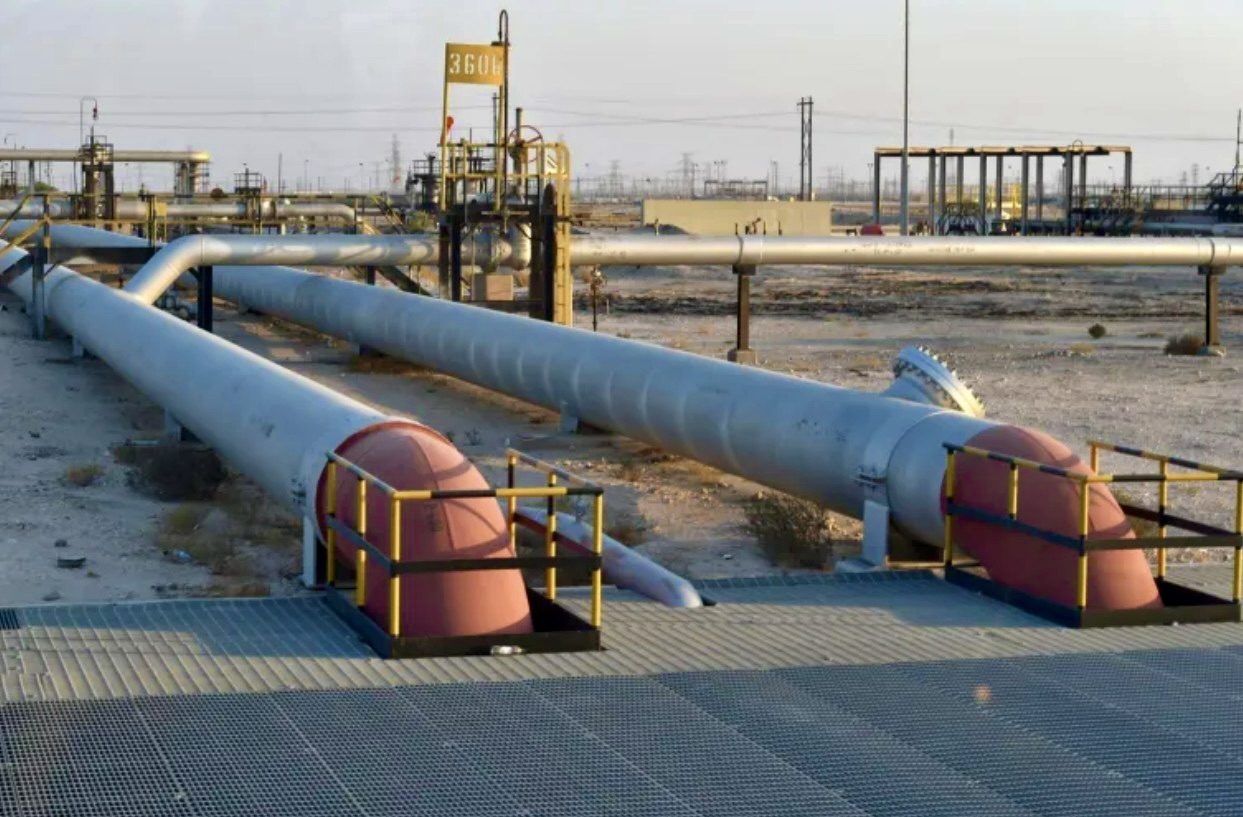
The East–West pipeline, approximately 1,200 kilometres long, connects oil fields in eastern Saudi Arabia with the port of Yanbu on the Red Sea coast. Its capacity is estimated at 5–7 million barrels of oil per day.
The key role of this infrastructure is that it allows Riyadh to export oil bypassing the Strait of Hormuz, which remains effectively blocked due to the ongoing US-Iran conflict.
Since the start of the war, Saudi Arabia has redirected about 5 million barrels per day — previously shipped through the Persian Gulf — onto this route. According to the International Energy Agency, by early June exports from the port of Yanbu exceeded 5 million barrels per day.
Riyadh’s Response: Restraint from Retaliation
Despite “resolute condemnation” of the attack, Saudi Arabia stated that it “chose not to respond at this stage” at the request of Iraqi Prime Minister Ali al-Zaidi, in order to give Baghdad the opportunity to take the necessary measures to prevent attacks from Iraqi territory against the kingdom and neighbouring countries.
At the same time, Riyadh emphasised that it “reserves the right to take all necessary measures to protect its sovereignty, security, facilities, citizens and residents.”
Baghdad’s Response: Condemnation and Investigation
The Iraqi government condemned the attacks and stated that “Iraqi territory and airspace will not be used as a launchpad for attacks against any country.”
Iraqi Prime Minister Ali al-Zaidi ordered an investigation into the circumstances of the attacks and the prosecution of those responsible. On September 12, Iraqi authorities announced the removal of a military commander overseeing operations in Maysan province after the investigation confirmed that the drone attacks were launched from that southern province.
Reaction of Regional Organisations
Secretary-General of the Gulf Cooperation Council (GCC) Jasem Mohamed Al-Budaiwi condemned the attack “in the strongest terms,” calling it a “dangerous escalation and an unacceptable threat to the security of Saudi Arabia, its territorial integrity and vital facilities.”
“This is a flagrant violation of the principles of international law,” Al-Budaiwi stated, calling on Iraq to “intensify efforts and take the necessary decisive measures to prevent the use of its territory as a launchpad for such attacks.”
Iran’s Coordinated Strategy
The attack on the East–West pipeline coincided with the Houthi capture of the strategic island of Perim in the Bab-el-Mandeb Strait and the port of Mokha in Yemen. This creates a threat to both ends of Saudi Arabia’s main bypass route on the same day.
According to the Associated Press, regional officials reported that the Houthis helped Iraqi militias plan and carry out drone attacks on Saudi oil facilities as early as July. This indicates a new level of coordination between Iran-backed groups in Yemen and Iraq. US officials have expressed concern over the Houthi presence in Iraq and their ability to strike other countries, including Saudi Arabia.
International Crisis Group analyst Ahmed Nagi characterised this strategy as an attempt to “squeeze Saudi Arabia like a pair of pliers.”
Economic Consequences
The attack came amid a sharp rise in oil prices. Brent futures rose nearly 9% over the week amid escalating regional conflict, once again exceeding $100 per barrel. According to CNN, Saudi Arabia informed OPEC that crude oil production had fallen to its lowest level since 1990.
Restoring pumping stations, according to US officials and experts, may prove less costly than repairing serious damage to the pipeline itself, but the timeline for restoration has not yet been determined.