

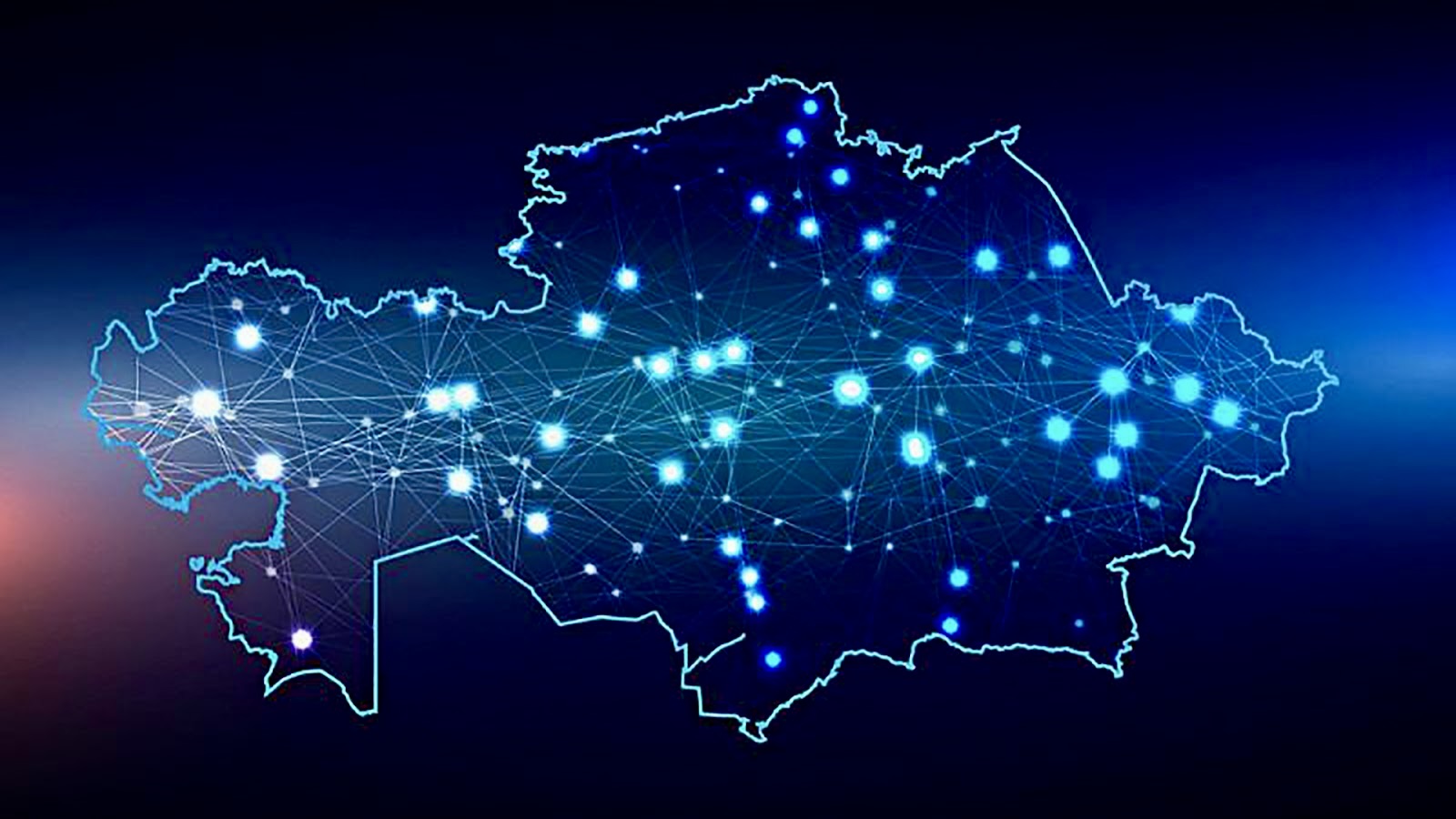
ASTANA (Realist English). Kazakhstan is making an ambitious attempt to reshape its national identity — from a resource-based economy into a high-tech “middle power” capable of connecting East and West in the digital age.
As AJU PRESS notes, this strategy envisions the creation of a new economic model in which hydrocarbons no longer play the decisive role; instead, human capital, innovation, and technology take center stage.
From a Resource Economy to a Knowledge Economy: Alatau as a Symbol of a New Course
The central element of this strategy is the construction of the satellite city of Alatau near Almaty, envisioned as a 21st-century technology hub. According to the government’s plan, it will become “a platform where artificial intelligence, advanced infrastructure, global talent, and international investment converge at the crossroads of Eurasia.”
The project is intended to support a strategic rethinking of Kazakhstan’s role in the global economy and reflects the understanding that natural resources are no longer a guarantee of national strength in the age of artificial intelligence.
Astana as a Bridge: Why Kazakhstan Seeks the Role of a “Middle Power”
At the same time, Kazakhstan is increasingly positioning itself on the international stage as a “proactive middle power” capable of acting as a bridge when major powers cannot or will not reach agreement.
This approach builds on the country’s traditional multi-vector foreign policy, which is now becoming more assertive. Kazakhstan seeks not only to balance among competing centers of power but also to participate in shaping a new global order, advocating reform of the United Nations, including the expansion of the Security Council to incorporate greater representation from Asia, Africa, Latin America, and the Middle East.
Betting on Capital: How Astana Attracts Investors and Talent
The transition to the new model is accompanied by the liberalization of migration and investment legislation. In April 2026, President Kassym-Jomart Tokayev signed a decree launching a comprehensive reform of migration policy, replacing the quota-and-permit system with a framework designed to attract highly skilled professionals and global talent.
The flagship initiative is the 10-year “Golden Visa” (Altyn Visa) program for investors who commit at least $300,000 to Kazakhstan’s economy.
In an effort to create a more attractive business environment, the government is actively introducing digital tools. Among them is an AI-powered “single-window” system for investors, capable of analyzing business requests and identifying systemic administrative bottlenecks.
Double Hedging: How Kazakhstan Balances Between Russia, China, and the West
The implementation of these ambitious plans is taking place against a complex geopolitical backdrop. According to a Harvard University study, Kazakhstan has adopted a policy of “double hedging”: Astana uses cooperation with China as a counterbalance to Russian influence while simultaneously strengthening ties with Turkey, the European Union, the United States, and the Gulf states in order to diversify political and economic risks.
China has already become Kazakhstan’s largest trading partner, surpassing Russia in total trade volume.
However, critics note that investment inflows remain uneven. In 2025, Kazakhstan attracted $20.5 billion in foreign direct investment, reflecting growing investor confidence. At the same time, China invested approximately $36 billion in Central Asia over the past decade, significantly outperforming Russia in terms of regional investment.
Successes and Risks: Does the Project Have a Future?
Early results are already visible in the technology sector. IT service exports reached $700 million in 2025, while the Astana Hub ecosystem now brings together around 2,000 technology companies.
In the same year, Kazakhstan attracted $20.5 billion in foreign investment, significantly exceeding the previous year’s figure of $17.9 billion.
Nevertheless, serious structural challenges remain. Administrative barriers, bureaucratic procedures, and weak interagency coordination continue to slow the implementation of many projects.
In addition, Kazakhstan experienced a net outflow of foreign direct investment of $2.55 billion in 2024, the first such decline in five years. Experts attribute this in part to the strengthening of the Russian ruble and substantial reverse excise payments made to oil companies.
Geopolitical risks are equally significant. The deepening confrontation between Russia and the West presents additional challenges for Astana and requires increasingly careful balancing among key partners.
If Kazakhstan succeeds in overcoming domestic obstacles, maintaining its multi-vector foreign policy, and implementing its announced reforms, it could emerge as one of the key connecting links between the world’s major centers of power in the 21st century. Otherwise, it risks finding itself squeezed between the competing interests of larger powers.