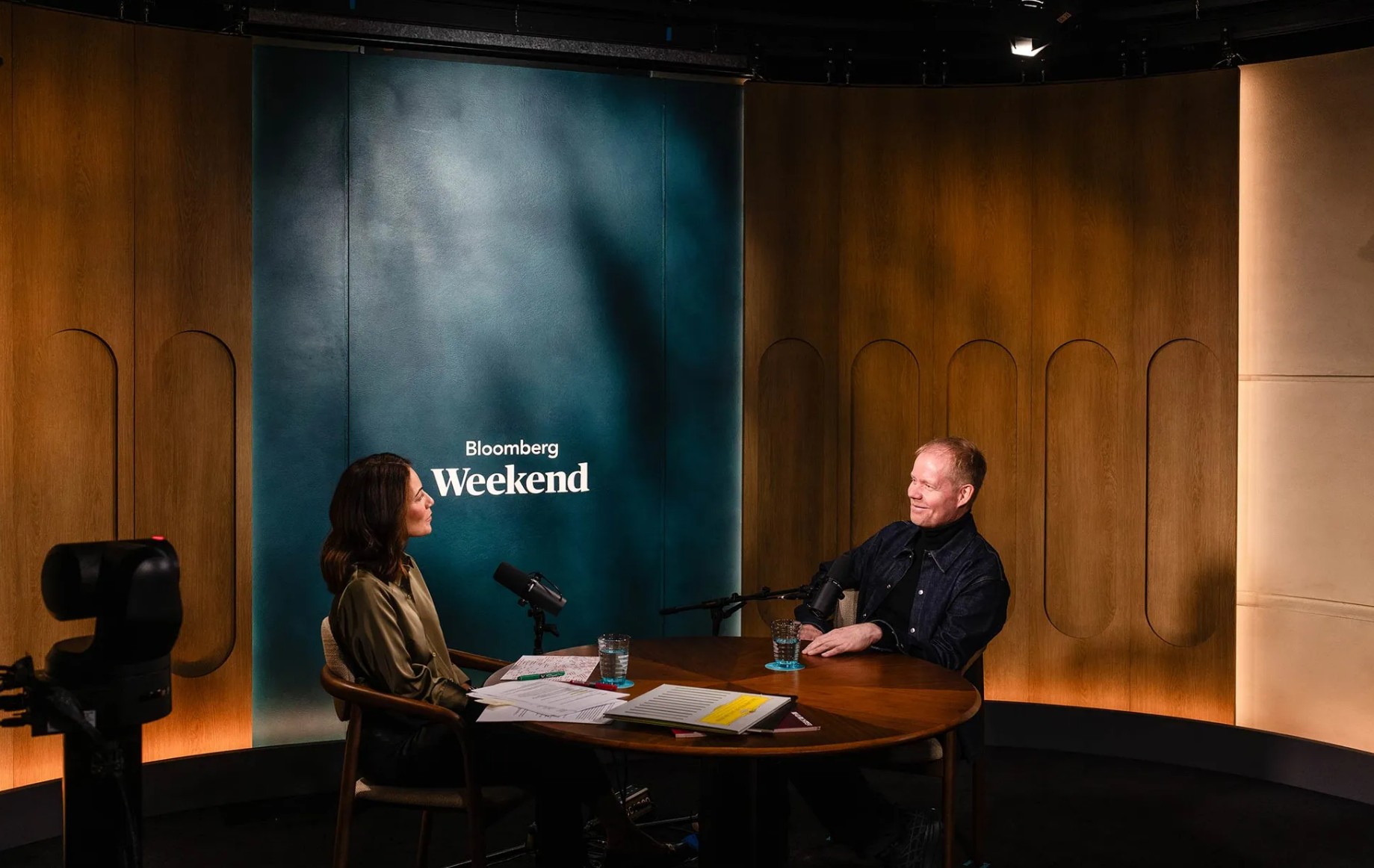
LONDON (Realist English). Max Richter, one of the most successful classical composers of our time, sharply criticised generative artificial intelligence in music in an interview with Bloomberg. According to him, AI systems trained on existing recordings do not create anything new but merely combine what is already known, which lowers the bar for listeners.
“Degradation of taste” and “slop”
Richter’s central thesis is that AI music, which he calls “slop,” accustoms audiences to a lack of innovation. “It will have a degrading effect on taste. People will think it’s normal. We will get used to this level of uninnovation, of lack of imagination. It sounds like music — sort of — but it isn’t, in any meaningful sense,” the composer said.
In his view, algorithms work like a “blender”: they take existing works and output them in a requested combination, whereas creativity involves overcoming the resistance of the material and searching for the new.
Economic consequences: “music for the rich”
Richter also pointed to an economic threat. According to him, millions of AI tracks dilute the overall royalty pool, and in the future only people with other income or family support will be able to pursue music. “It will be a hobby that the rich can afford,” he warned. The composer also noted that the situation resembles the early era of streaming, when labels struck deals with platforms without artists’ involvement, and called for a royalty mechanism for authors whose works were used to train AI.
Lawsuits, protests and the “silent album”
Richter’s statements came amid growing resistance from the music community. In 2025, more than 1,000 British musicians, including Richter, released a “silent album” in protest against government plans to allow AI training on copyrighted works without authors’ consent.
Richter himself testified before parliamentary committees, warning that such rules would “impoverish” creators and lead to the “vanillification” of musical culture. In parallel, Sony Music and Universal Music filed lawsuits against AI companies Suno and Udio, accusing them of illegally using recordings to train models.
Positions of other musicians
Not everyone shares Richter’s views. Pianist Lang Lang, for example, believes that classical music will always retain its place because AI “does not feel and cannot convey genuine emotions.”
Flautist Rajesh Chaurasia is also concerned that AI already reproduces his style, but he sees this more as a problem of preserving individuality than of degrading audience taste. Conductor Sakari Oramo is confident that AI will not replace the orchestra and will not be able to create complex works like Sibelius’s symphonies.
Richter’s criticism is not technological pessimism but a warning about the cultural and economic consequences of the algorithmisation of creativity. His argument about the “degradation of taste” points to a broader problem: if listeners become accustomed to averaged, predictable content, demand for complex and innovative art may decline, and with it the space for experimentation that has nourished classical music for centuries.
The question is whether this warning will become the basis for new regulatory mechanisms — from mandatory royalties to labelling AI content — or remain the voice of one of the few willing to publicly name the price of technological progress.