MOSCOW (Realist English). One of the important events on this occasion was a large festive concert organized by the Israeli Embassy in Russia on 26 October at the Moscow International House of Music, featuring the Russian orchestra “Gnessin Virtuosos” and the Jerusalem Orchestra “East-West.”
Historical background
The slight discrepancy in dates is explained by the fact that modern Russia is recognized by the world community as the successor to the Soviet Union, which, shortly before its dissolution on 18 October 1991, restored Soviet-Israeli relations, which had been severed in 1967 for almost a quarter of a century. The reason for the rupture of interstate relations was the so-called Six-Day War in the Middle East, when the USSR supported the coalition of Arab countries in their armed conflict with Israel.
It is worth recalling that the Soviet Union was the first in the world to recognize de jure the State of Israel on 18 May 1948, just on the fourth day after the proclamation of the new independent state. And on 26 May 1948, Soviet-Israeli diplomatic relations were established.
Support for Israel in 1948–1950
In 1948–1950, the Soviet Union provided the State of Israel with political, diplomatic and military support during the difficult period of its formation. Through the USSR’s allies — Czechoslovakia and Yugoslavia — large shipments of military equipment, small arms, artillery, mortars, ammunition and even a batch of aircraft (Avia S-199 fighter-bombers) arrived in Israel.
This weapons played a key role in repelling the attack by the coalition of seven Arab countries on Israel in May 1948. The USSR also permitted, during that period, the departure to Israel of Jewish refugees and volunteers (including former servicemen with experience in World War II) from the Soviet Union and other countries of Eastern Europe.
Reasons and collapse of hopes
The goal of the Soviet leadership in supporting Israel was to reduce the influence of Great Britain and the United States in the Middle East. In addition, there was hope that the new Jewish state would follow a socialist course of development and become a conduit for socialist ideas in the region.
However, by the early 1950s it had become obvious that these hopes of Moscow were not justified. Israel’s orientation in its foreign policy toward the United States and other Western countries coincided with the start of the campaign against cosmopolitanism and Zionism within the USSR, so support for Tel Aviv from Moscow soon ceased.
Rupture and restoration of relations
In subsequent years, trade, economic and cultural ties between the USSR and Israel were at a rather low level, although limited diplomatic missions were maintained. In the USSR, harsh ideological criticism of Zionism and its links with world imperialism continued. During the period when N.S. Khrushchev was in power in the USSR, on 7 October 1964, a deal was concluded to sell Israel 22 properties of the Russian Palestine and land plots in the Holy Land with a total area of about 167,000 square meters (in Jerusalem, Haifa, Nazareth, Afula, Ein Kerem, Kfar Kana).
As noted above, with the start of another Arab-Israeli war in early June 1967, the USSR openly supported the Arab coalition and severed diplomatic relations with Israel. Israel’s interests in Moscow began to be represented by the Netherlands, and the USSR’s interests in Tel Aviv by Finland. Repatriation of Soviet citizens to Israel was banned for a long time.
However, later the Soviet authorities, under pressure from the world community, were forced to permit limited emigration of Jews from the country under the pretext of “family reunification.” This process was strictly controlled by the authorities, and most applicants were denied exit under various pretexts. Only from 1987 did the number of exit permits begin to increase, but the procedure still had a permit-based nature and required appropriate invitations from relatives.
Finally, on 20 May 1991, the Supreme Soviet of the USSR adopted a law establishing the right of a Soviet citizen to free exit to all countries of the world. On the whole, during the so-called “perestroika” in the USSR in 1985–91, a warming in Soviet-Israeli relations emerged. The result was the restoration of bilateral diplomatic relations on 18 October 1991. To date, more than 1.5 million natives of the Soviet Union and post-Soviet states live in Israel.
Russian is the third most common native language in the country after Hebrew and Arabic. Between 12% and 15% of Israel’s residents speak it or consider it their native language.
On 12 November 1991, the famous Soviet journalist and TV presenter Alexander Yevgenyevich Bovin was appointed Ambassador Extraordinary and Plenipotentiary of the USSR to the State of Israel. After the collapse of the Soviet Union, he continued to work in Tel Aviv as Ambassador of the Russian Federation.
Current state of relations
Russia’s current ambassador in Tel Aviv, Anatoly Viktorov, in an interview with a TASS correspondent on 10 February 2026, stated: “We proceed from the fact that the further development of Russian-Israeli relations fully corresponds to the interests of the Russian Federation.
It is 35 years since the resumption, the restoration of full-format diplomatic relations between our countries. It is high time to sum up the results of the preceding decades and outline plans for the future. It is gratifying to note that relations between our countries retain a constructive, trust-based and frank character.”
He also noted that trade and economic relations between Russia and Israel remain at a quite decent level, the annual volume of mutual trade is about $2 billion, direct air service continues, and ties and contacts in the fields of tourism, culture, science and education are maintained.
This positive assessment of Russian-Israeli relations does not negate the remaining disagreements between Moscow and Jerusalem on a number of current and complex problems of our time.
In particular, Russia, like the overwhelming majority of UN member states, has recognized the State of Palestine, established diplomatic relations with it, and calls on the parties to the conflict to return to the 1967 borders, giving Palestinians the opportunity to have their capital in East Jerusalem.
Moscow consistently advocates a full-format Middle East settlement on all its tracks (Palestinian, Syrian, Lebanese) through peaceful negotiations. Russia also calls on Israel to limit the use of military force in the Gaza Strip, insisting on a complete ceasefire and the protection of civilians.
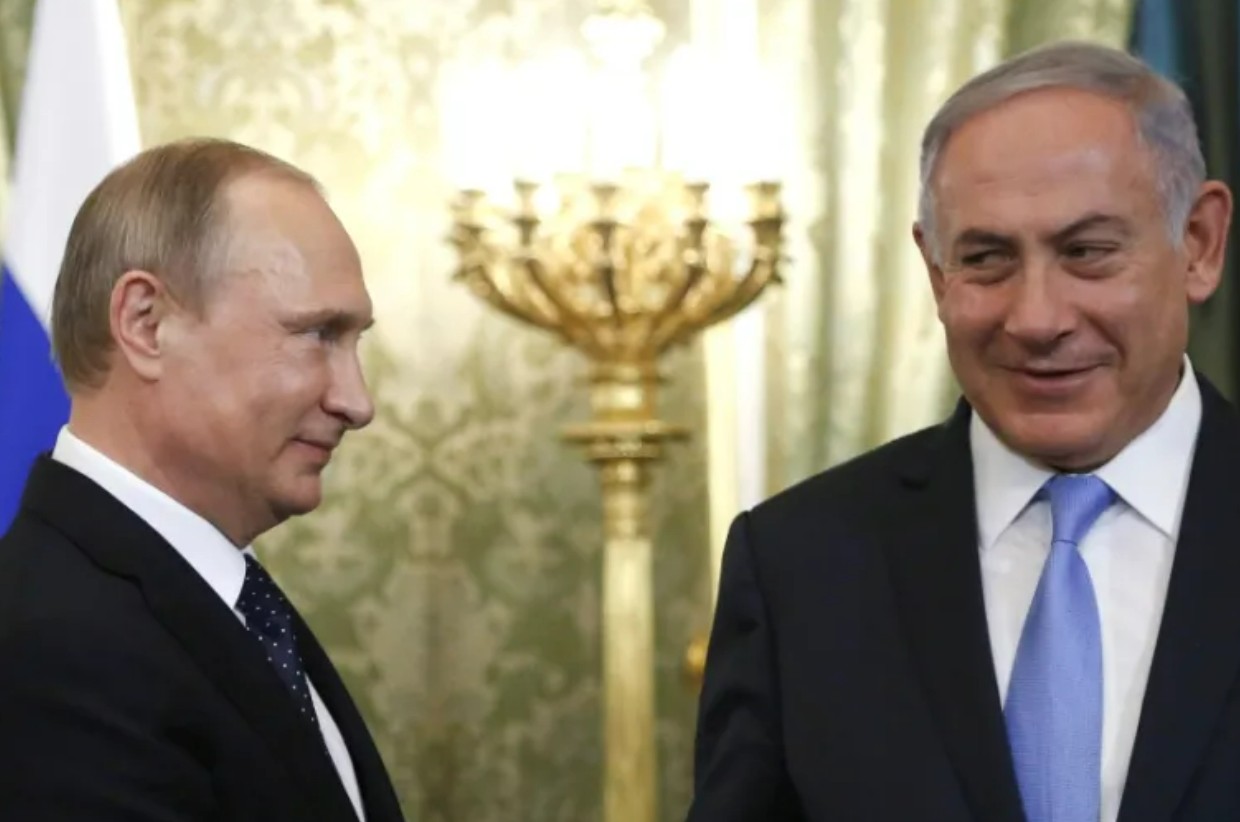
As is known, Benjamin Netanyahu’s government, after the attack by militants of radical Palestinian organizations on the border areas of Israel on 7 October 2023, launched a large-scale retaliatory military operation in the Gaza Strip and seeks the complete disarmament of the Hamas and Islamic Jihad groups (banned in Russia). According to statements by Israeli politicians, in the current conditions the issue of recognizing the State of Palestine has been removed from the agenda in Jerusalem. They believe that any Palestinian state entity will inevitably fall into the hands of terrorist groups and become a puppet of anti-Israeli external forces (obviously, Iran is meant).
Moscow also condemns Israel’s missile and bomb strikes on Iran, Lebanon and Syria. The Russian leadership proposes to resolve these conflicts as well by peaceful means at the negotiating table.
Israel supported the anti-Russian UN General Assembly resolution ES-11/1 of 2 March 2022, transferred American Patriot air defense systems from IDF arsenals (produced in the 1990s) to Ukraine, and also provided Ukraine with non-lethal defense technologies, including civilian early warning systems for missile strikes and drone attacks.
However, the Israeli leadership refrained from supplying Kyiv with lethal offensive weapons and air defense systems of its own production. Israel tries to focus on providing humanitarian aid to Ukraine and, where possible, to maintain a balance in its relations with Kyiv and Moscow.
Israel has also not officially joined harsh Western sanctions against Russia; however, investment projects and cooperation in high technology, medicine and agro-industry, which had previously been developing at a fairly high pace, slowed significantly due to difficulties with bank transactions, mutual settlements and logistics.
Thus, objective difficulties and contradictions in the parties’ positions on the Palestinian problem and the conflicts in Iran and Ukraine certainly complicate cooperation between our countries in various fields, but on the whole do not prevent Russia and Israel from maintaining and supporting the fairly close partnership and friendly relations that have developed earlier. There is a certain confidence that after the settlement of most conflicts in the Middle East and the resolution of the Ukrainian crisis, Russian-Israeli relations will receive a new impetus in their further progressive development in all areas.
Stanislav Ivanov — leading researcher at IMEMO RAS, candidate of historical sciences, especially for Realist IA