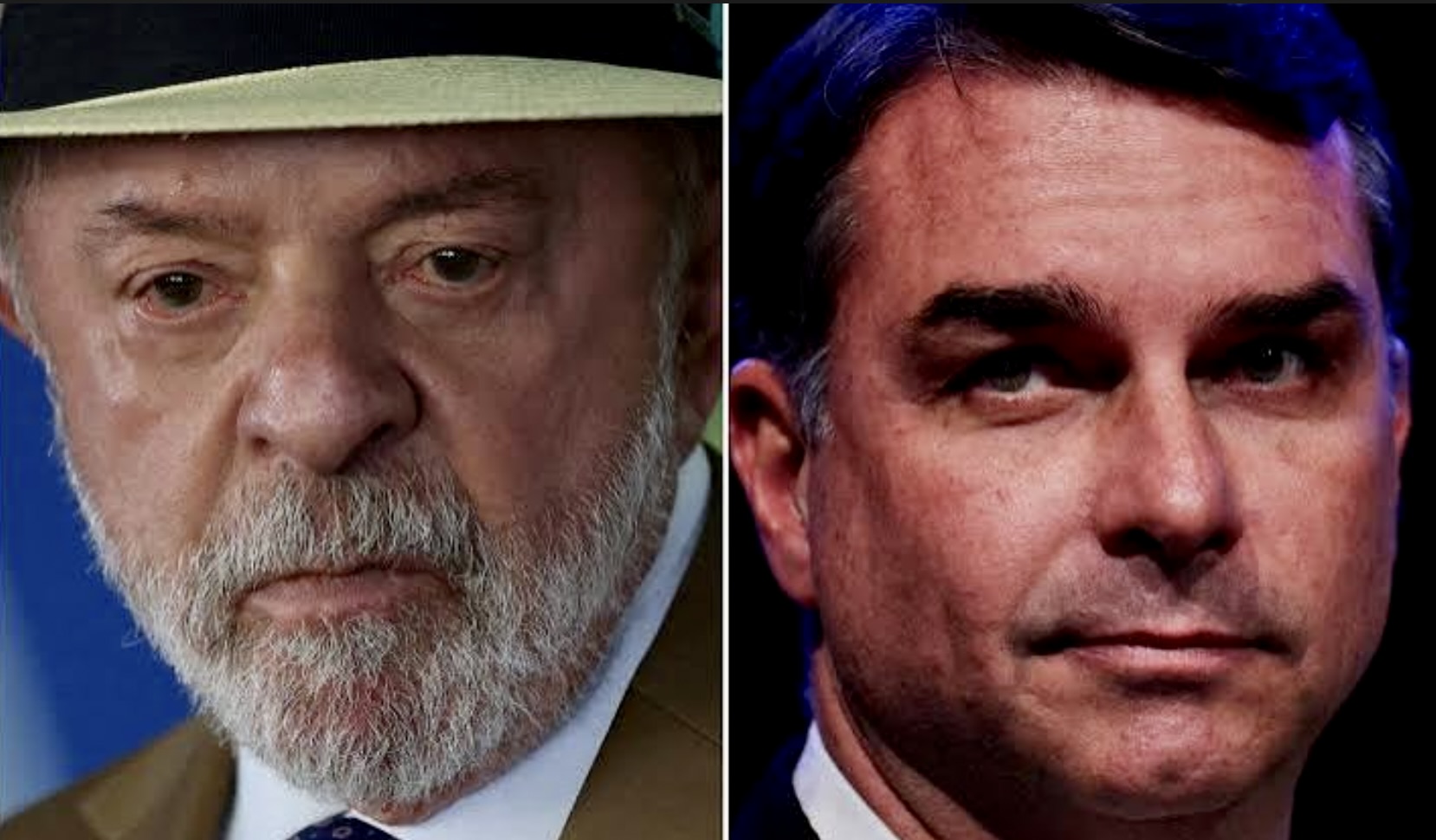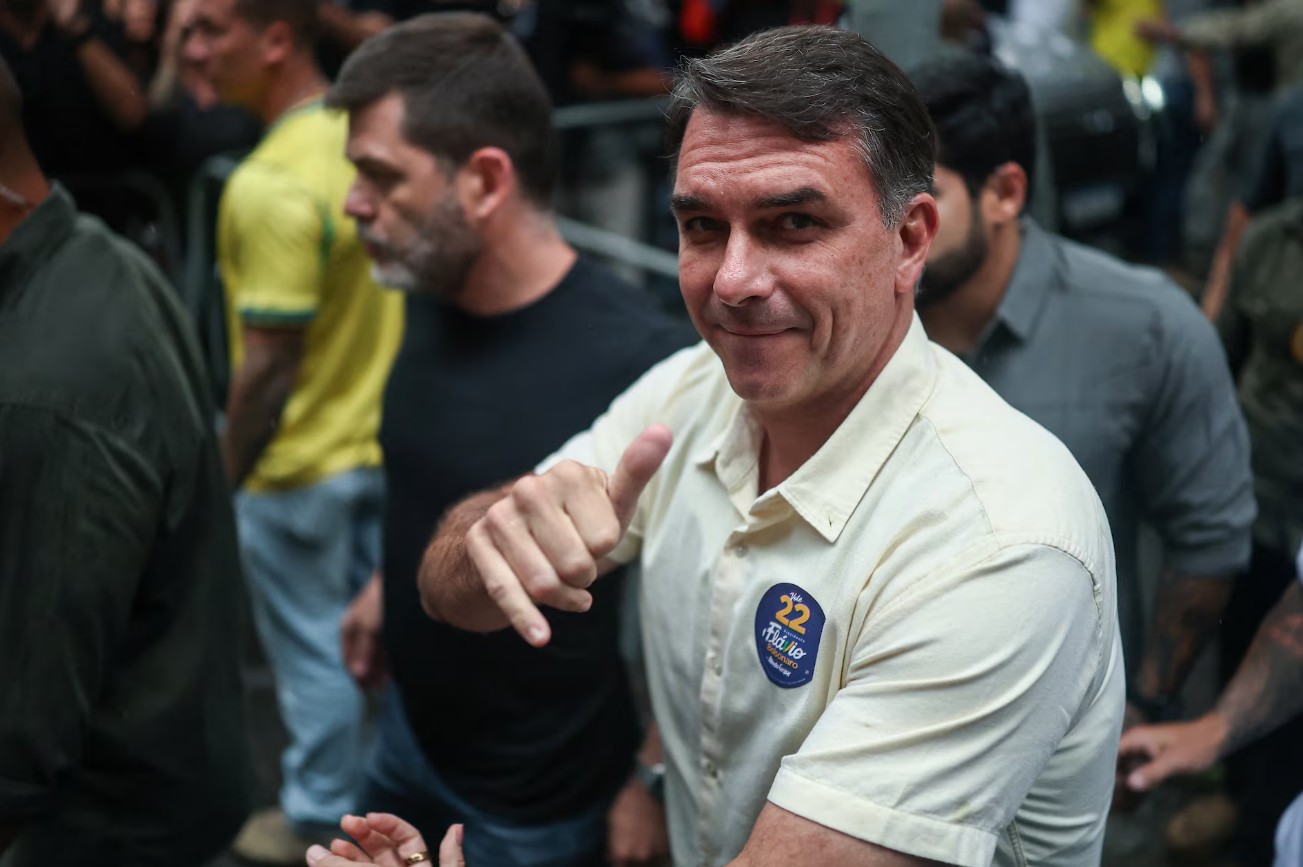
RIO DE JANEIRO (Realist English). Right-wing politician Flavio Bolsonaro, who lost the presidential election runoff to Luiz Inácio Lula da Silva, hastily left Brazil and flew to the United States via Argentina with a stopover in Ecuador. His departure was accompanied by legal complications — a Brazilian Supreme Court judge had banned him from leaving the country as part of a money-laundering case.
How Bolsonaro left the country
The latter circumstance, however, surprises no one in Brazil — similar charges were once brought against the election winner Lula as well. Nor does the ease with which, despite the travel ban, Bolsonaro crossed the border. Undoubtedly, his Brazilian supporters, of whom there are many in the security bloc, helped solve this problem. And in Argentina, reception conditions were arranged by Trump’s ally, President Milei. The land border between Brazil and Argentina strictly controls only drug trafficking — and even then, not always and not for everyone.
“I did not flee Brazil. I left for Brazil”
Bolsonaro is currently in the United States and has already made a number of statements about “election fraud” and his future plans. At first he called himself “president of all Brazil,” but then softened his wording and promised to continue the fight. It appears to be about forming a “government in exile.” Lula, who won by a three percent margin, called Bolsonaro’s flight shameful.
According to Russian media, in a statement published from the United States, Bolsonaro said he left Brazil with his family due to fears of political persecution and intends to lead the opposition from abroad. “I did not flee Brazil. I left for Brazil,” he said. Bolsonaro also compared himself to Charles de Gaulle, who led the Free France movement from London, was sentenced to death by the Vichy regime and subsequently returned to France. He thanked Donald Trump for providing asylum and Argentine President Javier Milei for his support.
Why Bolsonaro lost the runoff
Flavio Bolsonaro, who won the first round, lost the second — the first such case in Brazil’s entire political history. Usually, first-round winners become victors in the runoff. All opinion polls predicted Bolsonaro’s victory; Russian official media called the loss “shocking.” China, closely economically tied to Brazil, also did not expect an unconditional victory for the left, but has already, like a number of other countries, congratulated Lula.
Even Bolsonaro’s supporters do not believe in fraud — there is insufficient evidence of mass violations. True, no one has canceled the concept of “polling error,” and three percent fits well within it. Employees of the relevant department of the Russian Foreign Ministry, in private conversations, lean toward the view that Lula, as an experienced trade union leader, mobilized the full power of union organizations in preparation for the runoff. But that is more of a tool — and what did Lula mobilize it for?
According to Brazilian experts, there were clear errors in the forecasts. Logically, the poor strata and areas with indigenous, African and mixed populations voted most for Lula. It was precisely these dangerous settlement areas that were practically not covered by polls, which were conducted either online or in so-called “normal” places — universities, commercial centers, markets, city neighborhoods. Not a single representative of polling firms went through poor neighborhoods, much less favelas, due to their danger. No one polled people in indigenous, African and mixed settlements located far from the centers. After the first-round failure, all the forces of Lula’s team and the entire mobilization power of the unions were thrown into this “own electorate.”
Let us add that the overwhelming majority of the Brazilian electorate voted for the candidates’ domestic priorities, not for who is “for Russia or for Trump.” The population of Brazil is far from these topics. Many do not even know where Russia is located.
What this means for BRICS and Trump
Brazilian experts agree that Lula’s victory is a strong strengthening of BRICS positions. In addition, colleagues from Brazil are confident that active support from Trump and Rubio rather caused rejection among some voters — a small part, but still.
Many experts in Brazil are confident that Trump was the initiator of Bolsonaro’s flight with far-reaching goals — at a minimum, to send a signal to Lula that if he “attacks the US” too much, Trump could activate Bolsonaro against him. Moreover, official Washington has more than enough experience with such scenarios. Trump is trying in every way to distance himself, at least in words, from his interest in ousting the left in Brazil, but the facts say otherwise.
“Nature abhors a vacuum”
Professor Viktor Heifets, in an interview with the publication “V fokuse,” asked a rhetorical question: “How many people will support him? How many countries will support him in this? The US? Argentina?” He predicts that “Bolsonaro’s base electorate is unlikely to abandon him, since they would vote for him even if they found out he eats babies for breakfast. But those who voted for him situationally, just to oppose Lula, will be lost as an electorate, at least temporarily.”
Heifets also draws attention to the fact that the right camp has never been united in Brazil, and the world does not revolve around Bolsonaro alone: “There are other right-wingers for whom the road is being cleared — for example, the governor of São Paulo, Tarcísio de Freitas, who successfully won re-election to his post. So nature abhors a vacuum. A moral blow to the right camp has been dealt, but it is not forever.”
Trump can continue to pursue a line of supporting Bolsonaro and “promoting” his “government in exile,” if one is created. But he may also choose the option of inflaming internal political instability in Brazil and sanctioning nooses.
The opinion that the entire population of Latin America hates the United States is nothing more than a myth: they may not love it, but they dream of moving there. About Russia, the new generation knows extremely little. As for China, official Beijing tries to solve problems through negotiations, including preserving investment.
Bolsonaro’s political fate in exile is still unclear. One thing is clear: he will not be allowed to completely disappear in the US. But whether he will continue to be a favorite in Trump’s games with the Brazilian right is a big question. One way or another, Brazil is split almost in half: the right camp is supported by almost half the population, and the mistakes of the runoff, when victory was almost in hand, will certainly be taken into account there. The game is not over.
Tatiana Poloskova — Doctor of Political Sciences, State Counselor of the Russian Federation, First Class