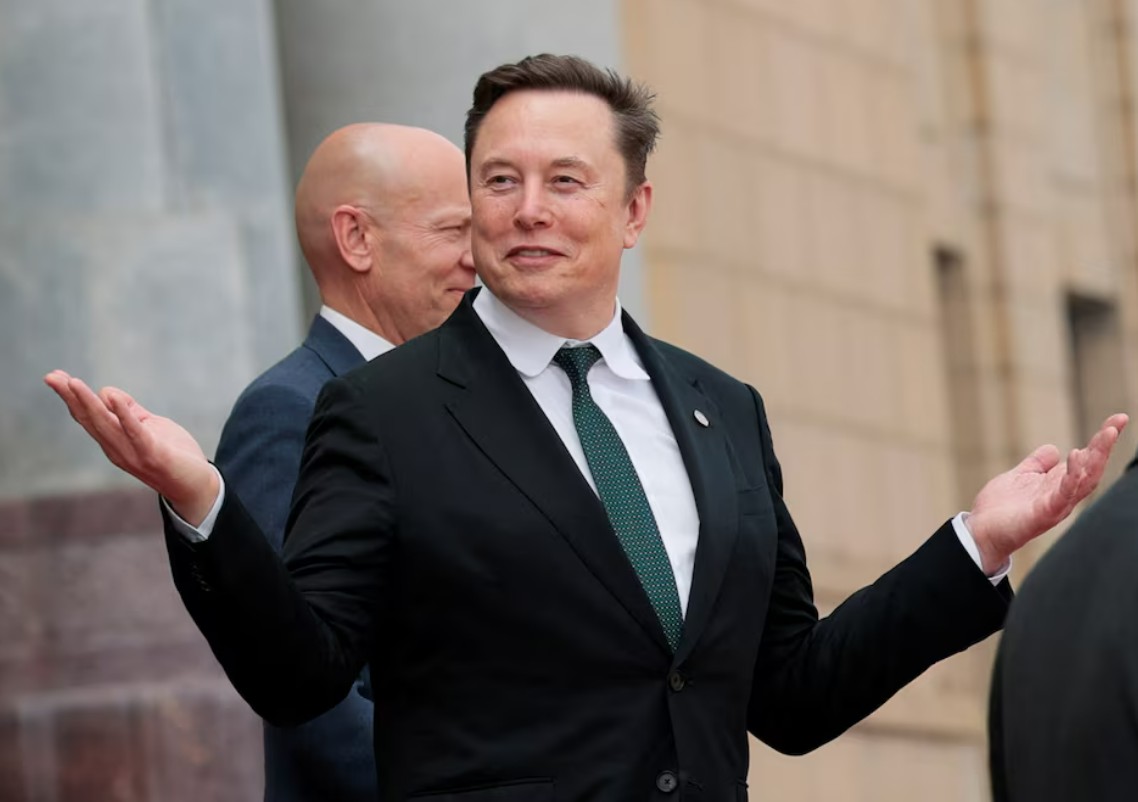
SAN FRANCISCO (Realist English). On 30 October, Elon Musk announced on his X social media page the second Neuralink product — the Blindsight neuroimplant, designed to restore vision. “The product is called Blindsight, and as the name suggests, it will enable even those who are completely blind or have never seen to see. From an engineering standpoint, it is ready. All that remains is to obtain regulatory approval,” the entrepreneur wrote. The statement came alongside the announcement of another company product — the Telepathy implant, which allows paralysed patients to control a computer with their thoughts.
How it works: bypassing damaged pathways
Unlike traditional methods that attempt to restore the function of the eyes or optic nerve, Blindsight bypasses these parts entirely. The system works as follows: an external camera, mounted for example on spectacle frames, captures the surrounding environment. The resulting images are converted into electrical signals and transmitted wirelessly to an implant placed in the visual cortex of the brain. Electrodes stimulate neurons, creating artificial visual sensations. Thus, the device transmits information directly to the brain, bypassing damaged eyes and optic nerves.
Theoretically, this means the implant could help even people who have lost both eyes or the optic nerve, provided the visual cortex is intact. As for those blind from birth, Musk claims the technology could potentially give them vision, but the key condition remains the preservation of the brain areas responsible for processing visual information.
Regulatory status and next steps
Blindsight received Breakthrough Device Designation from the US Food and Drug Administration (FDA) back in September 2024. This status accelerates the review and development of devices intended to treat serious diseases, but it is not a permit for commercial use and does not eliminate the need to prove safety and efficacy.
Neuralink’s website has opened registration for people interested in participating in future studies of the vision implant. However, according to sources, clinical trials of Blindsight in humans have not yet begun, and Neuralink has not yet demonstrated vision restoration in patients. Musk did not specify which approval the company is awaiting or when the first trials might begin.
Experts’ scepticism: “that’s not how biology works”
Musk’s claims have drawn criticism in the scientific community. A study published by a group of scientists at the University of Washington questioned the project’s key assumption — that implanting millions of microelectrodes into the visual cortex would produce high-resolution vision. “Electrodes do not produce pixels and therefore cannot reproduce an image, let alone a high-resolution image. That’s not how biology works,” said Ione Fine, a professor of psychology at the University of Washington and co-author of the study.
According to her, claims that the technology will “surpass human vision” are dangerous because they create unjustified expectations in patients. Other experts note that for people blind from birth, the visual processing pathways may never have formed, and current systems, due to the limited number of electrodes, can create only a flickering-dots effect rather than clear images. Musk himself has previously compared the image quality at the initial stage to the graphics of old Atari game consoles, which is far from “full vision.”
The Blindsight announcement is primarily a technological and marketing milestone rather than a confirmed medical breakthrough. The engineering readiness cited by Musk is not equivalent to proven efficacy and safety: clinical trials in humans have not yet begun, and fundamental questions about how the brain will interpret artificial signals, especially in those blind from birth, remain open.
The key question is whether Neuralink can bridge the gap between laboratory demonstration and real rehabilitation: from patients’ ability to recognise basic contours and movement to adaptation to a new sensory channel. The coming years will show whether Blindsight becomes the beginning of practical application of visual prostheses or remains a promising but unproven experiment.