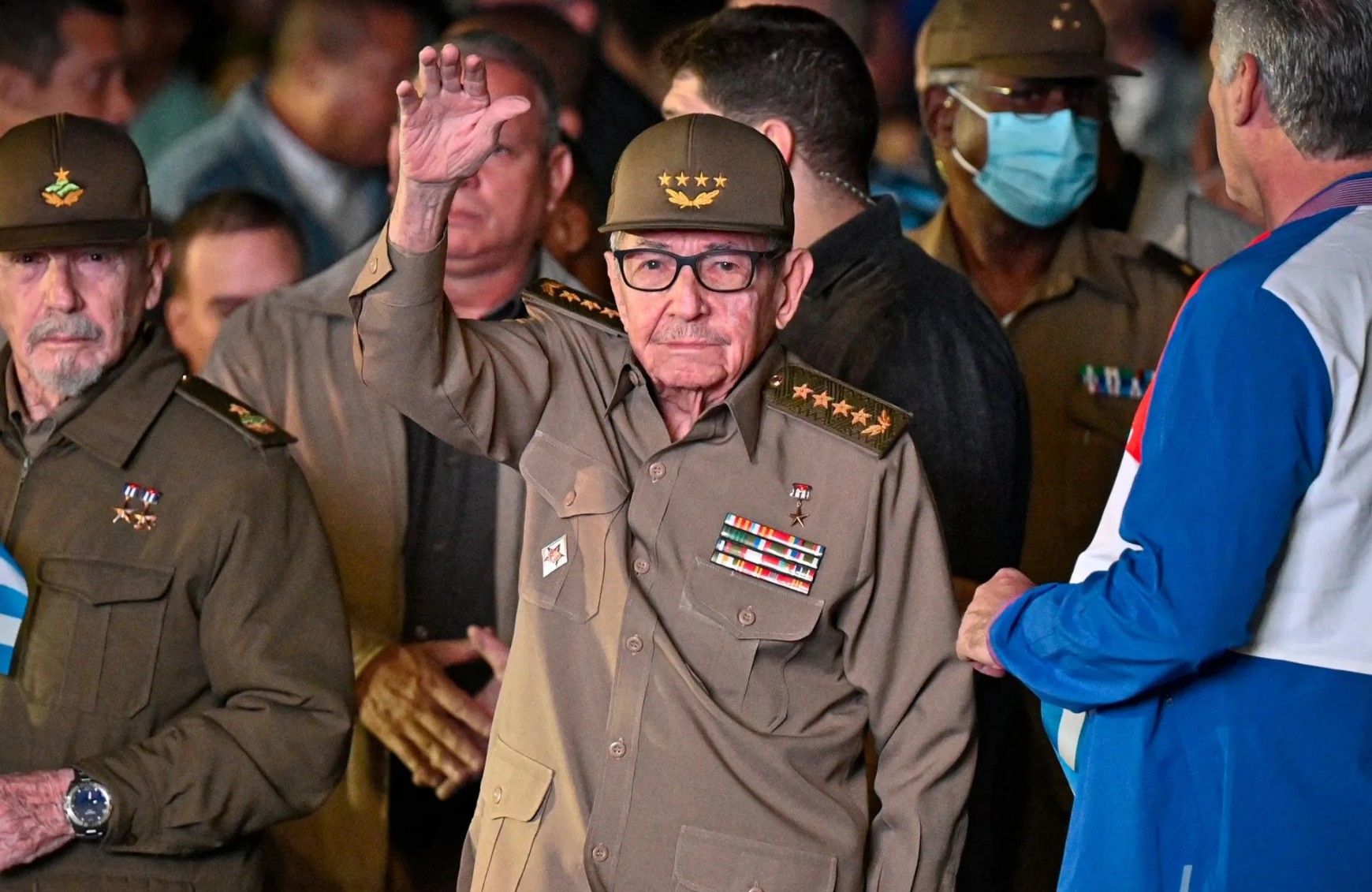
HAVANA (Realist English). Several days ago, Florida Attorney General James Uthmeier issued an arrest warrant for former Cuban President Raúl Castro. He is accused of conspiracy to commit premeditated murder in connection with the 1996 incident when Cuban military fighters shot down two civilian aircraft belonging to the Miami-based NGO Brothers to the Rescue. Recall that Brothers to the Rescue is an organization created by Cuban émigrés, founded with the aim of rescuing Cuban refugees. Four people died then: three US citizens and one Cuban citizen permanently residing in the US. In other words, the US has effectively demonstrated that it now has the “full legal right” to repeat the Venezuelan scenario with Raúl Castro. Of course, Castro is a former president, but he is a symbolic figure, and not only for Cuba.
Pressure on Cuba
At the same time, the US continues sanctions and informational pressure on Cuba. Cuban Foreign Minister Parrilla has already accused US Secretary of State Rubio of applying pressure ahead of the next UN vote on the need to lift Washington’s trade and economic blockade of Cuba. Parrilla stated that Rubio “resorts to blackmail against heads of state and government of a number of countries, trying to get them to change their position when voting at the UN General Assembly on the blockade.” “With constant lies and new steps, he seeks to hide behind a screen the act of collective punishment to which he subjects the Cuban people, while simultaneously trying to make the rest of the international community an accomplice to this barbarity,” Parrilla wrote on his X account. However, Parrilla did not mention that such a vote is already a traditional annual procedure. And similar resolutions have been adopted almost every year since 1992. It is important to remember: General Assembly resolutions are advisory in nature and have no binding legal force, so the vote itself does not mean automatic lifting of restrictions. As a rule, the overwhelming majority of General Assembly members have been voting for the lifting of the embargo on Cuba for more than thirty years, but the cart remains where it is.
Trump’s threats
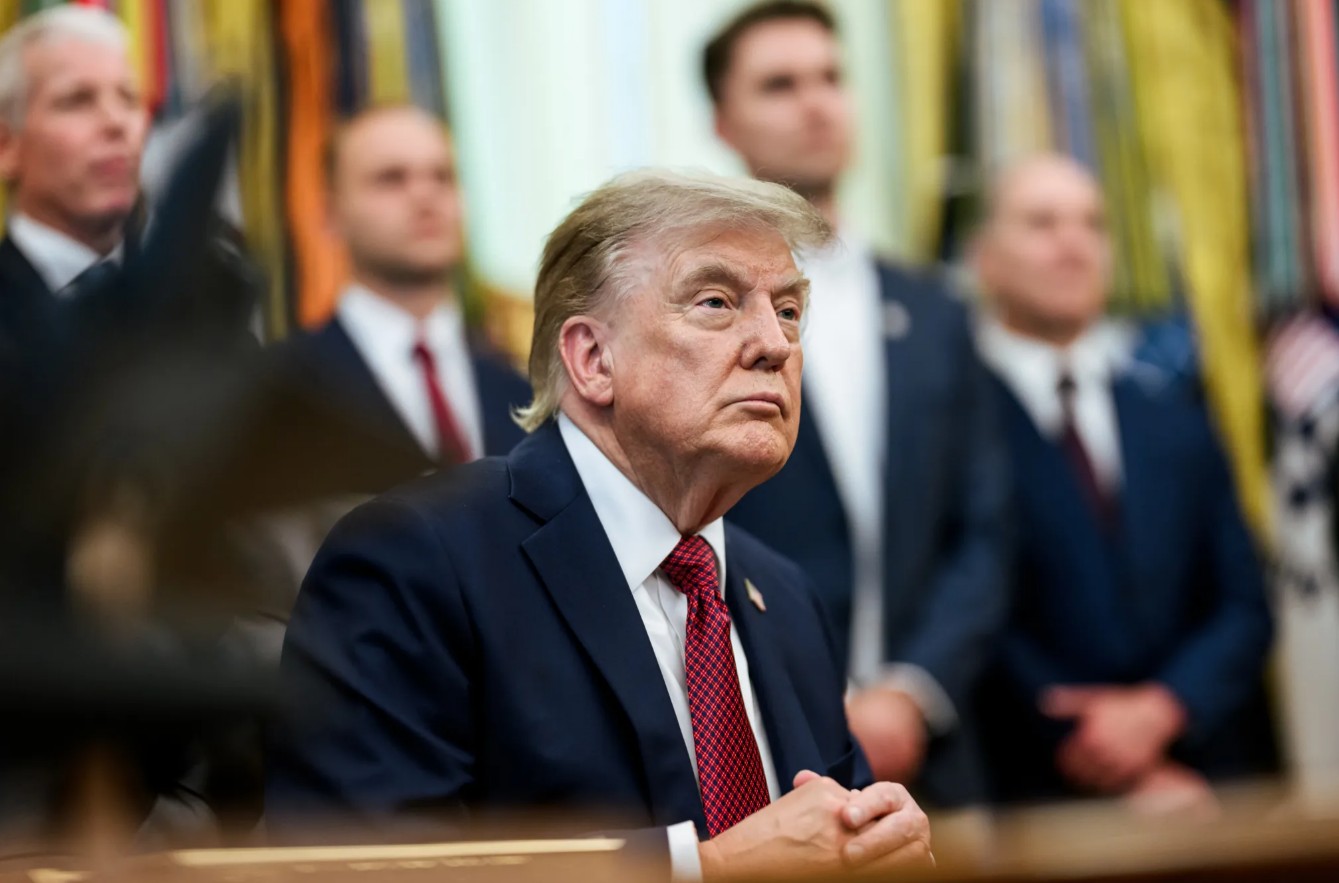
Trump, for his part, has for several months been threatening Cuba with either forceful absorption or voluntary surrender to Washington’s mercy. The other day, US President Donald Trump said that a possible deal with Cuba could lead to its “friendly absorption.” “It could be a friendly absorption, or it might not be. It doesn’t matter, because they are, as they say, on their last legs. They have no energy, no money. They have serious humanitarian problems,” Trump said.
Economic problems and reform attempts
Yes, Cuba has for many decades experienced the most serious problems in the economic and social spheres. Especially after the collapse of the USSR. At that time, Cubans were helped by Spanish, Canadian, and Norwegian investors in the hotel business and resort complexes. China has become deeply entrenched in the Cuban economy, which cannot but cause understandable irritation in the US. The alliance with Venezuela, under which Cuba effectively received oil for free while providing assistance to Caracas with security forces and intelligence officers (including the security of Petróleos de Venezuela), collapsed after Venezuela came under external management by the US.
The attempt to begin the process of liberalizing Cuba’s economy back in the mid-2010s encountered, on the one hand, enthusiasm from part of the active population, and on the other, fears by the authorities that society would split, that wealthy strata would emerge who might genuinely want a change of power. And most importantly — materially support such a change. I monitored the situation on the Island of Freedom during that period, traveled to virtually all provinces, and had the opportunity to meet with various social and political groups, including opposition-minded figures. Almost all of them agreed on one thing: “our authorities fear above all a social split in society. And the threat of the formation of a real, not sham, opposition.” In recent years, the Cuban authorities have become significantly concerned with protecting investors’ rights and expanding their opportunities. So far, these rights are significantly narrowed, and any entry into the hotel business, for example, presupposes a share ownership model: 49 percent for the investor and 51 percent for the local partner.
Oil and gas reform
The other day, Cuba approved a new decree-law No. 135 “On Oil and Gas,” which simplifies working conditions in the oil and gas sector and expands opportunities for attracting foreign investors and national private business. The reform is intended to increase hydrocarbon production, develop new fields, and strengthen the country’s energy security. The document updates the rules for exploration, production, and refining of oil and gas, and also provides for new forms of cooperation between the state and economic entities. Along with it, Decree No. 184 was adopted, regulating the application of the law, and the Ministry of Finance and Prices prepared additional provisions on taxation of the oil industry.
The reform also extends to the national private sector. In the forms provided by law, micro-, small, and medium-sized enterprises, private companies with more than 100 employees, as well as individual entrepreneurs will be able to participate in the industry.
However, against the backdrop of Trump’s constant threats and his victorious march in placing “his presidents” in Latin America, investors also have understandable concerns: is it worth the risk? Many, including Russian business circles looking with interest at Cuba, are generally not against Trump’s absorption of Cuba and the capitalization of the Island. Businessmen see this as guarantees for capital investment. For now, in Cuba a foreigner effectively cannot buy outright either a hotel or even an apartment.
How does Trump plan to take Cuba?
By war? Of course, Cuba alone cannot withstand the might of the US. China, judging by my conversations with expert circles, initially hoped that Russia would intervene and save China’s huge investments in the Island of Freedom. The same hopes were placed on Venezuela. Now Chinese experts are more concerned with how, in the event that Trump appears in Cuba seriously and for a long time, to manage to negotiate with him and preserve at least part of the investments.
I repeat, but Russia is not the USSR. And in Cuba we are practically invisible. Even Belarus is far more noticeable there. All the fervor to restore at least part of what the USSR had on the Island and in the region as a whole has gone into samovar contests and endless tours of various choirs from Moscow, which, by the way, cost our taxpayers a pretty penny. And the payoff is zero. Which is what we are observing now.
“Cuba has already fallen,” US Secretary of State, Cuban-American Marco Rubio, keeps repeating. In an interview with Fox News, he stated that the country’s economic and state systems cannot function normally, that it is run by people “preaching about some revolution that died 20 years ago and that never worked.”
Personally, I believe that the Cuban revolution gave a lot to the people of Cuba. It is free education, free and very good medicine, which was significantly undermined by the COVID epidemic. But life for decades with empty shelves will morally break anyone. Therefore, for most Cubans, the ideas of the revolution have long been dead. But the older generation realizes that Americans care least about ordinary Cubans.
Expert opinion: the dead end of the White House strategy
So why does Trump need Cuba?
In September 2026, speaking at the 81st session of the UN General Assembly in New York, Trump stated that the system of power in Cuba is “falling” under US pressure, calling the regime “failed.” At the same time, he said that Secretary of State Marco Rubio is conducting negotiations with the Cuban side and expressed hope to see their result. After these words, Cuban diplomats left the meeting hall, Russian media reported. In May 2026, Trump introduced new sanctions against the Cuban leadership.
Meanwhile, in April, according to Axios, the US and Cuba secretly held talks in Havana — for the first time in 10 years. President Miguel Díaz-Canel said that the country is entering into dialogue to find solutions to bilateral contradictions “through dialogue.” At the same time, Havana emphasized that official negotiations had not yet begun — there was only an exchange of messages and contacts through embassies. The problem is that Trump does not need dialogue.
Trump, as a businessman and a very ambitious person, wants to show Americans and the whole world that he is capable of solving any long-standing problem. And by what methods — that is “his business.” As well-known Russian Americanist Malek Dudakov believes, in fact we are currently witnessing not a triumph but the “despair of the Cuban strategy of the White House.” In his Telegram channel, Malek Dudakov notes: “Secretary of State Marco Rubio directly addressed Cubans… on the X platform and called on them to become CIA informants. He could not think of anything more serious. This symbolizes the dead end in which Trump’s team now finds itself. Immediately after the operation in Venezuela, it seemed that the White House had a chance to arrange a change of power in Havana as well. However, then Trump’s team switched to Iran, where it got stuck for a whole year. And missed a convenient moment for itself… Moreover, in Venezuela, after Trump’s first successes, a stalemate situation has developed, and nothing de facto is happening. And local authorities are waiting for the outcome of the political struggle inside the US. The Cubans are obviously adhering to a similar strategy now.
It is generally traditionally easier for them to work with Democrats. Not long ago, representatives of the left wing of the Democratic Party visited the island, which caused hysteria among Trump’s supporters. American socialists, raising their heads, take the side of Cuba in the current confrontation with the US. At the moment, 61% of Americans favor normalization of relations with Cuba and the lifting of sanctions. Trump’s team, meanwhile, is trying to increase turnout among the Cuban diaspora in Florida. After all, Republicans risk losing there too, and in the Senate race a black socialist woman is running against them. But one thing is clear — the campaign of pressure on Cuba and Venezuela has not brought Trump any significant political points.”
Trump also does not hide the fact that his task is to push China out of Cuba and out of the region as a whole. But one should not forget that Trump is not only a world-class political player but also a businessman. Therefore, while pushing China out, he will ultimately agree to bargain with them. And he will even make money on it.
Cuba has a chance to retain independence. But sooner or later it will still have to part with the socialist regime. In the corridors of Cuban power, the topic of a Chinese variant of preserving the political system with a change of economic priorities has long been discussed. Why not?
Tatiana Poloskova — Doctor of Political Science, State Counselor of the Russian Federation, 1st Class