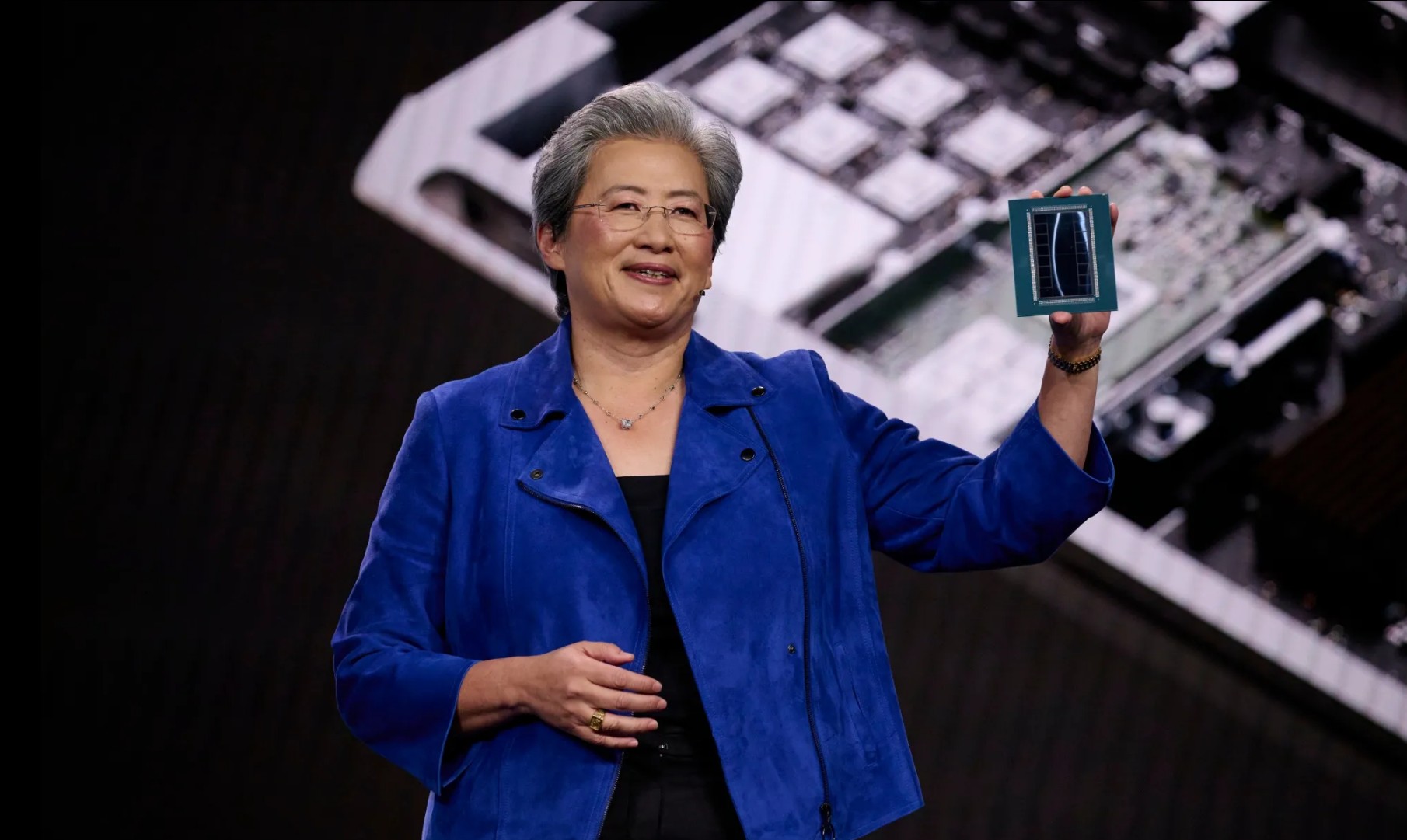
TAIPEI(Realist English). AMD CEO Lisa Su stated in Taipei that demand for semiconductors will remain “very high” in the coming years thanks to the application of artificial intelligence. She called on leading American AI companies to strengthen cooperation in the area of safe innovation.
What is AMD
AMD (Advanced Micro Devices) is an American semiconductor company founded in 1969. Its headquarters are located in Santa Clara, California. The company develops processors for computers and servers (Ryzen and EPYC lines), graphics processors (Radeon), and AI accelerators (Instinct). AMD is the main competitor to Intel in the CPU market and to NVIDIA in the GPU and AI chip market. Lisa Su has been CEO since 2014.
Key points
Lisa Su made these statements to journalists in Taipei on October 6, 2026. She stated directly that demand for chips exceeds supply, and memory supplies remain tight. Although AMD plans to significantly increase supplies next year, demand is growing even faster.
She emphasized: “Artificial intelligence is beneficial to the world and will not harm humanity.” At the same time, she noted that there is still much work to be done in the area of safe innovation, and “the most important thing is that we need to work together.” Lisa Su also called the American “Superintelligence Working Group” an “important step forward.”
Supply and demand dynamics
Lisa Su’s visit to Taiwan was packed; the key task was coordinating production capacity with supply chain partners. She stated she would meet with TSMC to thank the company for expanding capacity and expects a significant increase in supplies in 2027. She also noted the need to ensure all capacity is launched simultaneously.
Tension in memory supplies is one of the key current bottlenecks. The global shortage of high-bandwidth memory (HBM) is caused by data centers competing for supplies for GPUs and CPUs, which has led to a sharp rise in memory prices. Lisa Su stated she is working with memory suppliers to coordinate customer needs.
Background: AMD’s AI infrastructure
Lisa Su’s call rests on a rapidly expanding commercial base. In the first quarter of 2026, AMD’s data center segment revenue grew 57% year-on-year, reaching a record $5.8 billion. The company forecasts that the server CPU market will grow more than 35% annually, exceeding $120 billion by 2030.
Regarding customers, AMD has already concluded an agreement with Meta for the deployment of 6 gigawatts of GPUs, signed a similar-scale computing power agreement with OpenAI, and Microsoft Azure has committed to deploying AMD Helios rack-scale AI systems. Analysts expect AMD’s share of the data center server GPU market could grow from the current roughly 4.5% to 20–25%.
Competitive environment
Despite AMD’s rapid growth, NVIDIA still controls about 80% of the AI accelerator market. However, a VAST Data executive noted that in many new cloud providers (neoclouds), the ratio of AMD to NVIDIA GPU purchases has already reached roughly 1:1, and clients are accelerating adoption of AMD products due to price advantages and supply chain diversification. Lisa Su responded that the AI market is large enough, and “there will not be a single winner, but rather several winners will emerge.”